Wear Yellow. Work Safe.
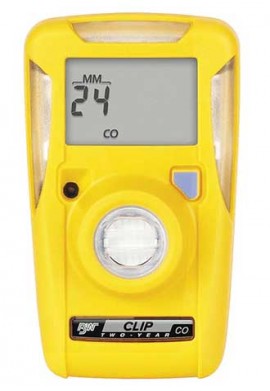
Fonctionnant sans entretien jusqu’à trois ans, ce détecteur à gaz unique est votre compagnon de tous les jours pour les environnements dangereux. Fiable, ce détecteur permet aux utilisateurs d’enregistrer les 35 événements de gaz les plus récents et les résultats des tests fonctionnels, et est compatible avec les systèmes de gestion MicroDock et IntelliDoX.
Fonctionnant sans entretien jusqu’à trois ans, ce détecteur à gaz unique est votre compagnon de tous les jours pour les environnements dangereux. Fiable, ce détecteur permet aux utilisateurs d’enregistrer les 35 événements de gaz les plus récents et les résultats des tests fonctionnels, et est compatible avec les systèmes de gestion MicroDock et IntelliDoX.
Caractéristiques
User-friendly, reliable and cost-effective safety tools for compliance and productivity
This single-gas detector is designed to be your everyday companion in hazardous environments. It operates for up to three years with zero maintenance. Once the detector is turned on it'll run continuously, meaning no need for calibration, sensor replacement, battery replacement or even battery charging. Meaning reliable performance with little downtime. This latest version of Fleet Manager II, v.4.3, is recommended for the support of the IntelliDoX for compatible GasAlertMicroClip detectors. All of the same configurable features possible on the MicroDock II have been adapted for the IntelliDoX. Now, users can incorporate their instrument management with the newest addition of IntelliDoX modules. Companies can now be more productive while enhancing their worksite safety management with the easy to network and configure GasAlertMicroClip IntelliDoX.
The Clip is compatible with both the MicroDock II and IntelliDoX instrument management systems.
Ensuring safety, compliance and productivity through advanced technology
Compatible with both the MicroDock II and IntelliDoX instrument management systems. The two-year BW Clip for H2S or CO can be placed in a hibernation case when you're not using it for a week or more, meaning you'll be able to extend the life of the unit beyond the typical 24 months. This latest version of Fleet Manager II, v.4.3, is recommended for the support of the IntelliDoX for compatible GasAlertMicroClip detectors. All of the same configurable features possible on the MicroDock II have been adapted for the IntelliDoX. Now, users can incorporate their instrument management with the newest addition of IntelliDoX modules. Companies can now be more productive while enhancing their worksite safety management with the easy to network and configure GasAlertMicroClip IntelliDoX.
Surecell™:
Dual reservoir sensor design dramatically improves instrument performance, response time, and longevity compared to traditional electrochemical sensors and consistently delivers reliable instrument performance under the harshest environmental conditions.
Reflex Technology™:
Advanced, automated self-test function routinely checks the operating condition of the sensor to increase safety, up-time and overall worker confidence.
IntelliDoX:
Configurable Options:
BW Clip Features:
Applications
| Spécifications du capteur | |
| Gaz surveillé | O2 |
| Gamme | 0 à 25.0% par volume |
| Alarme | Faible: 19.50% Forte: 23.50% |
| Spécifications générales | |
| Température d'utilisation | -20 à 50°C (-4 à 122°F) |
| Spécifications générales | |
| Alarmes | |
| Spécifications générales | |
| Tests | Détecteurs activés effectuant automatiquement un test de diagnostic interne toutes les 24 heures |
| Alimentation | Pile au lithium non remplaçable |
| Autonomie de la pile | Deux ans |
| Certifications & approbations | UL: Classe I, Div. 1, Gr. A, B, C, D, Classe I, Zone 0, Groupe IIC ATEX: CE 0539 II 1G Ex ia IIC T4 Ga IP66/67, DEMKO 14 ATEX 1356 IECEx: Ex ia IIC T4 Ga IP66/67 IECEx UL 14.0063 |
| Dimensions | 28 x 50 x 86 mm (1.1 x 2.0 x 3.4") |
| Poids | 3.2 oz (92 g) |
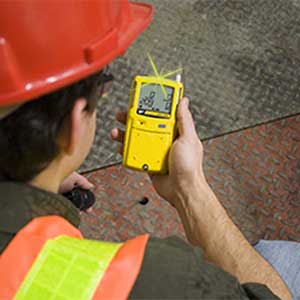
There are many gas detection products on the market that might appear to be the same, but a closer inspection of specification, functionality and features reveals major differences in what products can do and the potential value they can offer. Similarly, individual applications are also unique in their respective designs, needs and processes undertaken.
Before beginning to consider gas detection equipment, a risk assessment needs to be conducted. Any company employing staff has the obligation to conduct risk assessments to identify potential hazards and these can include potential gas, vapor or Oxygen deficiency risks. If gas hazards are identified, gas detection is applicable as a risk reduction method.
Depending on the processes being undertaken and the gases being detected, remote or off-site alarm notification plus event data logging/reporting may also be required for Health and Safety management records. Another factor impacting on the need for enhanced reporting functions might be regulatory compliance or a condition of insurance.
Having identified the primary objective, the suitable equipment is selected by asking a number of key questions. These fall into three broad categories:
The gases to be detected should be identified by the risk assessment, however experienced gas detection equipment manufacturers and their approved distributors are often able to help in this process, based on their experience of similar applications. However, it is important to remember that it is the end-user’s responsibility to identify all potential hazards. It is also essential to identify the potential source of a gas release as this helps determine the number and location of detectors required for a fixed gas detection system.
The performance, accuracy and reliability of any gas detection equipment will be affected by the environmental conditions it is subjected to. Temperature, humidity and pressure levels at the location all have a direct bearing on the type of equipment that should be selected. Additional factors such as potential variations resulting from a production process itself, diurnal/nocturnal fluctuations and seasonal changes may also affect the type of device which is suitable.
The next area of consideration relates to additional product functionality. Aspects like wiring configuration are important, especially when retro-fitting into an existing application. If the apparatus is being integrated into a separate safety system, certain communication protocols may also be required such as HART®, Lonworks or Modbus®. Consideration will also need to be given regarding the requirement for local displays on transmitter units and local configuration of the unit and gas displays may also be a useful addition.
Routine maintenance is another important consideration. Some gases and vapors can be detected with a number of different sensing technologies, e.g. Hydrocarbon gases with catalytic beads or Non-dispersive Infrared NDIR. Catalytic beads do not provide fail-to-safety operation and therefore can require a high frequency of routine maintenance, however NDIR based solutions tend to have a higher initial purchase price, but may require less routine maintenance. In-house resource to undertake such routine maintenance needs to be identified and in the absence of such a resource, budgeting for third party maintenance is an important factor in selecting the right equipment.
If you have questions about any of our gas detection products or services, please don’t hesitate to contact us. Whether you need a hand finding a new product or need help with your current system, just ask our team of Factory Trained Experts.
There are many gas detection products on the market that might appear to be the same, but a closer inspection of specification, functionality and features reveals major differences in what products can do and the potential value they can offer. Similarly, individual applications are also unique in their respective designs, needs and processes undertaken.
Before beginning to consider gas detection equipment, a risk assessment needs to be conducted. Any company employing staff has the obligation to conduct risk assessments to identify potential hazards and these can include potential gas, vapor or Oxygen deficiency risks. If gas hazards are identified, gas detection is applicable as a risk reduction method.
Depending on the processes being undertaken and the gases being detected, remote or off-site alarm notification plus event data logging/reporting may also be required for Health and Safety management records. Another factor impacting on the need for enhanced reporting functions might be regulatory compliance or a condition of insurance.
Having identified the primary objective, the suitable equipment is selected by asking a number of key questions. These fall into three broad categories:
The gases to be detected should be identified by the risk assessment, however experienced gas detection equipment manufacturers and their approved distributors are often able to help in this process, based on their experience of similar applications. However, it is important to remember that it is the end-user’s responsibility to identify all potential hazards. It is also essential to identify the potential source of a gas release as this helps determine the number and location of detectors required for a fixed gas detection system.
The performance, accuracy and reliability of any gas detection equipment will be affected by the environmental conditions it is subjected to. Temperature, humidity and pressure levels at the location all have a direct bearing on the type of equipment that should be selected. Additional factors such as potential variations resulting from a production process itself, diurnal/nocturnal fluctuations and seasonal changes may also affect the type of device which is suitable.
The next area of consideration relates to additional product functionality. Aspects like wiring configuration are important, especially when retro-fitting into an existing application. If the apparatus is being integrated into a separate safety system, certain communication protocols may also be required such as HART®, Lonworks or Modbus®. Consideration will also need to be given regarding the requirement for local displays on transmitter units and local configuration of the unit and gas displays may also be a useful addition.
Routine maintenance is another important consideration. Some gases and vapors can be detected with a number of different sensing technologies, e.g. Hydrocarbon gases with catalytic beads or Non-dispersive Infrared NDIR. Catalytic beads do not provide fail-to-safety operation and therefore can require a high frequency of routine maintenance, however NDIR based solutions tend to have a higher initial purchase price, but may require less routine maintenance. In-house resource to undertake such routine maintenance needs to be identified and in the absence of such a resource, budgeting for third party maintenance is an important factor in selecting the right equipment.
If you have questions about any of our gas detection products or services, please don’t hesitate to contact us. Whether you need a hand finding a new product or need help with your current system, just ask our team of Factory Trained Experts.
Cliquer sur une catégorie pour voir une sélection d'accessoires compatible avec le BW Clip Détecteur O2 série de gaz unique, 0 à 100 ppm, 2 ans.






| Spécifications du capteur | |
| Gaz surveillé | O2 |
| Gamme | 0 à 25.0% par volume |
| Alarme | Faible: 19.50% Forte: 23.50% |
| Spécifications générales | |
| Température d'utilisation | -20 à 50°C (-4 à 122°F) |
| Spécifications générales | |
| Alarmes | |
| Spécifications générales | |
| Tests | Détecteurs activés effectuant automatiquement un test de diagnostic interne toutes les 24 heures |
| Alimentation | Pile au lithium non remplaçable |
| Autonomie de la pile | Deux ans |
| Certifications & approbations | UL: Classe I, Div. 1, Gr. A, B, C, D, Classe I, Zone 0, Groupe IIC ATEX: CE 0539 II 1G Ex ia IIC T4 Ga IP66/67, DEMKO 14 ATEX 1356 IECEx: Ex ia IIC T4 Ga IP66/67 IECEx UL 14.0063 |
| Dimensions | 28 x 50 x 86 mm (1.1 x 2.0 x 3.4") |
| Poids | 3.2 oz (92 g) |
There are many gas detection products on the market that might appear to be the same, but a closer inspection of specification, functionality and features reveals major differences in what products can do and the potential value they can offer. Similarly, individual applications are also unique in their respective designs, needs and processes undertaken.
Before beginning to consider gas detection equipment, a risk assessment needs to be conducted. Any company employing staff has the obligation to conduct risk assessments to identify potential hazards and these can include potential gas, vapor or Oxygen deficiency risks. If gas hazards are identified, gas detection is applicable as a risk reduction method.
Depending on the processes being undertaken and the gases being detected, remote or off-site alarm notification plus event data logging/reporting may also be required for Health and Safety management records. Another factor impacting on the need for enhanced reporting functions might be regulatory compliance or a condition of insurance.
Having identified the primary objective, the suitable equipment is selected by asking a number of key questions. These fall into three broad categories:
The gases to be detected should be identified by the risk assessment, however experienced gas detection equipment manufacturers and their approved distributors are often able to help in this process, based on their experience of similar applications. However, it is important to remember that it is the end-user’s responsibility to identify all potential hazards. It is also essential to identify the potential source of a gas release as this helps determine the number and location of detectors required for a fixed gas detection system.
The performance, accuracy and reliability of any gas detection equipment will be affected by the environmental conditions it is subjected to. Temperature, humidity and pressure levels at the location all have a direct bearing on the type of equipment that should be selected. Additional factors such as potential variations resulting from a production process itself, diurnal/nocturnal fluctuations and seasonal changes may also affect the type of device which is suitable.
The next area of consideration relates to additional product functionality. Aspects like wiring configuration are important, especially when retro-fitting into an existing application. If the apparatus is being integrated into a separate safety system, certain communication protocols may also be required such as HART®, Lonworks or Modbus®. Consideration will also need to be given regarding the requirement for local displays on transmitter units and local configuration of the unit and gas displays may also be a useful addition.
Routine maintenance is another important consideration. Some gases and vapors can be detected with a number of different sensing technologies, e.g. Hydrocarbon gases with catalytic beads or Non-dispersive Infrared NDIR. Catalytic beads do not provide fail-to-safety operation and therefore can require a high frequency of routine maintenance, however NDIR based solutions tend to have a higher initial purchase price, but may require less routine maintenance. In-house resource to undertake such routine maintenance needs to be identified and in the absence of such a resource, budgeting for third party maintenance is an important factor in selecting the right equipment.
If you have questions about any of our gas detection products or services, please don’t hesitate to contact us. Whether you need a hand finding a new product or need help with your current system, just ask our team of Factory Trained Experts.
There are many gas detection products on the market that might appear to be the same, but a closer inspection of specification, functionality and features reveals major differences in what products can do and the potential value they can offer. Similarly, individual applications are also unique in their respective designs, needs and processes undertaken.
Before beginning to consider gas detection equipment, a risk assessment needs to be conducted. Any company employing staff has the obligation to conduct risk assessments to identify potential hazards and these can include potential gas, vapor or Oxygen deficiency risks. If gas hazards are identified, gas detection is applicable as a risk reduction method.
Depending on the processes being undertaken and the gases being detected, remote or off-site alarm notification plus event data logging/reporting may also be required for Health and Safety management records. Another factor impacting on the need for enhanced reporting functions might be regulatory compliance or a condition of insurance.
Having identified the primary objective, the suitable equipment is selected by asking a number of key questions. These fall into three broad categories:
The gases to be detected should be identified by the risk assessment, however experienced gas detection equipment manufacturers and their approved distributors are often able to help in this process, based on their experience of similar applications. However, it is important to remember that it is the end-user’s responsibility to identify all potential hazards. It is also essential to identify the potential source of a gas release as this helps determine the number and location of detectors required for a fixed gas detection system.
The performance, accuracy and reliability of any gas detection equipment will be affected by the environmental conditions it is subjected to. Temperature, humidity and pressure levels at the location all have a direct bearing on the type of equipment that should be selected. Additional factors such as potential variations resulting from a production process itself, diurnal/nocturnal fluctuations and seasonal changes may also affect the type of device which is suitable.
The next area of consideration relates to additional product functionality. Aspects like wiring configuration are important, especially when retro-fitting into an existing application. If the apparatus is being integrated into a separate safety system, certain communication protocols may also be required such as HART®, Lonworks or Modbus®. Consideration will also need to be given regarding the requirement for local displays on transmitter units and local configuration of the unit and gas displays may also be a useful addition.
Routine maintenance is another important consideration. Some gases and vapors can be detected with a number of different sensing technologies, e.g. Hydrocarbon gases with catalytic beads or Non-dispersive Infrared NDIR. Catalytic beads do not provide fail-to-safety operation and therefore can require a high frequency of routine maintenance, however NDIR based solutions tend to have a higher initial purchase price, but may require less routine maintenance. In-house resource to undertake such routine maintenance needs to be identified and in the absence of such a resource, budgeting for third party maintenance is an important factor in selecting the right equipment.
If you have questions about any of our gas detection products or services, please don’t hesitate to contact us. Whether you need a hand finding a new product or need help with your current system, just ask our team of Factory Trained Experts.
Cliquer sur une catégorie pour voir une sélection d'accessoires compatible avec le BW Clip Détecteur O2 série de gaz unique, 0 à 100 ppm, 2 ans.