Fluke Process Instruments RAYTES1501MR0 Imaging System for Continuous Web Processes, 600 to 1200°C (1112 to 2192°F), 1µm, Standard Configuration

Modèle: RAYTES1501MR0

Fluke Process Instruments RAYTES1501MR0 Imaging System for Continuous Web Processes, 600 to 1200°C (1112 to 2192°F), 1µm, Standard Configuration

Modèle: RAYTES1501MR0

Automated infrared linescanner inspection system for detecting, measuring, and classifying thermal features and defects occurring in continuous web processes.

Automated infrared linescanner inspection system for detecting, measuring, and classifying thermal features and defects occurring in continuous web processes.

Discontinué!

Ce produit a été discontinué et n’est plus disponible.

Il n’y a pas de remplacement direct, mais nous vous recommandons:
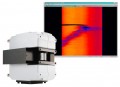
Fluke Process Instruments RAYTES150G5R0 Imaging System for Continuous Web Processes, 100 to 950°C (212 to 1742°F), 5µm, Standard Configuration-

Fluke Process Instruments RAYTES150G5R0 Imaging System for Continuous Web Processes, 100 to 950°C (212 to 1742°F), 5µm, Standard Configuration

Modèle: RAYTES150G5R0

Automated infrared linescanner inspection system for detecting, measuring, and classifying thermal features and defects occurring in continuous web processes.


Fluke Process RAYTES150LTR0 Imaging System for continuous web rocesses, 68 to 572°F, 3 to 5 µm, standard configuration-

Fluke Process RAYTES150LTR0 Imaging System for continuous web rocesses, 68 to 572°F, 3 to 5 µm, standard configuration

Modèle: RAYTES150LTR0

Automated infrared linescanner inspection system for detecting, measuring, and classifying thermal features and defects occurring in continuous web processes.


Fluke Process RAYTES150MTR0 Imaging System for continuous web processes, 212 to 1472°F, 3.9µm, standard configuration-

Fluke Process RAYTES150MTR0 Imaging System for continuous web processes, 212 to 1472°F, 3.9µm, standard configuration

Modèle: RAYTES150MTR0

Automated infrared linescanner inspection system for detecting, measuring, and classifying thermal features and defects occurring in continuous web processes.


Fluke Process RAYTES150P30R0 Imaging System for continuous web processes, 86 to 482°F, 3.43µm, standard configuration-

Fluke Process RAYTES150P30R0 Imaging System for continuous web processes, 86 to 482°F, 3.43µm, standard configuration

Modèle: RAYTES150P30R0

Automated infrared linescanner inspection system for detecting, measuring, and classifying thermal features and defects occurring in continuous web processes.


Fluke Process RAYTES150P31R0 Imaging System for continuous web processes, 212 to 662°F, 3.43µm, enhanced configuration-

Fluke Process RAYTES150P31R0 Imaging System for continuous web processes, 212 to 662°F, 3.43µm, enhanced configuration

Modèle: RAYTES150P31R0

Automated infrared linescanner inspection system for detecting, measuring, and classifying thermal features and defects occurring in continuous web processes.


Vous ne trouvez pas ce que vous cherchez? Nous ferons une recherche et vous aiderons à trouver ce dont vous avez besoin.


Fluke Process RAYTES1501MR0 offre

The ES150 system continuously monitors the web process allowing temperature data to be visualized as a line graph (profile) and a thermographic image. Profiles and images may be printed or archived for analysis.

Through the use of OPC (OLE for Process Control), the ES150 system acts as an OPC server and communicates with many common process control systems. This feature allows the ES150 to move beyond being just a measurement tool and becomes an integral part of the total process control system.

Caractéristiques

  • Reduce Process setup time and automatic quality monitoring
  • Early detect die bolt heater problems or plugged role
  • Define product-specific configurations and data files
  • View complete sheet temperature profile for more effective chill roll control
  • Customize and display zones overlayed on thermal image
  • Automatically analyze zone temperatures

ES150 Process Imaging Software

The system provides the capability to define any number of sectors corresponding to specific areas across the sheet. Sectors are defined by name, location, and the desired processing of temperature data within the sector (e.g., average, minimum, or maximum temperature).

Applications

In plastic sheet extrusion production, polymers are melted through a slot or flat die (extruded) to form a thin, molten sheet. This sheet is is attracted towards the surface of a chilled roller where it immediately solidifies. The sheet then passes through a series of rollers which will determine thickness and texture before being edge trimmed and cut to the required size (heavy gauge sheet) or wound onto a roller (thin gauge sheet). Extruded plastic sheets are often used for thermoforming into a final shape (for example in the manufacture of refrigerator or freezer internal panels or plastic beverage cups).

In cast film production, polymers are melted through a slot or flat die (extruded) to form a thin molten film. This film is attracted towards the surface of a chilled roller using the force of an air knife or vacuum box, where it immediately solidifies. The film then passes through a series of chill rollers before being edge-trimmed and typically wound on a roll. Some machines will extrude a number of films for a laminated final product.

Continuous process laminating and embossing machines typically heat and cure a number of substrates together before embossing a textured finish to one or both sides. Depending on the finish desired, calendar rolls may also be used to modify smoothness, surface luster and thickness uniformity. Heat energy is added to the process through the use of heated rollers and electric or gas infrared panel heaters.

Spécifications pour le Fluke Process RAYTES1501MR0

Temperature Range 600 to 1200°C (1112 to 2192°F)
Accuracy ±0.5% of measured value or ±3ºC (6ºF) whichever is greater
System Repeatability ±2°C (±4°F)
Spectral Response 1.0 µm
Optical Resolution 140:1
Emissivity 0.1 to 1.00 digitally adjustable
Focus Distance 1.5m (60") standard
Optical Scan Rate 20 to 150Hz
Number of Samples 512 data points per scan line (up to 80Hz ), 256 data points per scan line (80 to 150Hz)
Outputs Analog: 3 user-configurable 0/4-20mA current outputs, collectively isolated. Max. DC resistance 500Ω; Alarm: Electromechanical relay 30V, 1A; Digital Communications: RS485/RS232 full duplex, non-addressable; Ethernet Communication: TCP/IP protocol 10/100Mbit/s
Inputs Trigger + 5 to 24VDC pulse (user-supplied)
Power Supply 24 VDC ± 25%, 1A

Le Fluke Process RAYTES1501MR0 comprend

  • MP1501M Linescanner
  • Set of 7.5m cables for RS485 and Ethernet communications and power connections
  • Two loose connectors for other functions (to be wired by the end-user)
  • 1 spare window (Mica for all models)
  • ES150 System CD (includes DataTemp ES150 Software with OPC data sharing, ES150 Operator’s Manual, MP150 Operator’s Manual, and ES150 Brochure)
  • Industrial power supply (100-240 VAC input to 24VDC output)
  • RS232/RS485 converter (with 25- to 9-pin cable adapter)

Cliquer sur une catégorie pour voir une sélection d'accessoires compatible avec le Fluke Process Instruments RAYTES1501MR0 Imaging System for Continuous Web Processes, 600 to 1200°C (1112 to 2192°F), 1µm, Standard Configuration.


Poser une question sur le Fluke Process Instruments RAYTES1501MR0 Imaging System for Continuous Web Processes, 600 to 1200°C (1112 to 2192°F), 1µm, Standard Configuration

Fluke Process RAYTES1501MR0 offre

The ES150 system continuously monitors the web process allowing temperature data to be visualized as a line graph (profile) and a thermographic image. Profiles and images may be printed or archived for analysis.

Through the use of OPC (OLE for Process Control), the ES150 system acts as an OPC server and communicates with many common process control systems. This feature allows the ES150 to move beyond being just a measurement tool and becomes an integral part of the total process control system.

Caractéristiques

  • Reduce Process setup time and automatic quality monitoring
  • Early detect die bolt heater problems or plugged role
  • Define product-specific configurations and data files
  • View complete sheet temperature profile for more effective chill roll control
  • Customize and display zones overlayed on thermal image
  • Automatically analyze zone temperatures

ES150 Process Imaging Software

The system provides the capability to define any number of sectors corresponding to specific areas across the sheet. Sectors are defined by name, location, and the desired processing of temperature data within the sector (e.g., average, minimum, or maximum temperature).

Applications

In plastic sheet extrusion production, polymers are melted through a slot or flat die (extruded) to form a thin, molten sheet. This sheet is is attracted towards the surface of a chilled roller where it immediately solidifies. The sheet then passes through a series of rollers which will determine thickness and texture before being edge trimmed and cut to the required size (heavy gauge sheet) or wound onto a roller (thin gauge sheet). Extruded plastic sheets are often used for thermoforming into a final shape (for example in the manufacture of refrigerator or freezer internal panels or plastic beverage cups).

In cast film production, polymers are melted through a slot or flat die (extruded) to form a thin molten film. This film is attracted towards the surface of a chilled roller using the force of an air knife or vacuum box, where it immediately solidifies. The film then passes through a series of chill rollers before being edge-trimmed and typically wound on a roll. Some machines will extrude a number of films for a laminated final product.

Continuous process laminating and embossing machines typically heat and cure a number of substrates together before embossing a textured finish to one or both sides. Depending on the finish desired, calendar rolls may also be used to modify smoothness, surface luster and thickness uniformity. Heat energy is added to the process through the use of heated rollers and electric or gas infrared panel heaters.

Spécifications pour le Fluke Process RAYTES1501MR0

Temperature Range 600 to 1200°C (1112 to 2192°F)
Accuracy ±0.5% of measured value or ±3ºC (6ºF) whichever is greater
System Repeatability ±2°C (±4°F)
Spectral Response 1.0 µm
Optical Resolution 140:1
Emissivity 0.1 to 1.00 digitally adjustable
Focus Distance 1.5m (60") standard
Optical Scan Rate 20 to 150Hz
Number of Samples 512 data points per scan line (up to 80Hz ), 256 data points per scan line (80 to 150Hz)
Outputs Analog: 3 user-configurable 0/4-20mA current outputs, collectively isolated. Max. DC resistance 500Ω; Alarm: Electromechanical relay 30V, 1A; Digital Communications: RS485/RS232 full duplex, non-addressable; Ethernet Communication: TCP/IP protocol 10/100Mbit/s
Inputs Trigger + 5 to 24VDC pulse (user-supplied)
Power Supply 24 VDC ± 25%, 1A

Le Fluke Process RAYTES1501MR0 comprend

  • MP1501M Linescanner
  • Set of 7.5m cables for RS485 and Ethernet communications and power connections
  • Two loose connectors for other functions (to be wired by the end-user)
  • 1 spare window (Mica for all models)
  • ES150 System CD (includes DataTemp ES150 Software with OPC data sharing, ES150 Operator’s Manual, MP150 Operator’s Manual, and ES150 Brochure)
  • Industrial power supply (100-240 VAC input to 24VDC output)
  • RS232/RS485 converter (with 25- to 9-pin cable adapter)

Cliquer sur une catégorie pour voir une sélection d'accessoires compatible avec le Fluke Process Instruments RAYTES1501MR0 Imaging System for Continuous Web Processes, 600 to 1200°C (1112 to 2192°F), 1µm, Standard Configuration.

Poser une question sur le Fluke Process Instruments RAYTES1501MR0 Imaging System for Continuous Web Processes, 600 to 1200°C (1112 to 2192°F), 1µm, Standard Configuration

Plus de produits Fluke Process