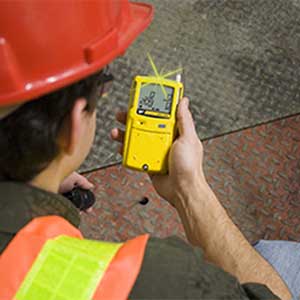
BW GasAlert MicroClip XL Détecteur de gaz multiples, O2, H2S, CO

Modèle: MCXL-X0HM-Y-NA

BW GasAlert MicroClip XL Détecteur de gaz multiples, O<sub>2</sub>, H<sub>2</sub>S, CO-


Télécharger: datasheet manual

Plus de produits BW

Demander à un expert

BW GasAlert MicroClip XL Détecteur de gaz multiples, O2, H2S, CO

Modèle: MCXL-X0HM-Y-NA

Compact et facile à utiliser, ce détecteur de gaz multiples est idéalement utilisé dans les environnements dangereux confinés et peut facilement détecter la présence d'oxygène (O2), de monoxyde de carbone (CO) et de sulfure d’hydrogène (H2S). Ce détecteur dispose également d'un voyant vert clignotant IntelliFlash pour une conformité en un clin d'œil.

Compact et facile à utiliser, ce détecteur de gaz multiples est idéalement utilisé dans les environnements dangereux confinés et peut facilement détecter la présence d'oxygène (O2), de monoxyde de carbone (CO) et de sulfure d’hydrogène (H2S). Ce détecteur dispose également d'un voyant vert clignotant IntelliFlash pour une conformité en un clin d'œil.

Prix spécial $684.74 CAD
Prix régulier $857.00 CAD
Disponibilité 15+ semaines
Quantité

Traceable Calibration Certificate Icon

Certificat d’étalonnage de traçabilité pour votre MCXL-X0HM-Y-NA asAlert MicroClip XL Détecteur de gaz multiples

Traceable Calibration Certificate Icon

Certificat d’étalonnage de traçabilité pour votre MCXL-X0HM-Y-NA asAlert MicroClip XL Détecteur de gaz multiples

BW MCXL-X0HM-Y-NA Offers

Designed for enhanced battery operation and improved functionality in cold weather environments. For simple, cost-effective management of your records, calibration and bump testing, choose BW's MicroDock II automatic test and calibration system and Fleet Manager II software.

Features

  • Designed for cold weather performance
  • IntelliFlash verifies operation and compliance to both the user and supervisor
  • Tamper-proof, one button operation
  • Powered by a rechargeable lithium polymer battery
  • Continuous LCD shows real-time gas concentrations
  • Compact and lightweight design makes it comfortable to wear
  • Water-resistant
  • Simple automatic calibration procedure; compatible with BW MicroDock II automatic test and calibration station
  • Full function self-test of sensor, battery status, circuit integrity and audible/visual alarms on start up
  • Bright wide-angled visual alarm bars
  • Built-in concussion-proof boot
  • Multi-language support in English, French, German, Spanish and Portuguese
  • Conveniently manage your fleet using Fleet Manager II

Confined Space Kit Available
The MicroClip XL can also be used in a confined space kit. A confined space can represent a risk for the health and safety of anyone who enters, because it has restricted entrance and exit and the possibility of dangerous substances in the atmosphere. The air within the confined space should be tested from outside before entry. A trained worker should use remote probes and sampling lines with properly calibrated and maintained equipment to verify that oxygen content is within safe limits and that a hazardous atmosphere is not present.

Software
Data storage and analysis has never been so simple. With the same look and feel as Fleet Manager, Fleet Manager II allows users to download information directly from BW instruments or the MicroDock II.

With improved functionality, users can...

  • Automatically create accurate and user-friendly reports
  • Easily sort, format and graph data as well as view history
  • Archive and share data easily, including databases
  • Download and manage calibration and bump check records as well as datalogged information onto any PC

BW GasAlertMicroClip XL Specifications

Hydrogen Sulfide (H2S)
Range 0 to 100ppm
Resolution 1ppm
Carbon Monoxide (CO)
Range 0 to 100ppm
Resolution 1ppm
Oxygen (O2)
Range 0 to 100ppm
Resolution 0.1%
General Specifications
Size 4.4 x 2.4 x 1.2" (11.3 x 6.0 x 3.1cm)
Weight 6.7oz (190g)
Temperature -4 to 122°F (-20 to 50°C)
Humidity 0 to 95% RH (non-condensing)
Ratings EMI/RFI: Complies with EMC Directive 2004/108/EC IP 66
Certifications and Approvals Class I, Div. 1, Gr. A, B, C, D
ATEX: II 1 G
Ex ia IIC T4 Ga
IECEx: Ex ia IIC T4 Ga
European Conformity
Cliquer ici pour toutes les spécifications du BW MCXL-X0HM-Y-NA

Le BW MCXL-X0HM-Y-NA comprend

  • GasAlertMicroClip XL
  • GasAlertMicroClip XL
  • GasAlertMicroClip XL
  • GasAlertMicroClip XL
  • GasAlertMicroClip XL
  • GasAlertMicroClip XL
  • GasAlertMicroClip XL
  • GasAlertMicroClip XL
  • GasAlertMicroClip XL
  • GasAlertMicroClip XL
  • GasAlertMicroClip XL
  • GasAlertMicroClip XL
  • GasAlertMicroClip XL
  • GasAlertMicroClip XL
  • GasAlertMicroClip XL
  • GasAlertMicroClip XL
  • GasAlertMicroClip XL
  • GasAlertMicroClip XL
  • GasAlertMicroClip XL
  • GasAlertMicroClip XL
  • GasAlertMicroClip XL
  • GasAlertMicroClip XL
  • Rechargeable Battery
  • Rechargeable Battery
  • Rechargeable Battery
  • Rechargeable Battery
  • Rechargeable Battery
  • Rechargeable Battery
  • Rechargeable Battery
  • Rechargeable Battery
  • Rechargeable Battery
  • Rechargeable Battery
  • Rechargeable Battery
  • Rechargeable Battery
  • Rechargeable Battery
  • Rechargeable Battery
  • Rechargeable Battery
  • Rechargeable Battery
  • Rechargeable Battery
  • Rechargeable Battery
  • Rechargeable Battery
  • Rechargeable Battery
  • Rechargeable Battery
  • Rechargeable Battery
  • Wall Outlet Charging Adaptor
  • Wall Outlet Charging Adaptor
  • Wall Outlet Charging Adaptor
  • Wall Outlet Charging Adaptor
  • Wall Outlet Charging Adaptor
  • Wall Outlet Charging Adaptor
  • Wall Outlet Charging Adaptor
  • Wall Outlet Charging Adaptor
  • Wall Outlet Charging Adaptor
  • Wall Outlet Charging Adaptor
  • Wall Outlet Charging Adaptor
  • Wall Outlet Charging Adaptor
  • Wall Outlet Charging Adaptor
  • Wall Outlet Charging Adaptor
  • Wall Outlet Charging Adaptor
  • Wall Outlet Charging Adaptor
  • Wall Outlet Charging Adaptor
  • Wall Outlet Charging Adaptor
  • Wall Outlet Charging Adaptor
  • Wall Outlet Charging Adaptor
  • Wall Outlet Charging Adaptor
  • Wall Outlet Charging Adaptor
  • Calibration / Test Cap and Hose
  • Calibration / Test Cap and Hose
  • Calibration / Test Cap and Hose
  • Calibration / Test Cap and Hose
  • Calibration / Test Cap and Hose
  • Calibration / Test Cap and Hose
  • Calibration / Test Cap and Hose
  • Calibration / Test Cap and Hose
  • Calibration / Test Cap and Hose
  • Calibration / Test Cap and Hose
  • Calibration / Test Cap and Hose
  • Calibration / Test Cap and Hose
  • Calibration / Test Cap and Hose
  • Calibration / Test Cap and Hose
  • Calibration / Test Cap and Hose
  • Calibration / Test Cap and Hose
  • Calibration / Test Cap and Hose
  • Calibration / Test Cap and Hose
  • Calibration / Test Cap and Hose
  • Calibration / Test Cap and Hose
  • Calibration / Test Cap and Hose
  • Calibration / Test Cap and Hose
  • Manual
  • Manual
  • Manual
  • Manual
  • Manual
  • Manual
  • Manual
  • Manual
  • Manual
  • Manual
  • Manual
  • Manual
  • Manual
  • Manual
  • Manual
  • Manual
  • Manual
  • Manual
  • Manual
  • Manual
  • Manual
  • Manual
  • Multi-Language CD Manual
  • Multi-Language CD Manual
  • Multi-Language CD Manual
  • Multi-Language CD Manual
  • Multi-Language CD Manual
  • Multi-Language CD Manual
  • Multi-Language CD Manual
  • Multi-Language CD Manual
  • Multi-Language CD Manual
  • Multi-Language CD Manual
  • Multi-Language CD Manual
  • Multi-Language CD Manual
  • Multi-Language CD Manual
  • Multi-Language CD Manual
  • Multi-Language CD Manual
  • Multi-Language CD Manual
  • Multi-Language CD Manual
  • Multi-Language CD Manual
  • Multi-Language CD Manual
  • Multi-Language CD Manual
  • Multi-Language CD Manual
  • Multi-Language CD Manual

How to Select the Right Gas Detection Solution

by Don Galman

There are many gas detection products on the market that might appear to be the same, but a closer inspection of specification, functionality and features reveals major differences in what products can do and the potential value they can offer. Similarly, individual applications are also unique in their respective designs, needs and processes undertaken.

Know your site risks

Before beginning to consider gas detection equipment, a risk assessment needs to be conducted. Any company employing staff has the obligation to conduct risk assessments to identify potential hazards and these can include potential gas, vapor or Oxygen deficiency risks. If gas hazards are identified, gas detection is applicable as a risk reduction method.

Identifying the prime objective

Depending on the processes being undertaken and the gases being detected, remote or off-site alarm notification plus event data logging/reporting may also be required for Health and Safety management records. Another factor impacting on the need for enhanced reporting functions might be regulatory compliance or a condition of insurance.

Ask the right questions

Having identified the primary objective, the suitable equipment is selected by asking a number of key questions. These fall into three broad categories:

  • The gases to be detected and where they may come from
  • The location and environmental conditions where detection is to take place
  • The ease of use for operators and routine servicing personnel
Identify the gases to be detected and where they may come from

The gases to be detected should be identified by the risk assessment, however experienced gas detection equipment manufacturers and their approved distributors are often able to help in this process, based on their experience of similar applications. However, it is important to remember that it is the end-user’s responsibility to identify all potential hazards. It is also essential to identify the potential source of a gas release as this helps determine the number and location of detectors required for a fixed gas detection system.

Consider the environmental conditions

The performance, accuracy and reliability of any gas detection equipment will be affected by the environmental conditions it is subjected to. Temperature, humidity and pressure levels at the location all have a direct bearing on the type of equipment that should be selected. Additional factors such as potential variations resulting from a production process itself, diurnal/nocturnal fluctuations and seasonal changes may also affect the type of device which is suitable.

Understand product functionality

The next area of consideration relates to additional product functionality. Aspects like wiring configuration are important, especially when retro-fitting into an existing application. If the apparatus is being integrated into a separate safety system, certain communication protocols may also be required such as HART®, Lonworks or Modbus®. Consideration will also need to be given regarding the requirement for local displays on transmitter units and local configuration of the unit and gas displays may also be a useful addition.

Measure the ease of use for operators and routine servicing personnel

Routine maintenance is another important consideration. Some gases and vapors can be detected with a number of different sensing technologies, e.g. Hydrocarbon gases with catalytic beads or Non-dispersive Infrared NDIR. Catalytic beads do not provide fail-to-safety operation and therefore can require a high frequency of routine maintenance, however NDIR based solutions tend to have a higher initial purchase price, but may require less routine maintenance. In-house resource to undertake such routine maintenance needs to be identified and in the absence of such a resource, budgeting for third party maintenance is an important factor in selecting the right equipment.


Need Help Selecting the Right Solution?

If you have questions about any of our gas detection products or services, please don’t hesitate to contact us. Whether you need a hand finding a new product or need help with your current system, just ask our team of Factory Trained Experts.


How to Select the Right Gas Detection Solution

by Don Galman

There are many gas detection products on the market that might appear to be the same, but a closer inspection of specification, functionality and features reveals major differences in what products can do and the potential value they can offer. Similarly, individual applications are also unique in their respective designs, needs and processes undertaken.

Know your site risks

Before beginning to consider gas detection equipment, a risk assessment needs to be conducted. Any company employing staff has the obligation to conduct risk assessments to identify potential hazards and these can include potential gas, vapor or Oxygen deficiency risks. If gas hazards are identified, gas detection is applicable as a risk reduction method.

Identifying the prime objective

Depending on the processes being undertaken and the gases being detected, remote or off-site alarm notification plus event data logging/reporting may also be required for Health and Safety management records. Another factor impacting on the need for enhanced reporting functions might be regulatory compliance or a condition of insurance.

Ask the right questions

Having identified the primary objective, the suitable equipment is selected by asking a number of key questions. These fall into three broad categories:

  • The gases to be detected and where they may come from
  • The location and environmental conditions where detection is to take place
  • The ease of use for operators and routine servicing personnel
Identify the gases to be detected and where they may come from

The gases to be detected should be identified by the risk assessment, however experienced gas detection equipment manufacturers and their approved distributors are often able to help in this process, based on their experience of similar applications. However, it is important to remember that it is the end-user’s responsibility to identify all potential hazards. It is also essential to identify the potential source of a gas release as this helps determine the number and location of detectors required for a fixed gas detection system.

Consider the environmental conditions

The performance, accuracy and reliability of any gas detection equipment will be affected by the environmental conditions it is subjected to. Temperature, humidity and pressure levels at the location all have a direct bearing on the type of equipment that should be selected. Additional factors such as potential variations resulting from a production process itself, diurnal/nocturnal fluctuations and seasonal changes may also affect the type of device which is suitable.

Understand product functionality

The next area of consideration relates to additional product functionality. Aspects like wiring configuration are important, especially when retro-fitting into an existing application. If the apparatus is being integrated into a separate safety system, certain communication protocols may also be required such as HART®, Lonworks or Modbus®. Consideration will also need to be given regarding the requirement for local displays on transmitter units and local configuration of the unit and gas displays may also be a useful addition.

Measure the ease of use for operators and routine servicing personnel

Routine maintenance is another important consideration. Some gases and vapors can be detected with a number of different sensing technologies, e.g. Hydrocarbon gases with catalytic beads or Non-dispersive Infrared NDIR. Catalytic beads do not provide fail-to-safety operation and therefore can require a high frequency of routine maintenance, however NDIR based solutions tend to have a higher initial purchase price, but may require less routine maintenance. In-house resource to undertake such routine maintenance needs to be identified and in the absence of such a resource, budgeting for third party maintenance is an important factor in selecting the right equipment.


Need Help Selecting the Right Solution?

If you have questions about any of our gas detection products or services, please don’t hesitate to contact us. Whether you need a hand finding a new product or need help with your current system, just ask our team of Factory Trained Experts.


How to Select the Right Gas Detection Solution

by Don Galman

There are many gas detection products on the market that might appear to be the same, but a closer inspection of specification, functionality and features reveals major differences in what products can do and the potential value they can offer. Similarly, individual applications are also unique in their respective designs, needs and processes undertaken.

Know your site risks

Before beginning to consider gas detection equipment, a risk assessment needs to be conducted. Any company employing staff has the obligation to conduct risk assessments to identify potential hazards and these can include potential gas, vapor or Oxygen deficiency risks. If gas hazards are identified, gas detection is applicable as a risk reduction method.

Identifying the prime objective

Depending on the processes being undertaken and the gases being detected, remote or off-site alarm notification plus event data logging/reporting may also be required for Health and Safety management records. Another factor impacting on the need for enhanced reporting functions might be regulatory compliance or a condition of insurance.

Ask the right questions

Having identified the primary objective, the suitable equipment is selected by asking a number of key questions. These fall into three broad categories:

  • The gases to be detected and where they may come from
  • The location and environmental conditions where detection is to take place
  • The ease of use for operators and routine servicing personnel
Identify the gases to be detected and where they may come from

The gases to be detected should be identified by the risk assessment, however experienced gas detection equipment manufacturers and their approved distributors are often able to help in this process, based on their experience of similar applications. However, it is important to remember that it is the end-user’s responsibility to identify all potential hazards. It is also essential to identify the potential source of a gas release as this helps determine the number and location of detectors required for a fixed gas detection system.

Consider the environmental conditions

The performance, accuracy and reliability of any gas detection equipment will be affected by the environmental conditions it is subjected to. Temperature, humidity and pressure levels at the location all have a direct bearing on the type of equipment that should be selected. Additional factors such as potential variations resulting from a production process itself, diurnal/nocturnal fluctuations and seasonal changes may also affect the type of device which is suitable.

Understand product functionality

The next area of consideration relates to additional product functionality. Aspects like wiring configuration are important, especially when retro-fitting into an existing application. If the apparatus is being integrated into a separate safety system, certain communication protocols may also be required such as HART®, Lonworks or Modbus®. Consideration will also need to be given regarding the requirement for local displays on transmitter units and local configuration of the unit and gas displays may also be a useful addition.

Measure the ease of use for operators and routine servicing personnel

Routine maintenance is another important consideration. Some gases and vapors can be detected with a number of different sensing technologies, e.g. Hydrocarbon gases with catalytic beads or Non-dispersive Infrared NDIR. Catalytic beads do not provide fail-to-safety operation and therefore can require a high frequency of routine maintenance, however NDIR based solutions tend to have a higher initial purchase price, but may require less routine maintenance. In-house resource to undertake such routine maintenance needs to be identified and in the absence of such a resource, budgeting for third party maintenance is an important factor in selecting the right equipment.


Need Help Selecting the Right Solution?

If you have questions about any of our gas detection products or services, please don’t hesitate to contact us. Whether you need a hand finding a new product or need help with your current system, just ask our team of Factory Trained Experts.


How to Select the Right Gas Detection Solution

by Don Galman

There are many gas detection products on the market that might appear to be the same, but a closer inspection of specification, functionality and features reveals major differences in what products can do and the potential value they can offer. Similarly, individual applications are also unique in their respective designs, needs and processes undertaken.

Know your site risks

Before beginning to consider gas detection equipment, a risk assessment needs to be conducted. Any company employing staff has the obligation to conduct risk assessments to identify potential hazards and these can include potential gas, vapor or Oxygen deficiency risks. If gas hazards are identified, gas detection is applicable as a risk reduction method.

Identifying the prime objective

Depending on the processes being undertaken and the gases being detected, remote or off-site alarm notification plus event data logging/reporting may also be required for Health and Safety management records. Another factor impacting on the need for enhanced reporting functions might be regulatory compliance or a condition of insurance.

Ask the right questions

Having identified the primary objective, the suitable equipment is selected by asking a number of key questions. These fall into three broad categories:

  • The gases to be detected and where they may come from
  • The location and environmental conditions where detection is to take place
  • The ease of use for operators and routine servicing personnel
Identify the gases to be detected and where they may come from

The gases to be detected should be identified by the risk assessment, however experienced gas detection equipment manufacturers and their approved distributors are often able to help in this process, based on their experience of similar applications. However, it is important to remember that it is the end-user’s responsibility to identify all potential hazards. It is also essential to identify the potential source of a gas release as this helps determine the number and location of detectors required for a fixed gas detection system.

Consider the environmental conditions

The performance, accuracy and reliability of any gas detection equipment will be affected by the environmental conditions it is subjected to. Temperature, humidity and pressure levels at the location all have a direct bearing on the type of equipment that should be selected. Additional factors such as potential variations resulting from a production process itself, diurnal/nocturnal fluctuations and seasonal changes may also affect the type of device which is suitable.

Understand product functionality

The next area of consideration relates to additional product functionality. Aspects like wiring configuration are important, especially when retro-fitting into an existing application. If the apparatus is being integrated into a separate safety system, certain communication protocols may also be required such as HART®, Lonworks or Modbus®. Consideration will also need to be given regarding the requirement for local displays on transmitter units and local configuration of the unit and gas displays may also be a useful addition.

Measure the ease of use for operators and routine servicing personnel

Routine maintenance is another important consideration. Some gases and vapors can be detected with a number of different sensing technologies, e.g. Hydrocarbon gases with catalytic beads or Non-dispersive Infrared NDIR. Catalytic beads do not provide fail-to-safety operation and therefore can require a high frequency of routine maintenance, however NDIR based solutions tend to have a higher initial purchase price, but may require less routine maintenance. In-house resource to undertake such routine maintenance needs to be identified and in the absence of such a resource, budgeting for third party maintenance is an important factor in selecting the right equipment.


Need Help Selecting the Right Solution?

If you have questions about any of our gas detection products or services, please don’t hesitate to contact us. Whether you need a hand finding a new product or need help with your current system, just ask our team of Factory Trained Experts.


How to Select the Right Gas Detection Solution

by Don Galman

There are many gas detection products on the market that might appear to be the same, but a closer inspection of specification, functionality and features reveals major differences in what products can do and the potential value they can offer. Similarly, individual applications are also unique in their respective designs, needs and processes undertaken.

Know your site risks

Before beginning to consider gas detection equipment, a risk assessment needs to be conducted. Any company employing staff has the obligation to conduct risk assessments to identify potential hazards and these can include potential gas, vapor or Oxygen deficiency risks. If gas hazards are identified, gas detection is applicable as a risk reduction method.

Identifying the prime objective

Depending on the processes being undertaken and the gases being detected, remote or off-site alarm notification plus event data logging/reporting may also be required for Health and Safety management records. Another factor impacting on the need for enhanced reporting functions might be regulatory compliance or a condition of insurance.

Ask the right questions

Having identified the primary objective, the suitable equipment is selected by asking a number of key questions. These fall into three broad categories:

  • The gases to be detected and where they may come from
  • The location and environmental conditions where detection is to take place
  • The ease of use for operators and routine servicing personnel
Identify the gases to be detected and where they may come from

The gases to be detected should be identified by the risk assessment, however experienced gas detection equipment manufacturers and their approved distributors are often able to help in this process, based on their experience of similar applications. However, it is important to remember that it is the end-user’s responsibility to identify all potential hazards. It is also essential to identify the potential source of a gas release as this helps determine the number and location of detectors required for a fixed gas detection system.

Consider the environmental conditions

The performance, accuracy and reliability of any gas detection equipment will be affected by the environmental conditions it is subjected to. Temperature, humidity and pressure levels at the location all have a direct bearing on the type of equipment that should be selected. Additional factors such as potential variations resulting from a production process itself, diurnal/nocturnal fluctuations and seasonal changes may also affect the type of device which is suitable.

Understand product functionality

The next area of consideration relates to additional product functionality. Aspects like wiring configuration are important, especially when retro-fitting into an existing application. If the apparatus is being integrated into a separate safety system, certain communication protocols may also be required such as HART®, Lonworks or Modbus®. Consideration will also need to be given regarding the requirement for local displays on transmitter units and local configuration of the unit and gas displays may also be a useful addition.

Measure the ease of use for operators and routine servicing personnel

Routine maintenance is another important consideration. Some gases and vapors can be detected with a number of different sensing technologies, e.g. Hydrocarbon gases with catalytic beads or Non-dispersive Infrared NDIR. Catalytic beads do not provide fail-to-safety operation and therefore can require a high frequency of routine maintenance, however NDIR based solutions tend to have a higher initial purchase price, but may require less routine maintenance. In-house resource to undertake such routine maintenance needs to be identified and in the absence of such a resource, budgeting for third party maintenance is an important factor in selecting the right equipment.


Need Help Selecting the Right Solution?

If you have questions about any of our gas detection products or services, please don’t hesitate to contact us. Whether you need a hand finding a new product or need help with your current system, just ask our team of Factory Trained Experts.


How to Select the Right Gas Detection Solution

by Don Galman

There are many gas detection products on the market that might appear to be the same, but a closer inspection of specification, functionality and features reveals major differences in what products can do and the potential value they can offer. Similarly, individual applications are also unique in their respective designs, needs and processes undertaken.

Know your site risks

Before beginning to consider gas detection equipment, a risk assessment needs to be conducted. Any company employing staff has the obligation to conduct risk assessments to identify potential hazards and these can include potential gas, vapor or Oxygen deficiency risks. If gas hazards are identified, gas detection is applicable as a risk reduction method.

Identifying the prime objective

Depending on the processes being undertaken and the gases being detected, remote or off-site alarm notification plus event data logging/reporting may also be required for Health and Safety management records. Another factor impacting on the need for enhanced reporting functions might be regulatory compliance or a condition of insurance.

Ask the right questions

Having identified the primary objective, the suitable equipment is selected by asking a number of key questions. These fall into three broad categories:

  • The gases to be detected and where they may come from
  • The location and environmental conditions where detection is to take place
  • The ease of use for operators and routine servicing personnel
Identify the gases to be detected and where they may come from

The gases to be detected should be identified by the risk assessment, however experienced gas detection equipment manufacturers and their approved distributors are often able to help in this process, based on their experience of similar applications. However, it is important to remember that it is the end-user’s responsibility to identify all potential hazards. It is also essential to identify the potential source of a gas release as this helps determine the number and location of detectors required for a fixed gas detection system.

Consider the environmental conditions

The performance, accuracy and reliability of any gas detection equipment will be affected by the environmental conditions it is subjected to. Temperature, humidity and pressure levels at the location all have a direct bearing on the type of equipment that should be selected. Additional factors such as potential variations resulting from a production process itself, diurnal/nocturnal fluctuations and seasonal changes may also affect the type of device which is suitable.

Understand product functionality

The next area of consideration relates to additional product functionality. Aspects like wiring configuration are important, especially when retro-fitting into an existing application. If the apparatus is being integrated into a separate safety system, certain communication protocols may also be required such as HART®, Lonworks or Modbus®. Consideration will also need to be given regarding the requirement for local displays on transmitter units and local configuration of the unit and gas displays may also be a useful addition.

Measure the ease of use for operators and routine servicing personnel

Routine maintenance is another important consideration. Some gases and vapors can be detected with a number of different sensing technologies, e.g. Hydrocarbon gases with catalytic beads or Non-dispersive Infrared NDIR. Catalytic beads do not provide fail-to-safety operation and therefore can require a high frequency of routine maintenance, however NDIR based solutions tend to have a higher initial purchase price, but may require less routine maintenance. In-house resource to undertake such routine maintenance needs to be identified and in the absence of such a resource, budgeting for third party maintenance is an important factor in selecting the right equipment.


Need Help Selecting the Right Solution?

If you have questions about any of our gas detection products or services, please don’t hesitate to contact us. Whether you need a hand finding a new product or need help with your current system, just ask our team of Factory Trained Experts.


How to Select the Right Gas Detection Solution

by Don Galman

There are many gas detection products on the market that might appear to be the same, but a closer inspection of specification, functionality and features reveals major differences in what products can do and the potential value they can offer. Similarly, individual applications are also unique in their respective designs, needs and processes undertaken.

Know your site risks

Before beginning to consider gas detection equipment, a risk assessment needs to be conducted. Any company employing staff has the obligation to conduct risk assessments to identify potential hazards and these can include potential gas, vapor or Oxygen deficiency risks. If gas hazards are identified, gas detection is applicable as a risk reduction method.

Identifying the prime objective

Depending on the processes being undertaken and the gases being detected, remote or off-site alarm notification plus event data logging/reporting may also be required for Health and Safety management records. Another factor impacting on the need for enhanced reporting functions might be regulatory compliance or a condition of insurance.

Ask the right questions

Having identified the primary objective, the suitable equipment is selected by asking a number of key questions. These fall into three broad categories:

  • The gases to be detected and where they may come from
  • The location and environmental conditions where detection is to take place
  • The ease of use for operators and routine servicing personnel
Identify the gases to be detected and where they may come from

The gases to be detected should be identified by the risk assessment, however experienced gas detection equipment manufacturers and their approved distributors are often able to help in this process, based on their experience of similar applications. However, it is important to remember that it is the end-user’s responsibility to identify all potential hazards. It is also essential to identify the potential source of a gas release as this helps determine the number and location of detectors required for a fixed gas detection system.

Consider the environmental conditions

The performance, accuracy and reliability of any gas detection equipment will be affected by the environmental conditions it is subjected to. Temperature, humidity and pressure levels at the location all have a direct bearing on the type of equipment that should be selected. Additional factors such as potential variations resulting from a production process itself, diurnal/nocturnal fluctuations and seasonal changes may also affect the type of device which is suitable.

Understand product functionality

The next area of consideration relates to additional product functionality. Aspects like wiring configuration are important, especially when retro-fitting into an existing application. If the apparatus is being integrated into a separate safety system, certain communication protocols may also be required such as HART®, Lonworks or Modbus®. Consideration will also need to be given regarding the requirement for local displays on transmitter units and local configuration of the unit and gas displays may also be a useful addition.

Measure the ease of use for operators and routine servicing personnel

Routine maintenance is another important consideration. Some gases and vapors can be detected with a number of different sensing technologies, e.g. Hydrocarbon gases with catalytic beads or Non-dispersive Infrared NDIR. Catalytic beads do not provide fail-to-safety operation and therefore can require a high frequency of routine maintenance, however NDIR based solutions tend to have a higher initial purchase price, but may require less routine maintenance. In-house resource to undertake such routine maintenance needs to be identified and in the absence of such a resource, budgeting for third party maintenance is an important factor in selecting the right equipment.


Need Help Selecting the Right Solution?

If you have questions about any of our gas detection products or services, please don’t hesitate to contact us. Whether you need a hand finding a new product or need help with your current system, just ask our team of Factory Trained Experts.


How to Select the Right Gas Detection Solution

by Don Galman

There are many gas detection products on the market that might appear to be the same, but a closer inspection of specification, functionality and features reveals major differences in what products can do and the potential value they can offer. Similarly, individual applications are also unique in their respective designs, needs and processes undertaken.

Know your site risks

Before beginning to consider gas detection equipment, a risk assessment needs to be conducted. Any company employing staff has the obligation to conduct risk assessments to identify potential hazards and these can include potential gas, vapor or Oxygen deficiency risks. If gas hazards are identified, gas detection is applicable as a risk reduction method.

Identifying the prime objective

Depending on the processes being undertaken and the gases being detected, remote or off-site alarm notification plus event data logging/reporting may also be required for Health and Safety management records. Another factor impacting on the need for enhanced reporting functions might be regulatory compliance or a condition of insurance.

Ask the right questions

Having identified the primary objective, the suitable equipment is selected by asking a number of key questions. These fall into three broad categories:

  • The gases to be detected and where they may come from
  • The location and environmental conditions where detection is to take place
  • The ease of use for operators and routine servicing personnel
Identify the gases to be detected and where they may come from

The gases to be detected should be identified by the risk assessment, however experienced gas detection equipment manufacturers and their approved distributors are often able to help in this process, based on their experience of similar applications. However, it is important to remember that it is the end-user’s responsibility to identify all potential hazards. It is also essential to identify the potential source of a gas release as this helps determine the number and location of detectors required for a fixed gas detection system.

Consider the environmental conditions

The performance, accuracy and reliability of any gas detection equipment will be affected by the environmental conditions it is subjected to. Temperature, humidity and pressure levels at the location all have a direct bearing on the type of equipment that should be selected. Additional factors such as potential variations resulting from a production process itself, diurnal/nocturnal fluctuations and seasonal changes may also affect the type of device which is suitable.

Understand product functionality

The next area of consideration relates to additional product functionality. Aspects like wiring configuration are important, especially when retro-fitting into an existing application. If the apparatus is being integrated into a separate safety system, certain communication protocols may also be required such as HART®, Lonworks or Modbus®. Consideration will also need to be given regarding the requirement for local displays on transmitter units and local configuration of the unit and gas displays may also be a useful addition.

Measure the ease of use for operators and routine servicing personnel

Routine maintenance is another important consideration. Some gases and vapors can be detected with a number of different sensing technologies, e.g. Hydrocarbon gases with catalytic beads or Non-dispersive Infrared NDIR. Catalytic beads do not provide fail-to-safety operation and therefore can require a high frequency of routine maintenance, however NDIR based solutions tend to have a higher initial purchase price, but may require less routine maintenance. In-house resource to undertake such routine maintenance needs to be identified and in the absence of such a resource, budgeting for third party maintenance is an important factor in selecting the right equipment.


Need Help Selecting the Right Solution?

If you have questions about any of our gas detection products or services, please don’t hesitate to contact us. Whether you need a hand finding a new product or need help with your current system, just ask our team of Factory Trained Experts.


How to Select the Right Gas Detection Solution

by Don Galman

There are many gas detection products on the market that might appear to be the same, but a closer inspection of specification, functionality and features reveals major differences in what products can do and the potential value they can offer. Similarly, individual applications are also unique in their respective designs, needs and processes undertaken.

Know your site risks

Before beginning to consider gas detection equipment, a risk assessment needs to be conducted. Any company employing staff has the obligation to conduct risk assessments to identify potential hazards and these can include potential gas, vapor or Oxygen deficiency risks. If gas hazards are identified, gas detection is applicable as a risk reduction method.

Identifying the prime objective

Depending on the processes being undertaken and the gases being detected, remote or off-site alarm notification plus event data logging/reporting may also be required for Health and Safety management records. Another factor impacting on the need for enhanced reporting functions might be regulatory compliance or a condition of insurance.

Ask the right questions

Having identified the primary objective, the suitable equipment is selected by asking a number of key questions. These fall into three broad categories:

  • The gases to be detected and where they may come from
  • The location and environmental conditions where detection is to take place
  • The ease of use for operators and routine servicing personnel
Identify the gases to be detected and where they may come from

The gases to be detected should be identified by the risk assessment, however experienced gas detection equipment manufacturers and their approved distributors are often able to help in this process, based on their experience of similar applications. However, it is important to remember that it is the end-user’s responsibility to identify all potential hazards. It is also essential to identify the potential source of a gas release as this helps determine the number and location of detectors required for a fixed gas detection system.

Consider the environmental conditions

The performance, accuracy and reliability of any gas detection equipment will be affected by the environmental conditions it is subjected to. Temperature, humidity and pressure levels at the location all have a direct bearing on the type of equipment that should be selected. Additional factors such as potential variations resulting from a production process itself, diurnal/nocturnal fluctuations and seasonal changes may also affect the type of device which is suitable.

Understand product functionality

The next area of consideration relates to additional product functionality. Aspects like wiring configuration are important, especially when retro-fitting into an existing application. If the apparatus is being integrated into a separate safety system, certain communication protocols may also be required such as HART®, Lonworks or Modbus®. Consideration will also need to be given regarding the requirement for local displays on transmitter units and local configuration of the unit and gas displays may also be a useful addition.

Measure the ease of use for operators and routine servicing personnel

Routine maintenance is another important consideration. Some gases and vapors can be detected with a number of different sensing technologies, e.g. Hydrocarbon gases with catalytic beads or Non-dispersive Infrared NDIR. Catalytic beads do not provide fail-to-safety operation and therefore can require a high frequency of routine maintenance, however NDIR based solutions tend to have a higher initial purchase price, but may require less routine maintenance. In-house resource to undertake such routine maintenance needs to be identified and in the absence of such a resource, budgeting for third party maintenance is an important factor in selecting the right equipment.


Need Help Selecting the Right Solution?

If you have questions about any of our gas detection products or services, please don’t hesitate to contact us. Whether you need a hand finding a new product or need help with your current system, just ask our team of Factory Trained Experts.


How to Select the Right Gas Detection Solution

by Don Galman

There are many gas detection products on the market that might appear to be the same, but a closer inspection of specification, functionality and features reveals major differences in what products can do and the potential value they can offer. Similarly, individual applications are also unique in their respective designs, needs and processes undertaken.

Know your site risks

Before beginning to consider gas detection equipment, a risk assessment needs to be conducted. Any company employing staff has the obligation to conduct risk assessments to identify potential hazards and these can include potential gas, vapor or Oxygen deficiency risks. If gas hazards are identified, gas detection is applicable as a risk reduction method.

Identifying the prime objective

Depending on the processes being undertaken and the gases being detected, remote or off-site alarm notification plus event data logging/reporting may also be required for Health and Safety management records. Another factor impacting on the need for enhanced reporting functions might be regulatory compliance or a condition of insurance.

Ask the right questions

Having identified the primary objective, the suitable equipment is selected by asking a number of key questions. These fall into three broad categories:

  • The gases to be detected and where they may come from
  • The location and environmental conditions where detection is to take place
  • The ease of use for operators and routine servicing personnel
Identify the gases to be detected and where they may come from

The gases to be detected should be identified by the risk assessment, however experienced gas detection equipment manufacturers and their approved distributors are often able to help in this process, based on their experience of similar applications. However, it is important to remember that it is the end-user’s responsibility to identify all potential hazards. It is also essential to identify the potential source of a gas release as this helps determine the number and location of detectors required for a fixed gas detection system.

Consider the environmental conditions

The performance, accuracy and reliability of any gas detection equipment will be affected by the environmental conditions it is subjected to. Temperature, humidity and pressure levels at the location all have a direct bearing on the type of equipment that should be selected. Additional factors such as potential variations resulting from a production process itself, diurnal/nocturnal fluctuations and seasonal changes may also affect the type of device which is suitable.

Understand product functionality

The next area of consideration relates to additional product functionality. Aspects like wiring configuration are important, especially when retro-fitting into an existing application. If the apparatus is being integrated into a separate safety system, certain communication protocols may also be required such as HART®, Lonworks or Modbus®. Consideration will also need to be given regarding the requirement for local displays on transmitter units and local configuration of the unit and gas displays may also be a useful addition.

Measure the ease of use for operators and routine servicing personnel

Routine maintenance is another important consideration. Some gases and vapors can be detected with a number of different sensing technologies, e.g. Hydrocarbon gases with catalytic beads or Non-dispersive Infrared NDIR. Catalytic beads do not provide fail-to-safety operation and therefore can require a high frequency of routine maintenance, however NDIR based solutions tend to have a higher initial purchase price, but may require less routine maintenance. In-house resource to undertake such routine maintenance needs to be identified and in the absence of such a resource, budgeting for third party maintenance is an important factor in selecting the right equipment.


Need Help Selecting the Right Solution?

If you have questions about any of our gas detection products or services, please don’t hesitate to contact us. Whether you need a hand finding a new product or need help with your current system, just ask our team of Factory Trained Experts.


How to Select the Right Gas Detection Solution

by Don Galman

There are many gas detection products on the market that might appear to be the same, but a closer inspection of specification, functionality and features reveals major differences in what products can do and the potential value they can offer. Similarly, individual applications are also unique in their respective designs, needs and processes undertaken.

Know your site risks

Before beginning to consider gas detection equipment, a risk assessment needs to be conducted. Any company employing staff has the obligation to conduct risk assessments to identify potential hazards and these can include potential gas, vapor or Oxygen deficiency risks. If gas hazards are identified, gas detection is applicable as a risk reduction method.

Identifying the prime objective

Depending on the processes being undertaken and the gases being detected, remote or off-site alarm notification plus event data logging/reporting may also be required for Health and Safety management records. Another factor impacting on the need for enhanced reporting functions might be regulatory compliance or a condition of insurance.

Ask the right questions

Having identified the primary objective, the suitable equipment is selected by asking a number of key questions. These fall into three broad categories:

  • The gases to be detected and where they may come from
  • The location and environmental conditions where detection is to take place
  • The ease of use for operators and routine servicing personnel
Identify the gases to be detected and where they may come from

The gases to be detected should be identified by the risk assessment, however experienced gas detection equipment manufacturers and their approved distributors are often able to help in this process, based on their experience of similar applications. However, it is important to remember that it is the end-user’s responsibility to identify all potential hazards. It is also essential to identify the potential source of a gas release as this helps determine the number and location of detectors required for a fixed gas detection system.

Consider the environmental conditions

The performance, accuracy and reliability of any gas detection equipment will be affected by the environmental conditions it is subjected to. Temperature, humidity and pressure levels at the location all have a direct bearing on the type of equipment that should be selected. Additional factors such as potential variations resulting from a production process itself, diurnal/nocturnal fluctuations and seasonal changes may also affect the type of device which is suitable.

Understand product functionality

The next area of consideration relates to additional product functionality. Aspects like wiring configuration are important, especially when retro-fitting into an existing application. If the apparatus is being integrated into a separate safety system, certain communication protocols may also be required such as HART®, Lonworks or Modbus®. Consideration will also need to be given regarding the requirement for local displays on transmitter units and local configuration of the unit and gas displays may also be a useful addition.

Measure the ease of use for operators and routine servicing personnel

Routine maintenance is another important consideration. Some gases and vapors can be detected with a number of different sensing technologies, e.g. Hydrocarbon gases with catalytic beads or Non-dispersive Infrared NDIR. Catalytic beads do not provide fail-to-safety operation and therefore can require a high frequency of routine maintenance, however NDIR based solutions tend to have a higher initial purchase price, but may require less routine maintenance. In-house resource to undertake such routine maintenance needs to be identified and in the absence of such a resource, budgeting for third party maintenance is an important factor in selecting the right equipment.


Need Help Selecting the Right Solution?

If you have questions about any of our gas detection products or services, please don’t hesitate to contact us. Whether you need a hand finding a new product or need help with your current system, just ask our team of Factory Trained Experts.


How to Select the Right Gas Detection Solution

by Don Galman

There are many gas detection products on the market that might appear to be the same, but a closer inspection of specification, functionality and features reveals major differences in what products can do and the potential value they can offer. Similarly, individual applications are also unique in their respective designs, needs and processes undertaken.

Know your site risks

Before beginning to consider gas detection equipment, a risk assessment needs to be conducted. Any company employing staff has the obligation to conduct risk assessments to identify potential hazards and these can include potential gas, vapor or Oxygen deficiency risks. If gas hazards are identified, gas detection is applicable as a risk reduction method.

Identifying the prime objective

Depending on the processes being undertaken and the gases being detected, remote or off-site alarm notification plus event data logging/reporting may also be required for Health and Safety management records. Another factor impacting on the need for enhanced reporting functions might be regulatory compliance or a condition of insurance.

Ask the right questions

Having identified the primary objective, the suitable equipment is selected by asking a number of key questions. These fall into three broad categories:

  • The gases to be detected and where they may come from
  • The location and environmental conditions where detection is to take place
  • The ease of use for operators and routine servicing personnel
Identify the gases to be detected and where they may come from

The gases to be detected should be identified by the risk assessment, however experienced gas detection equipment manufacturers and their approved distributors are often able to help in this process, based on their experience of similar applications. However, it is important to remember that it is the end-user’s responsibility to identify all potential hazards. It is also essential to identify the potential source of a gas release as this helps determine the number and location of detectors required for a fixed gas detection system.

Consider the environmental conditions

The performance, accuracy and reliability of any gas detection equipment will be affected by the environmental conditions it is subjected to. Temperature, humidity and pressure levels at the location all have a direct bearing on the type of equipment that should be selected. Additional factors such as potential variations resulting from a production process itself, diurnal/nocturnal fluctuations and seasonal changes may also affect the type of device which is suitable.

Understand product functionality

The next area of consideration relates to additional product functionality. Aspects like wiring configuration are important, especially when retro-fitting into an existing application. If the apparatus is being integrated into a separate safety system, certain communication protocols may also be required such as HART®, Lonworks or Modbus®. Consideration will also need to be given regarding the requirement for local displays on transmitter units and local configuration of the unit and gas displays may also be a useful addition.

Measure the ease of use for operators and routine servicing personnel

Routine maintenance is another important consideration. Some gases and vapors can be detected with a number of different sensing technologies, e.g. Hydrocarbon gases with catalytic beads or Non-dispersive Infrared NDIR. Catalytic beads do not provide fail-to-safety operation and therefore can require a high frequency of routine maintenance, however NDIR based solutions tend to have a higher initial purchase price, but may require less routine maintenance. In-house resource to undertake such routine maintenance needs to be identified and in the absence of such a resource, budgeting for third party maintenance is an important factor in selecting the right equipment.


Need Help Selecting the Right Solution?

If you have questions about any of our gas detection products or services, please don’t hesitate to contact us. Whether you need a hand finding a new product or need help with your current system, just ask our team of Factory Trained Experts.


How to Select the Right Gas Detection Solution

by Don Galman

There are many gas detection products on the market that might appear to be the same, but a closer inspection of specification, functionality and features reveals major differences in what products can do and the potential value they can offer. Similarly, individual applications are also unique in their respective designs, needs and processes undertaken.

Know your site risks

Before beginning to consider gas detection equipment, a risk assessment needs to be conducted. Any company employing staff has the obligation to conduct risk assessments to identify potential hazards and these can include potential gas, vapor or Oxygen deficiency risks. If gas hazards are identified, gas detection is applicable as a risk reduction method.

Identifying the prime objective

Depending on the processes being undertaken and the gases being detected, remote or off-site alarm notification plus event data logging/reporting may also be required for Health and Safety management records. Another factor impacting on the need for enhanced reporting functions might be regulatory compliance or a condition of insurance.

Ask the right questions

Having identified the primary objective, the suitable equipment is selected by asking a number of key questions. These fall into three broad categories:

  • The gases to be detected and where they may come from
  • The location and environmental conditions where detection is to take place
  • The ease of use for operators and routine servicing personnel
Identify the gases to be detected and where they may come from

The gases to be detected should be identified by the risk assessment, however experienced gas detection equipment manufacturers and their approved distributors are often able to help in this process, based on their experience of similar applications. However, it is important to remember that it is the end-user’s responsibility to identify all potential hazards. It is also essential to identify the potential source of a gas release as this helps determine the number and location of detectors required for a fixed gas detection system.

Consider the environmental conditions

The performance, accuracy and reliability of any gas detection equipment will be affected by the environmental conditions it is subjected to. Temperature, humidity and pressure levels at the location all have a direct bearing on the type of equipment that should be selected. Additional factors such as potential variations resulting from a production process itself, diurnal/nocturnal fluctuations and seasonal changes may also affect the type of device which is suitable.

Understand product functionality

The next area of consideration relates to additional product functionality. Aspects like wiring configuration are important, especially when retro-fitting into an existing application. If the apparatus is being integrated into a separate safety system, certain communication protocols may also be required such as HART®, Lonworks or Modbus®. Consideration will also need to be given regarding the requirement for local displays on transmitter units and local configuration of the unit and gas displays may also be a useful addition.

Measure the ease of use for operators and routine servicing personnel

Routine maintenance is another important consideration. Some gases and vapors can be detected with a number of different sensing technologies, e.g. Hydrocarbon gases with catalytic beads or Non-dispersive Infrared NDIR. Catalytic beads do not provide fail-to-safety operation and therefore can require a high frequency of routine maintenance, however NDIR based solutions tend to have a higher initial purchase price, but may require less routine maintenance. In-house resource to undertake such routine maintenance needs to be identified and in the absence of such a resource, budgeting for third party maintenance is an important factor in selecting the right equipment.


Need Help Selecting the Right Solution?

If you have questions about any of our gas detection products or services, please don’t hesitate to contact us. Whether you need a hand finding a new product or need help with your current system, just ask our team of Factory Trained Experts.


How to Select the Right Gas Detection Solution

by Don Galman

There are many gas detection products on the market that might appear to be the same, but a closer inspection of specification, functionality and features reveals major differences in what products can do and the potential value they can offer. Similarly, individual applications are also unique in their respective designs, needs and processes undertaken.

Know your site risks

Before beginning to consider gas detection equipment, a risk assessment needs to be conducted. Any company employing staff has the obligation to conduct risk assessments to identify potential hazards and these can include potential gas, vapor or Oxygen deficiency risks. If gas hazards are identified, gas detection is applicable as a risk reduction method.

Identifying the prime objective

Depending on the processes being undertaken and the gases being detected, remote or off-site alarm notification plus event data logging/reporting may also be required for Health and Safety management records. Another factor impacting on the need for enhanced reporting functions might be regulatory compliance or a condition of insurance.

Ask the right questions

Having identified the primary objective, the suitable equipment is selected by asking a number of key questions. These fall into three broad categories:

  • The gases to be detected and where they may come from
  • The location and environmental conditions where detection is to take place
  • The ease of use for operators and routine servicing personnel
Identify the gases to be detected and where they may come from

The gases to be detected should be identified by the risk assessment, however experienced gas detection equipment manufacturers and their approved distributors are often able to help in this process, based on their experience of similar applications. However, it is important to remember that it is the end-user’s responsibility to identify all potential hazards. It is also essential to identify the potential source of a gas release as this helps determine the number and location of detectors required for a fixed gas detection system.

Consider the environmental conditions

The performance, accuracy and reliability of any gas detection equipment will be affected by the environmental conditions it is subjected to. Temperature, humidity and pressure levels at the location all have a direct bearing on the type of equipment that should be selected. Additional factors such as potential variations resulting from a production process itself, diurnal/nocturnal fluctuations and seasonal changes may also affect the type of device which is suitable.

Understand product functionality

The next area of consideration relates to additional product functionality. Aspects like wiring configuration are important, especially when retro-fitting into an existing application. If the apparatus is being integrated into a separate safety system, certain communication protocols may also be required such as HART®, Lonworks or Modbus®. Consideration will also need to be given regarding the requirement for local displays on transmitter units and local configuration of the unit and gas displays may also be a useful addition.

Measure the ease of use for operators and routine servicing personnel

Routine maintenance is another important consideration. Some gases and vapors can be detected with a number of different sensing technologies, e.g. Hydrocarbon gases with catalytic beads or Non-dispersive Infrared NDIR. Catalytic beads do not provide fail-to-safety operation and therefore can require a high frequency of routine maintenance, however NDIR based solutions tend to have a higher initial purchase price, but may require less routine maintenance. In-house resource to undertake such routine maintenance needs to be identified and in the absence of such a resource, budgeting for third party maintenance is an important factor in selecting the right equipment.


Need Help Selecting the Right Solution?

If you have questions about any of our gas detection products or services, please don’t hesitate to contact us. Whether you need a hand finding a new product or need help with your current system, just ask our team of Factory Trained Experts.


How to Select the Right Gas Detection Solution

by Don Galman

There are many gas detection products on the market that might appear to be the same, but a closer inspection of specification, functionality and features reveals major differences in what products can do and the potential value they can offer. Similarly, individual applications are also unique in their respective designs, needs and processes undertaken.

Know your site risks

Before beginning to consider gas detection equipment, a risk assessment needs to be conducted. Any company employing staff has the obligation to conduct risk assessments to identify potential hazards and these can include potential gas, vapor or Oxygen deficiency risks. If gas hazards are identified, gas detection is applicable as a risk reduction method.

Identifying the prime objective

Depending on the processes being undertaken and the gases being detected, remote or off-site alarm notification plus event data logging/reporting may also be required for Health and Safety management records. Another factor impacting on the need for enhanced reporting functions might be regulatory compliance or a condition of insurance.

Ask the right questions

Having identified the primary objective, the suitable equipment is selected by asking a number of key questions. These fall into three broad categories:

  • The gases to be detected and where they may come from
  • The location and environmental conditions where detection is to take place
  • The ease of use for operators and routine servicing personnel
Identify the gases to be detected and where they may come from

The gases to be detected should be identified by the risk assessment, however experienced gas detection equipment manufacturers and their approved distributors are often able to help in this process, based on their experience of similar applications. However, it is important to remember that it is the end-user’s responsibility to identify all potential hazards. It is also essential to identify the potential source of a gas release as this helps determine the number and location of detectors required for a fixed gas detection system.

Consider the environmental conditions

The performance, accuracy and reliability of any gas detection equipment will be affected by the environmental conditions it is subjected to. Temperature, humidity and pressure levels at the location all have a direct bearing on the type of equipment that should be selected. Additional factors such as potential variations resulting from a production process itself, diurnal/nocturnal fluctuations and seasonal changes may also affect the type of device which is suitable.

Understand product functionality

The next area of consideration relates to additional product functionality. Aspects like wiring configuration are important, especially when retro-fitting into an existing application. If the apparatus is being integrated into a separate safety system, certain communication protocols may also be required such as HART®, Lonworks or Modbus®. Consideration will also need to be given regarding the requirement for local displays on transmitter units and local configuration of the unit and gas displays may also be a useful addition.

Measure the ease of use for operators and routine servicing personnel

Routine maintenance is another important consideration. Some gases and vapors can be detected with a number of different sensing technologies, e.g. Hydrocarbon gases with catalytic beads or Non-dispersive Infrared NDIR. Catalytic beads do not provide fail-to-safety operation and therefore can require a high frequency of routine maintenance, however NDIR based solutions tend to have a higher initial purchase price, but may require less routine maintenance. In-house resource to undertake such routine maintenance needs to be identified and in the absence of such a resource, budgeting for third party maintenance is an important factor in selecting the right equipment.


Need Help Selecting the Right Solution?

If you have questions about any of our gas detection products or services, please don’t hesitate to contact us. Whether you need a hand finding a new product or need help with your current system, just ask our team of Factory Trained Experts.


How to Select the Right Gas Detection Solution

by Don Galman

There are many gas detection products on the market that might appear to be the same, but a closer inspection of specification, functionality and features reveals major differences in what products can do and the potential value they can offer. Similarly, individual applications are also unique in their respective designs, needs and processes undertaken.

Know your site risks

Before beginning to consider gas detection equipment, a risk assessment needs to be conducted. Any company employing staff has the obligation to conduct risk assessments to identify potential hazards and these can include potential gas, vapor or Oxygen deficiency risks. If gas hazards are identified, gas detection is applicable as a risk reduction method.

Identifying the prime objective

Depending on the processes being undertaken and the gases being detected, remote or off-site alarm notification plus event data logging/reporting may also be required for Health and Safety management records. Another factor impacting on the need for enhanced reporting functions might be regulatory compliance or a condition of insurance.

Ask the right questions

Having identified the primary objective, the suitable equipment is selected by asking a number of key questions. These fall into three broad categories:

  • The gases to be detected and where they may come from
  • The location and environmental conditions where detection is to take place
  • The ease of use for operators and routine servicing personnel
Identify the gases to be detected and where they may come from

The gases to be detected should be identified by the risk assessment, however experienced gas detection equipment manufacturers and their approved distributors are often able to help in this process, based on their experience of similar applications. However, it is important to remember that it is the end-user’s responsibility to identify all potential hazards. It is also essential to identify the potential source of a gas release as this helps determine the number and location of detectors required for a fixed gas detection system.

Consider the environmental conditions

The performance, accuracy and reliability of any gas detection equipment will be affected by the environmental conditions it is subjected to. Temperature, humidity and pressure levels at the location all have a direct bearing on the type of equipment that should be selected. Additional factors such as potential variations resulting from a production process itself, diurnal/nocturnal fluctuations and seasonal changes may also affect the type of device which is suitable.

Understand product functionality

The next area of consideration relates to additional product functionality. Aspects like wiring configuration are important, especially when retro-fitting into an existing application. If the apparatus is being integrated into a separate safety system, certain communication protocols may also be required such as HART®, Lonworks or Modbus®. Consideration will also need to be given regarding the requirement for local displays on transmitter units and local configuration of the unit and gas displays may also be a useful addition.

Measure the ease of use for operators and routine servicing personnel

Routine maintenance is another important consideration. Some gases and vapors can be detected with a number of different sensing technologies, e.g. Hydrocarbon gases with catalytic beads or Non-dispersive Infrared NDIR. Catalytic beads do not provide fail-to-safety operation and therefore can require a high frequency of routine maintenance, however NDIR based solutions tend to have a higher initial purchase price, but may require less routine maintenance. In-house resource to undertake such routine maintenance needs to be identified and in the absence of such a resource, budgeting for third party maintenance is an important factor in selecting the right equipment.


Need Help Selecting the Right Solution?

If you have questions about any of our gas detection products or services, please don’t hesitate to contact us. Whether you need a hand finding a new product or need help with your current system, just ask our team of Factory Trained Experts.


How to Select the Right Gas Detection Solution

by Don Galman

There are many gas detection products on the market that might appear to be the same, but a closer inspection of specification, functionality and features reveals major differences in what products can do and the potential value they can offer. Similarly, individual applications are also unique in their respective designs, needs and processes undertaken.

Know your site risks

Before beginning to consider gas detection equipment, a risk assessment needs to be conducted. Any company employing staff has the obligation to conduct risk assessments to identify potential hazards and these can include potential gas, vapor or Oxygen deficiency risks. If gas hazards are identified, gas detection is applicable as a risk reduction method.

Identifying the prime objective

Depending on the processes being undertaken and the gases being detected, remote or off-site alarm notification plus event data logging/reporting may also be required for Health and Safety management records. Another factor impacting on the need for enhanced reporting functions might be regulatory compliance or a condition of insurance.

Ask the right questions

Having identified the primary objective, the suitable equipment is selected by asking a number of key questions. These fall into three broad categories:

  • The gases to be detected and where they may come from
  • The location and environmental conditions where detection is to take place
  • The ease of use for operators and routine servicing personnel
Identify the gases to be detected and where they may come from

The gases to be detected should be identified by the risk assessment, however experienced gas detection equipment manufacturers and their approved distributors are often able to help in this process, based on their experience of similar applications. However, it is important to remember that it is the end-user’s responsibility to identify all potential hazards. It is also essential to identify the potential source of a gas release as this helps determine the number and location of detectors required for a fixed gas detection system.

Consider the environmental conditions

The performance, accuracy and reliability of any gas detection equipment will be affected by the environmental conditions it is subjected to. Temperature, humidity and pressure levels at the location all have a direct bearing on the type of equipment that should be selected. Additional factors such as potential variations resulting from a production process itself, diurnal/nocturnal fluctuations and seasonal changes may also affect the type of device which is suitable.

Understand product functionality

The next area of consideration relates to additional product functionality. Aspects like wiring configuration are important, especially when retro-fitting into an existing application. If the apparatus is being integrated into a separate safety system, certain communication protocols may also be required such as HART®, Lonworks or Modbus®. Consideration will also need to be given regarding the requirement for local displays on transmitter units and local configuration of the unit and gas displays may also be a useful addition.

Measure the ease of use for operators and routine servicing personnel

Routine maintenance is another important consideration. Some gases and vapors can be detected with a number of different sensing technologies, e.g. Hydrocarbon gases with catalytic beads or Non-dispersive Infrared NDIR. Catalytic beads do not provide fail-to-safety operation and therefore can require a high frequency of routine maintenance, however NDIR based solutions tend to have a higher initial purchase price, but may require less routine maintenance. In-house resource to undertake such routine maintenance needs to be identified and in the absence of such a resource, budgeting for third party maintenance is an important factor in selecting the right equipment.


Need Help Selecting the Right Solution?

If you have questions about any of our gas detection products or services, please don’t hesitate to contact us. Whether you need a hand finding a new product or need help with your current system, just ask our team of Factory Trained Experts.


How to Select the Right Gas Detection Solution

by Don Galman

There are many gas detection products on the market that might appear to be the same, but a closer inspection of specification, functionality and features reveals major differences in what products can do and the potential value they can offer. Similarly, individual applications are also unique in their respective designs, needs and processes undertaken.

Know your site risks

Before beginning to consider gas detection equipment, a risk assessment needs to be conducted. Any company employing staff has the obligation to conduct risk assessments to identify potential hazards and these can include potential gas, vapor or Oxygen deficiency risks. If gas hazards are identified, gas detection is applicable as a risk reduction method.

Identifying the prime objective

Depending on the processes being undertaken and the gases being detected, remote or off-site alarm notification plus event data logging/reporting may also be required for Health and Safety management records. Another factor impacting on the need for enhanced reporting functions might be regulatory compliance or a condition of insurance.

Ask the right questions

Having identified the primary objective, the suitable equipment is selected by asking a number of key questions. These fall into three broad categories:

  • The gases to be detected and where they may come from
  • The location and environmental conditions where detection is to take place
  • The ease of use for operators and routine servicing personnel
Identify the gases to be detected and where they may come from

The gases to be detected should be identified by the risk assessment, however experienced gas detection equipment manufacturers and their approved distributors are often able to help in this process, based on their experience of similar applications. However, it is important to remember that it is the end-user’s responsibility to identify all potential hazards. It is also essential to identify the potential source of a gas release as this helps determine the number and location of detectors required for a fixed gas detection system.

Consider the environmental conditions

The performance, accuracy and reliability of any gas detection equipment will be affected by the environmental conditions it is subjected to. Temperature, humidity and pressure levels at the location all have a direct bearing on the type of equipment that should be selected. Additional factors such as potential variations resulting from a production process itself, diurnal/nocturnal fluctuations and seasonal changes may also affect the type of device which is suitable.

Understand product functionality

The next area of consideration relates to additional product functionality. Aspects like wiring configuration are important, especially when retro-fitting into an existing application. If the apparatus is being integrated into a separate safety system, certain communication protocols may also be required such as HART®, Lonworks or Modbus®. Consideration will also need to be given regarding the requirement for local displays on transmitter units and local configuration of the unit and gas displays may also be a useful addition.

Measure the ease of use for operators and routine servicing personnel

Routine maintenance is another important consideration. Some gases and vapors can be detected with a number of different sensing technologies, e.g. Hydrocarbon gases with catalytic beads or Non-dispersive Infrared NDIR. Catalytic beads do not provide fail-to-safety operation and therefore can require a high frequency of routine maintenance, however NDIR based solutions tend to have a higher initial purchase price, but may require less routine maintenance. In-house resource to undertake such routine maintenance needs to be identified and in the absence of such a resource, budgeting for third party maintenance is an important factor in selecting the right equipment.


Need Help Selecting the Right Solution?

If you have questions about any of our gas detection products or services, please don’t hesitate to contact us. Whether you need a hand finding a new product or need help with your current system, just ask our team of Factory Trained Experts.


How to Select the Right Gas Detection Solution

by Don Galman

There are many gas detection products on the market that might appear to be the same, but a closer inspection of specification, functionality and features reveals major differences in what products can do and the potential value they can offer. Similarly, individual applications are also unique in their respective designs, needs and processes undertaken.

Know your site risks

Before beginning to consider gas detection equipment, a risk assessment needs to be conducted. Any company employing staff has the obligation to conduct risk assessments to identify potential hazards and these can include potential gas, vapor or Oxygen deficiency risks. If gas hazards are identified, gas detection is applicable as a risk reduction method.

Identifying the prime objective

Depending on the processes being undertaken and the gases being detected, remote or off-site alarm notification plus event data logging/reporting may also be required for Health and Safety management records. Another factor impacting on the need for enhanced reporting functions might be regulatory compliance or a condition of insurance.

Ask the right questions

Having identified the primary objective, the suitable equipment is selected by asking a number of key questions. These fall into three broad categories:

  • The gases to be detected and where they may come from
  • The location and environmental conditions where detection is to take place
  • The ease of use for operators and routine servicing personnel
Identify the gases to be detected and where they may come from

The gases to be detected should be identified by the risk assessment, however experienced gas detection equipment manufacturers and their approved distributors are often able to help in this process, based on their experience of similar applications. However, it is important to remember that it is the end-user’s responsibility to identify all potential hazards. It is also essential to identify the potential source of a gas release as this helps determine the number and location of detectors required for a fixed gas detection system.

Consider the environmental conditions

The performance, accuracy and reliability of any gas detection equipment will be affected by the environmental conditions it is subjected to. Temperature, humidity and pressure levels at the location all have a direct bearing on the type of equipment that should be selected. Additional factors such as potential variations resulting from a production process itself, diurnal/nocturnal fluctuations and seasonal changes may also affect the type of device which is suitable.

Understand product functionality

The next area of consideration relates to additional product functionality. Aspects like wiring configuration are important, especially when retro-fitting into an existing application. If the apparatus is being integrated into a separate safety system, certain communication protocols may also be required such as HART®, Lonworks or Modbus®. Consideration will also need to be given regarding the requirement for local displays on transmitter units and local configuration of the unit and gas displays may also be a useful addition.

Measure the ease of use for operators and routine servicing personnel

Routine maintenance is another important consideration. Some gases and vapors can be detected with a number of different sensing technologies, e.g. Hydrocarbon gases with catalytic beads or Non-dispersive Infrared NDIR. Catalytic beads do not provide fail-to-safety operation and therefore can require a high frequency of routine maintenance, however NDIR based solutions tend to have a higher initial purchase price, but may require less routine maintenance. In-house resource to undertake such routine maintenance needs to be identified and in the absence of such a resource, budgeting for third party maintenance is an important factor in selecting the right equipment.


Need Help Selecting the Right Solution?

If you have questions about any of our gas detection products or services, please don’t hesitate to contact us. Whether you need a hand finding a new product or need help with your current system, just ask our team of Factory Trained Experts.


How to Select the Right Gas Detection Solution

by Don Galman

There are many gas detection products on the market that might appear to be the same, but a closer inspection of specification, functionality and features reveals major differences in what products can do and the potential value they can offer. Similarly, individual applications are also unique in their respective designs, needs and processes undertaken.

Know your site risks

Before beginning to consider gas detection equipment, a risk assessment needs to be conducted. Any company employing staff has the obligation to conduct risk assessments to identify potential hazards and these can include potential gas, vapor or Oxygen deficiency risks. If gas hazards are identified, gas detection is applicable as a risk reduction method.

Identifying the prime objective

Depending on the processes being undertaken and the gases being detected, remote or off-site alarm notification plus event data logging/reporting may also be required for Health and Safety management records. Another factor impacting on the need for enhanced reporting functions might be regulatory compliance or a condition of insurance.

Ask the right questions

Having identified the primary objective, the suitable equipment is selected by asking a number of key questions. These fall into three broad categories:

  • The gases to be detected and where they may come from
  • The location and environmental conditions where detection is to take place
  • The ease of use for operators and routine servicing personnel
Identify the gases to be detected and where they may come from

The gases to be detected should be identified by the risk assessment, however experienced gas detection equipment manufacturers and their approved distributors are often able to help in this process, based on their experience of similar applications. However, it is important to remember that it is the end-user’s responsibility to identify all potential hazards. It is also essential to identify the potential source of a gas release as this helps determine the number and location of detectors required for a fixed gas detection system.

Consider the environmental conditions

The performance, accuracy and reliability of any gas detection equipment will be affected by the environmental conditions it is subjected to. Temperature, humidity and pressure levels at the location all have a direct bearing on the type of equipment that should be selected. Additional factors such as potential variations resulting from a production process itself, diurnal/nocturnal fluctuations and seasonal changes may also affect the type of device which is suitable.

Understand product functionality

The next area of consideration relates to additional product functionality. Aspects like wiring configuration are important, especially when retro-fitting into an existing application. If the apparatus is being integrated into a separate safety system, certain communication protocols may also be required such as HART®, Lonworks or Modbus®. Consideration will also need to be given regarding the requirement for local displays on transmitter units and local configuration of the unit and gas displays may also be a useful addition.

Measure the ease of use for operators and routine servicing personnel

Routine maintenance is another important consideration. Some gases and vapors can be detected with a number of different sensing technologies, e.g. Hydrocarbon gases with catalytic beads or Non-dispersive Infrared NDIR. Catalytic beads do not provide fail-to-safety operation and therefore can require a high frequency of routine maintenance, however NDIR based solutions tend to have a higher initial purchase price, but may require less routine maintenance. In-house resource to undertake such routine maintenance needs to be identified and in the absence of such a resource, budgeting for third party maintenance is an important factor in selecting the right equipment.


Need Help Selecting the Right Solution?

If you have questions about any of our gas detection products or services, please don’t hesitate to contact us. Whether you need a hand finding a new product or need help with your current system, just ask our team of Factory Trained Experts.


How to Select the Right Gas Detection Solution

by Don Galman

There are many gas detection products on the market that might appear to be the same, but a closer inspection of specification, functionality and features reveals major differences in what products can do and the potential value they can offer. Similarly, individual applications are also unique in their respective designs, needs and processes undertaken.

Know your site risks

Before beginning to consider gas detection equipment, a risk assessment needs to be conducted. Any company employing staff has the obligation to conduct risk assessments to identify potential hazards and these can include potential gas, vapor or Oxygen deficiency risks. If gas hazards are identified, gas detection is applicable as a risk reduction method.

Identifying the prime objective

Depending on the processes being undertaken and the gases being detected, remote or off-site alarm notification plus event data logging/reporting may also be required for Health and Safety management records. Another factor impacting on the need for enhanced reporting functions might be regulatory compliance or a condition of insurance.

Ask the right questions

Having identified the primary objective, the suitable equipment is selected by asking a number of key questions. These fall into three broad categories:

  • The gases to be detected and where they may come from
  • The location and environmental conditions where detection is to take place
  • The ease of use for operators and routine servicing personnel
Identify the gases to be detected and where they may come from

The gases to be detected should be identified by the risk assessment, however experienced gas detection equipment manufacturers and their approved distributors are often able to help in this process, based on their experience of similar applications. However, it is important to remember that it is the end-user’s responsibility to identify all potential hazards. It is also essential to identify the potential source of a gas release as this helps determine the number and location of detectors required for a fixed gas detection system.

Consider the environmental conditions

The performance, accuracy and reliability of any gas detection equipment will be affected by the environmental conditions it is subjected to. Temperature, humidity and pressure levels at the location all have a direct bearing on the type of equipment that should be selected. Additional factors such as potential variations resulting from a production process itself, diurnal/nocturnal fluctuations and seasonal changes may also affect the type of device which is suitable.

Understand product functionality

The next area of consideration relates to additional product functionality. Aspects like wiring configuration are important, especially when retro-fitting into an existing application. If the apparatus is being integrated into a separate safety system, certain communication protocols may also be required such as HART®, Lonworks or Modbus®. Consideration will also need to be given regarding the requirement for local displays on transmitter units and local configuration of the unit and gas displays may also be a useful addition.

Measure the ease of use for operators and routine servicing personnel

Routine maintenance is another important consideration. Some gases and vapors can be detected with a number of different sensing technologies, e.g. Hydrocarbon gases with catalytic beads or Non-dispersive Infrared NDIR. Catalytic beads do not provide fail-to-safety operation and therefore can require a high frequency of routine maintenance, however NDIR based solutions tend to have a higher initial purchase price, but may require less routine maintenance. In-house resource to undertake such routine maintenance needs to be identified and in the absence of such a resource, budgeting for third party maintenance is an important factor in selecting the right equipment.


Need Help Selecting the Right Solution?

If you have questions about any of our gas detection products or services, please don’t hesitate to contact us. Whether you need a hand finding a new product or need help with your current system, just ask our team of Factory Trained Experts.


How to Select the Right Gas Detection Solution

by Don Galman

There are many gas detection products on the market that might appear to be the same, but a closer inspection of specification, functionality and features reveals major differences in what products can do and the potential value they can offer. Similarly, individual applications are also unique in their respective designs, needs and processes undertaken.

Know your site risks

Before beginning to consider gas detection equipment, a risk assessment needs to be conducted. Any company employing staff has the obligation to conduct risk assessments to identify potential hazards and these can include potential gas, vapor or Oxygen deficiency risks. If gas hazards are identified, gas detection is applicable as a risk reduction method.

Identifying the prime objective

Depending on the processes being undertaken and the gases being detected, remote or off-site alarm notification plus event data logging/reporting may also be required for Health and Safety management records. Another factor impacting on the need for enhanced reporting functions might be regulatory compliance or a condition of insurance.

Ask the right questions

Having identified the primary objective, the suitable equipment is selected by asking a number of key questions. These fall into three broad categories:

  • The gases to be detected and where they may come from
  • The location and environmental conditions where detection is to take place
  • The ease of use for operators and routine servicing personnel
Identify the gases to be detected and where they may come from

The gases to be detected should be identified by the risk assessment, however experienced gas detection equipment manufacturers and their approved distributors are often able to help in this process, based on their experience of similar applications. However, it is important to remember that it is the end-user’s responsibility to identify all potential hazards. It is also essential to identify the potential source of a gas release as this helps determine the number and location of detectors required for a fixed gas detection system.

Consider the environmental conditions

The performance, accuracy and reliability of any gas detection equipment will be affected by the environmental conditions it is subjected to. Temperature, humidity and pressure levels at the location all have a direct bearing on the type of equipment that should be selected. Additional factors such as potential variations resulting from a production process itself, diurnal/nocturnal fluctuations and seasonal changes may also affect the type of device which is suitable.

Understand product functionality

The next area of consideration relates to additional product functionality. Aspects like wiring configuration are important, especially when retro-fitting into an existing application. If the apparatus is being integrated into a separate safety system, certain communication protocols may also be required such as HART®, Lonworks or Modbus®. Consideration will also need to be given regarding the requirement for local displays on transmitter units and local configuration of the unit and gas displays may also be a useful addition.

Measure the ease of use for operators and routine servicing personnel

Routine maintenance is another important consideration. Some gases and vapors can be detected with a number of different sensing technologies, e.g. Hydrocarbon gases with catalytic beads or Non-dispersive Infrared NDIR. Catalytic beads do not provide fail-to-safety operation and therefore can require a high frequency of routine maintenance, however NDIR based solutions tend to have a higher initial purchase price, but may require less routine maintenance. In-house resource to undertake such routine maintenance needs to be identified and in the absence of such a resource, budgeting for third party maintenance is an important factor in selecting the right equipment.


Need Help Selecting the Right Solution?

If you have questions about any of our gas detection products or services, please don’t hesitate to contact us. Whether you need a hand finding a new product or need help with your current system, just ask our team of Factory Trained Experts.


Webinaire: Les principes de base de la détection de gaz portable avec Honeywell


Les instruments de d&eacute;tection de gaz inflammables et toxiques sont g&eacute;n&eacute;ralement offerts en deux formats: d&eacute;tecteurs portables (lecture de points) et moniteurs fixes (d&eacute;tecteurs permanents). Le choix de l&rsquo;application qui convient le mieux d&eacute;pend de plusieurs facteurs. Y compris la fr&eacute;quence &agrave; laquelle le personnel acc&egrave;de &agrave; la zone, les conditions du site, si le danger est permanent ou transitoire, la fr&eacute;quence &agrave; laquelle des essais sont n&eacute;cessaires et, enfin, la disponibilit&eacute; des fonds.<br/><br/>Nous avons fait &eacute;quipe avec Honeywell pour ce court webinaire sur les principes de base de la d&eacute;tection de gaz portable, o&ugrave; nous couvrons:<br/>&bull; Caract&eacute;ristiques et dangers d&rsquo;un espace clos<br/>&bull; Les deux principales fonctions des d&eacute;tecteurs de gaz portables<br/>&bull; Les diff&eacute;rentes applications<br/>&bull; Que faire lors d&rsquo;alarme<br/>&bull; Contaminants potentiels pour les capteurs<br/>&bull; &Eacute;talonnage par rapport au test de r&eacute;sistance aux chocs... La diff&eacute;rence<br/>&bull; Utilisation d&rsquo;une station d&rsquo;accueil IntelliDox<br/>&bull; Entretien, nettoyage et service<br/>&bull; Conditions m&eacute;t&eacute;orologiques extr&ecirc;mes... Que faire?

Cliquer sur une catégorie pour voir une sélection d'accessoires compatible avec le BW GasAlert MicroClip XL Détecteur de gaz multiples, O2, H2S, CO.

BW MC-CK-DL GasAlertMicroClip Deluxe Confined Space Kit MC-CK-DL
Use the Confined Space Kit with a BW GasAlert Gas Detector to detect gas in tight spaces. The included IR Connectivity Kit can be used to transmit data from the Gas Detector to a PC. The included Regulator can be used to control the flow of gas at up to 0.5 liters per minute (LPM).
Detector, calibration gas and motorized sampling pump sold separately.


BW MC-CK-CC Carrying Case for GasAlertMicroClip XT MC-CK-CC
BW MC-CK-CC Carrying Case for use with the GasAlertMicroClip XT, with foam and lid insert from confined space kit. Dimensions: 18 x 13 x 6".
Note: Detector, calibration gas and motorized sampling pump sold separately.


BW GA-LY-1 Short Strap for GasAlert, 6in (15.2cm) GA-LY-1
The short strap (6 in. / 15.2 cm) facilitates the attachment of your gas detector to your clothing or personal protective equipment (PPE). The smaller loop attaches to buttons or other fasteners.


BW GA-CH-2 Chest Harness for GasAlert GA-CH-2
For use with GasAlert gas detectors.
Note: Unit not included.


BW MC2-LC-1 Black Leather PVC Carrying Holster for GasAlertMicroClip XT MC2-LC-1
Black Leather / Clear PVC case for the BW GasAlert MicroClip XT multi-gas detector.
Note: Unit not included.


BW MC2-C01-MC5 Multi-Unit Cradle Charger for GasAlertMicroClip XT, 5-Units MC2-C01-MC5
Using adaptors other than those supplied may cause damage to GasAlertMicroClip XT units in the charger. Charging status can be monitored on the detectors' LCD. Wall or table mountable, the multi-unit charger ships with a power adaptor. Simply slide detectors or batteries into the charger and wait for the battery icon on the LCD to show the battery is fully charged or the LED on the battery to turn green.
Note: Units not included.


BW GA-VPA-1 Adaptateur d'alimentation pour véhicule GasAlertMicroClip XT & XL, GasAlertQuattro & GasAlertMax XT II GA-VPA-1
Adaptateur secteur pour véhicule, compatible avec les modèles GasAlert Micro Clip XT et XL, GasAlert Quattro et GasAlert Max XT II.


BW GA-PA-3 12-24 VDC Direct-Wire Power Adaptor for GasAlert XT, XT II & Quattro, V DC GA-PA-3
For use with the GasAlert XT, XT II & Quattro. Connect directly to a 12V or 24V power system with the 12-24 V DC Direct-Wire Power Adaptor. Simply connect the adaptor to the detector's charging/IR interface.


BW GA-PA-1-NA Adaptateur secteur de remplacement pour GasAlert GA-PA-1-NA
Adaptateur secteur / chargeur de remplacement 120 VCA Amérique du Nord BW Technologies.


BW SR-W-MP75C Capteur de remplacement, gaz combustible (%LIE) SR-W-MP75C
Replacement MICROpeL combustible (LEL) sensor for the GasAlertMicroClip XT or GasAlertMax XT II series of BW gas detectors.


BW SR-H-MC Capteur de remplacement, sulfide d'hydrogène (H2S) SR-H-MC
Replacement MICROceL hydrogen sulfide (H2S) sensor for the GasAlert MicroClip XT or GasAlert Max XT II series of BW gas detectors.


BW SR-M-MC Capteur de remplacement, monoxyde de carbone (CO) SR-M-MC
Replacement MICROceL carbon monoxide (CO) sensor for the GasAlert MicroClip XT or GasAlert Max XT II series of BW gas detectors.


BW SR-W-MC-DUM Capteur factice pour combustibles (%LIE) SR-W-MC-DUM
Dummy sensor for combustible (LEL) sensor locations. Please note that this sensor has no detection abilities and will not put the unit into alarm. It is only for training or long term storage of a unit.


BW SR-DUMM1 Capteur factice pour oxygène (O<sup>2</sup>) SR-DUMM1
Dummy sensor for oxygen (O2) sensor location for GasAlertMicroClip XT series of BW gas detectors. Please note that this sensor has no detection abilities and will not put the unit into alarm. It is only for training or long term storage of a unit.


BW SR-TOX-MC-DUM Capteur factice pour gaz toxique SR-TOX-MC-DUM
Dummy sensor for toxic sensor locations. Please note that this sensor has no detection abilities and will not put the unit into alarm. It is only for training or long term storage of a unit.


Poser une question sur le BW GasAlert MicroClip XL Détecteur de gaz multiples, O2, H2S, CO

BW MCXL-X0HM-Y-NA Offers

Designed for enhanced battery operation and improved functionality in cold weather environments. For simple, cost-effective management of your records, calibration and bump testing, choose BW's MicroDock II automatic test and calibration system and Fleet Manager II software.

Features

  • Designed for cold weather performance
  • IntelliFlash verifies operation and compliance to both the user and supervisor
  • Tamper-proof, one button operation
  • Powered by a rechargeable lithium polymer battery
  • Continuous LCD shows real-time gas concentrations
  • Compact and lightweight design makes it comfortable to wear
  • Water-resistant
  • Simple automatic calibration procedure; compatible with BW MicroDock II automatic test and calibration station
  • Full function self-test of sensor, battery status, circuit integrity and audible/visual alarms on start up
  • Bright wide-angled visual alarm bars
  • Built-in concussion-proof boot
  • Multi-language support in English, French, German, Spanish and Portuguese
  • Conveniently manage your fleet using Fleet Manager II

Confined Space Kit Available
The MicroClip XL can also be used in a confined space kit. A confined space can represent a risk for the health and safety of anyone who enters, because it has restricted entrance and exit and the possibility of dangerous substances in the atmosphere. The air within the confined space should be tested from outside before entry. A trained worker should use remote probes and sampling lines with properly calibrated and maintained equipment to verify that oxygen content is within safe limits and that a hazardous atmosphere is not present.

Software
Data storage and analysis has never been so simple. With the same look and feel as Fleet Manager, Fleet Manager II allows users to download information directly from BW instruments or the MicroDock II.

With improved functionality, users can...

  • Automatically create accurate and user-friendly reports
  • Easily sort, format and graph data as well as view history
  • Archive and share data easily, including databases
  • Download and manage calibration and bump check records as well as datalogged information onto any PC

BW GasAlertMicroClip XL Specifications

Hydrogen Sulfide (H2S)
Range 0 to 100ppm
Resolution 1ppm
Carbon Monoxide (CO)
Range 0 to 100ppm
Resolution 1ppm
Oxygen (O2)
Range 0 to 100ppm
Resolution 0.1%
General Specifications
Size 4.4 x 2.4 x 1.2" (11.3 x 6.0 x 3.1cm)
Weight 6.7oz (190g)
Temperature -4 to 122°F (-20 to 50°C)
Humidity 0 to 95% RH (non-condensing)
Ratings EMI/RFI: Complies with EMC Directive 2004/108/EC IP 66
Certifications and Approvals Class I, Div. 1, Gr. A, B, C, D
ATEX: II 1 G
Ex ia IIC T4 Ga
IECEx: Ex ia IIC T4 Ga
European Conformity
Cliquer ici pour toutes les spécifications du BW MCXL-X0HM-Y-NA

Le BW MCXL-X0HM-Y-NA comprend

  • GasAlertMicroClip XL
  • GasAlertMicroClip XL
  • GasAlertMicroClip XL
  • GasAlertMicroClip XL
  • GasAlertMicroClip XL
  • GasAlertMicroClip XL
  • GasAlertMicroClip XL
  • GasAlertMicroClip XL
  • GasAlertMicroClip XL
  • GasAlertMicroClip XL
  • GasAlertMicroClip XL
  • GasAlertMicroClip XL
  • GasAlertMicroClip XL
  • GasAlertMicroClip XL
  • GasAlertMicroClip XL
  • GasAlertMicroClip XL
  • GasAlertMicroClip XL
  • GasAlertMicroClip XL
  • GasAlertMicroClip XL
  • GasAlertMicroClip XL
  • GasAlertMicroClip XL
  • GasAlertMicroClip XL
  • Rechargeable Battery
  • Rechargeable Battery
  • Rechargeable Battery
  • Rechargeable Battery
  • Rechargeable Battery
  • Rechargeable Battery
  • Rechargeable Battery
  • Rechargeable Battery
  • Rechargeable Battery
  • Rechargeable Battery
  • Rechargeable Battery
  • Rechargeable Battery
  • Rechargeable Battery
  • Rechargeable Battery
  • Rechargeable Battery
  • Rechargeable Battery
  • Rechargeable Battery
  • Rechargeable Battery
  • Rechargeable Battery
  • Rechargeable Battery
  • Rechargeable Battery
  • Rechargeable Battery
  • Wall Outlet Charging Adaptor
  • Wall Outlet Charging Adaptor
  • Wall Outlet Charging Adaptor
  • Wall Outlet Charging Adaptor
  • Wall Outlet Charging Adaptor
  • Wall Outlet Charging Adaptor
  • Wall Outlet Charging Adaptor
  • Wall Outlet Charging Adaptor
  • Wall Outlet Charging Adaptor
  • Wall Outlet Charging Adaptor
  • Wall Outlet Charging Adaptor
  • Wall Outlet Charging Adaptor
  • Wall Outlet Charging Adaptor
  • Wall Outlet Charging Adaptor
  • Wall Outlet Charging Adaptor
  • Wall Outlet Charging Adaptor
  • Wall Outlet Charging Adaptor
  • Wall Outlet Charging Adaptor
  • Wall Outlet Charging Adaptor
  • Wall Outlet Charging Adaptor
  • Wall Outlet Charging Adaptor
  • Wall Outlet Charging Adaptor
  • Calibration / Test Cap and Hose
  • Calibration / Test Cap and Hose
  • Calibration / Test Cap and Hose
  • Calibration / Test Cap and Hose
  • Calibration / Test Cap and Hose
  • Calibration / Test Cap and Hose
  • Calibration / Test Cap and Hose
  • Calibration / Test Cap and Hose
  • Calibration / Test Cap and Hose
  • Calibration / Test Cap and Hose
  • Calibration / Test Cap and Hose
  • Calibration / Test Cap and Hose
  • Calibration / Test Cap and Hose
  • Calibration / Test Cap and Hose
  • Calibration / Test Cap and Hose
  • Calibration / Test Cap and Hose
  • Calibration / Test Cap and Hose
  • Calibration / Test Cap and Hose
  • Calibration / Test Cap and Hose
  • Calibration / Test Cap and Hose
  • Calibration / Test Cap and Hose
  • Calibration / Test Cap and Hose
  • Manual
  • Manual
  • Manual
  • Manual
  • Manual
  • Manual
  • Manual
  • Manual
  • Manual
  • Manual
  • Manual
  • Manual
  • Manual
  • Manual
  • Manual
  • Manual
  • Manual
  • Manual
  • Manual
  • Manual
  • Manual
  • Manual
  • Multi-Language CD Manual
  • Multi-Language CD Manual
  • Multi-Language CD Manual
  • Multi-Language CD Manual
  • Multi-Language CD Manual
  • Multi-Language CD Manual
  • Multi-Language CD Manual
  • Multi-Language CD Manual
  • Multi-Language CD Manual
  • Multi-Language CD Manual
  • Multi-Language CD Manual
  • Multi-Language CD Manual
  • Multi-Language CD Manual
  • Multi-Language CD Manual
  • Multi-Language CD Manual
  • Multi-Language CD Manual
  • Multi-Language CD Manual
  • Multi-Language CD Manual
  • Multi-Language CD Manual
  • Multi-Language CD Manual
  • Multi-Language CD Manual
  • Multi-Language CD Manual

How to Select the Right Gas Detection Solution

by Don Galman

There are many gas detection products on the market that might appear to be the same, but a closer inspection of specification, functionality and features reveals major differences in what products can do and the potential value they can offer. Similarly, individual applications are also unique in their respective designs, needs and processes undertaken.

Know your site risks

Before beginning to consider gas detection equipment, a risk assessment needs to be conducted. Any company employing staff has the obligation to conduct risk assessments to identify potential hazards and these can include potential gas, vapor or Oxygen deficiency risks. If gas hazards are identified, gas detection is applicable as a risk reduction method.

Identifying the prime objective

Depending on the processes being undertaken and the gases being detected, remote or off-site alarm notification plus event data logging/reporting may also be required for Health and Safety management records. Another factor impacting on the need for enhanced reporting functions might be regulatory compliance or a condition of insurance.

Ask the right questions

Having identified the primary objective, the suitable equipment is selected by asking a number of key questions. These fall into three broad categories:

  • The gases to be detected and where they may come from
  • The location and environmental conditions where detection is to take place
  • The ease of use for operators and routine servicing personnel
Identify the gases to be detected and where they may come from

The gases to be detected should be identified by the risk assessment, however experienced gas detection equipment manufacturers and their approved distributors are often able to help in this process, based on their experience of similar applications. However, it is important to remember that it is the end-user’s responsibility to identify all potential hazards. It is also essential to identify the potential source of a gas release as this helps determine the number and location of detectors required for a fixed gas detection system.

Consider the environmental conditions

The performance, accuracy and reliability of any gas detection equipment will be affected by the environmental conditions it is subjected to. Temperature, humidity and pressure levels at the location all have a direct bearing on the type of equipment that should be selected. Additional factors such as potential variations resulting from a production process itself, diurnal/nocturnal fluctuations and seasonal changes may also affect the type of device which is suitable.

Understand product functionality

The next area of consideration relates to additional product functionality. Aspects like wiring configuration are important, especially when retro-fitting into an existing application. If the apparatus is being integrated into a separate safety system, certain communication protocols may also be required such as HART®, Lonworks or Modbus®. Consideration will also need to be given regarding the requirement for local displays on transmitter units and local configuration of the unit and gas displays may also be a useful addition.

Measure the ease of use for operators and routine servicing personnel

Routine maintenance is another important consideration. Some gases and vapors can be detected with a number of different sensing technologies, e.g. Hydrocarbon gases with catalytic beads or Non-dispersive Infrared NDIR. Catalytic beads do not provide fail-to-safety operation and therefore can require a high frequency of routine maintenance, however NDIR based solutions tend to have a higher initial purchase price, but may require less routine maintenance. In-house resource to undertake such routine maintenance needs to be identified and in the absence of such a resource, budgeting for third party maintenance is an important factor in selecting the right equipment.


Need Help Selecting the Right Solution?

If you have questions about any of our gas detection products or services, please don’t hesitate to contact us. Whether you need a hand finding a new product or need help with your current system, just ask our team of Factory Trained Experts.


How to Select the Right Gas Detection Solution

by Don Galman

There are many gas detection products on the market that might appear to be the same, but a closer inspection of specification, functionality and features reveals major differences in what products can do and the potential value they can offer. Similarly, individual applications are also unique in their respective designs, needs and processes undertaken.

Know your site risks

Before beginning to consider gas detection equipment, a risk assessment needs to be conducted. Any company employing staff has the obligation to conduct risk assessments to identify potential hazards and these can include potential gas, vapor or Oxygen deficiency risks. If gas hazards are identified, gas detection is applicable as a risk reduction method.

Identifying the prime objective

Depending on the processes being undertaken and the gases being detected, remote or off-site alarm notification plus event data logging/reporting may also be required for Health and Safety management records. Another factor impacting on the need for enhanced reporting functions might be regulatory compliance or a condition of insurance.

Ask the right questions

Having identified the primary objective, the suitable equipment is selected by asking a number of key questions. These fall into three broad categories:

  • The gases to be detected and where they may come from
  • The location and environmental conditions where detection is to take place
  • The ease of use for operators and routine servicing personnel
Identify the gases to be detected and where they may come from

The gases to be detected should be identified by the risk assessment, however experienced gas detection equipment manufacturers and their approved distributors are often able to help in this process, based on their experience of similar applications. However, it is important to remember that it is the end-user’s responsibility to identify all potential hazards. It is also essential to identify the potential source of a gas release as this helps determine the number and location of detectors required for a fixed gas detection system.

Consider the environmental conditions

The performance, accuracy and reliability of any gas detection equipment will be affected by the environmental conditions it is subjected to. Temperature, humidity and pressure levels at the location all have a direct bearing on the type of equipment that should be selected. Additional factors such as potential variations resulting from a production process itself, diurnal/nocturnal fluctuations and seasonal changes may also affect the type of device which is suitable.

Understand product functionality

The next area of consideration relates to additional product functionality. Aspects like wiring configuration are important, especially when retro-fitting into an existing application. If the apparatus is being integrated into a separate safety system, certain communication protocols may also be required such as HART®, Lonworks or Modbus®. Consideration will also need to be given regarding the requirement for local displays on transmitter units and local configuration of the unit and gas displays may also be a useful addition.

Measure the ease of use for operators and routine servicing personnel

Routine maintenance is another important consideration. Some gases and vapors can be detected with a number of different sensing technologies, e.g. Hydrocarbon gases with catalytic beads or Non-dispersive Infrared NDIR. Catalytic beads do not provide fail-to-safety operation and therefore can require a high frequency of routine maintenance, however NDIR based solutions tend to have a higher initial purchase price, but may require less routine maintenance. In-house resource to undertake such routine maintenance needs to be identified and in the absence of such a resource, budgeting for third party maintenance is an important factor in selecting the right equipment.


Need Help Selecting the Right Solution?

If you have questions about any of our gas detection products or services, please don’t hesitate to contact us. Whether you need a hand finding a new product or need help with your current system, just ask our team of Factory Trained Experts.


How to Select the Right Gas Detection Solution

by Don Galman

There are many gas detection products on the market that might appear to be the same, but a closer inspection of specification, functionality and features reveals major differences in what products can do and the potential value they can offer. Similarly, individual applications are also unique in their respective designs, needs and processes undertaken.

Know your site risks

Before beginning to consider gas detection equipment, a risk assessment needs to be conducted. Any company employing staff has the obligation to conduct risk assessments to identify potential hazards and these can include potential gas, vapor or Oxygen deficiency risks. If gas hazards are identified, gas detection is applicable as a risk reduction method.

Identifying the prime objective

Depending on the processes being undertaken and the gases being detected, remote or off-site alarm notification plus event data logging/reporting may also be required for Health and Safety management records. Another factor impacting on the need for enhanced reporting functions might be regulatory compliance or a condition of insurance.

Ask the right questions

Having identified the primary objective, the suitable equipment is selected by asking a number of key questions. These fall into three broad categories:

  • The gases to be detected and where they may come from
  • The location and environmental conditions where detection is to take place
  • The ease of use for operators and routine servicing personnel
Identify the gases to be detected and where they may come from

The gases to be detected should be identified by the risk assessment, however experienced gas detection equipment manufacturers and their approved distributors are often able to help in this process, based on their experience of similar applications. However, it is important to remember that it is the end-user’s responsibility to identify all potential hazards. It is also essential to identify the potential source of a gas release as this helps determine the number and location of detectors required for a fixed gas detection system.

Consider the environmental conditions

The performance, accuracy and reliability of any gas detection equipment will be affected by the environmental conditions it is subjected to. Temperature, humidity and pressure levels at the location all have a direct bearing on the type of equipment that should be selected. Additional factors such as potential variations resulting from a production process itself, diurnal/nocturnal fluctuations and seasonal changes may also affect the type of device which is suitable.

Understand product functionality

The next area of consideration relates to additional product functionality. Aspects like wiring configuration are important, especially when retro-fitting into an existing application. If the apparatus is being integrated into a separate safety system, certain communication protocols may also be required such as HART®, Lonworks or Modbus®. Consideration will also need to be given regarding the requirement for local displays on transmitter units and local configuration of the unit and gas displays may also be a useful addition.

Measure the ease of use for operators and routine servicing personnel

Routine maintenance is another important consideration. Some gases and vapors can be detected with a number of different sensing technologies, e.g. Hydrocarbon gases with catalytic beads or Non-dispersive Infrared NDIR. Catalytic beads do not provide fail-to-safety operation and therefore can require a high frequency of routine maintenance, however NDIR based solutions tend to have a higher initial purchase price, but may require less routine maintenance. In-house resource to undertake such routine maintenance needs to be identified and in the absence of such a resource, budgeting for third party maintenance is an important factor in selecting the right equipment.


Need Help Selecting the Right Solution?

If you have questions about any of our gas detection products or services, please don’t hesitate to contact us. Whether you need a hand finding a new product or need help with your current system, just ask our team of Factory Trained Experts.


How to Select the Right Gas Detection Solution

by Don Galman

There are many gas detection products on the market that might appear to be the same, but a closer inspection of specification, functionality and features reveals major differences in what products can do and the potential value they can offer. Similarly, individual applications are also unique in their respective designs, needs and processes undertaken.

Know your site risks

Before beginning to consider gas detection equipment, a risk assessment needs to be conducted. Any company employing staff has the obligation to conduct risk assessments to identify potential hazards and these can include potential gas, vapor or Oxygen deficiency risks. If gas hazards are identified, gas detection is applicable as a risk reduction method.

Identifying the prime objective

Depending on the processes being undertaken and the gases being detected, remote or off-site alarm notification plus event data logging/reporting may also be required for Health and Safety management records. Another factor impacting on the need for enhanced reporting functions might be regulatory compliance or a condition of insurance.

Ask the right questions

Having identified the primary objective, the suitable equipment is selected by asking a number of key questions. These fall into three broad categories:

  • The gases to be detected and where they may come from
  • The location and environmental conditions where detection is to take place
  • The ease of use for operators and routine servicing personnel
Identify the gases to be detected and where they may come from

The gases to be detected should be identified by the risk assessment, however experienced gas detection equipment manufacturers and their approved distributors are often able to help in this process, based on their experience of similar applications. However, it is important to remember that it is the end-user’s responsibility to identify all potential hazards. It is also essential to identify the potential source of a gas release as this helps determine the number and location of detectors required for a fixed gas detection system.

Consider the environmental conditions

The performance, accuracy and reliability of any gas detection equipment will be affected by the environmental conditions it is subjected to. Temperature, humidity and pressure levels at the location all have a direct bearing on the type of equipment that should be selected. Additional factors such as potential variations resulting from a production process itself, diurnal/nocturnal fluctuations and seasonal changes may also affect the type of device which is suitable.

Understand product functionality

The next area of consideration relates to additional product functionality. Aspects like wiring configuration are important, especially when retro-fitting into an existing application. If the apparatus is being integrated into a separate safety system, certain communication protocols may also be required such as HART®, Lonworks or Modbus®. Consideration will also need to be given regarding the requirement for local displays on transmitter units and local configuration of the unit and gas displays may also be a useful addition.

Measure the ease of use for operators and routine servicing personnel

Routine maintenance is another important consideration. Some gases and vapors can be detected with a number of different sensing technologies, e.g. Hydrocarbon gases with catalytic beads or Non-dispersive Infrared NDIR. Catalytic beads do not provide fail-to-safety operation and therefore can require a high frequency of routine maintenance, however NDIR based solutions tend to have a higher initial purchase price, but may require less routine maintenance. In-house resource to undertake such routine maintenance needs to be identified and in the absence of such a resource, budgeting for third party maintenance is an important factor in selecting the right equipment.


Need Help Selecting the Right Solution?

If you have questions about any of our gas detection products or services, please don’t hesitate to contact us. Whether you need a hand finding a new product or need help with your current system, just ask our team of Factory Trained Experts.


How to Select the Right Gas Detection Solution

by Don Galman

There are many gas detection products on the market that might appear to be the same, but a closer inspection of specification, functionality and features reveals major differences in what products can do and the potential value they can offer. Similarly, individual applications are also unique in their respective designs, needs and processes undertaken.

Know your site risks

Before beginning to consider gas detection equipment, a risk assessment needs to be conducted. Any company employing staff has the obligation to conduct risk assessments to identify potential hazards and these can include potential gas, vapor or Oxygen deficiency risks. If gas hazards are identified, gas detection is applicable as a risk reduction method.

Identifying the prime objective

Depending on the processes being undertaken and the gases being detected, remote or off-site alarm notification plus event data logging/reporting may also be required for Health and Safety management records. Another factor impacting on the need for enhanced reporting functions might be regulatory compliance or a condition of insurance.

Ask the right questions

Having identified the primary objective, the suitable equipment is selected by asking a number of key questions. These fall into three broad categories:

  • The gases to be detected and where they may come from
  • The location and environmental conditions where detection is to take place
  • The ease of use for operators and routine servicing personnel
Identify the gases to be detected and where they may come from

The gases to be detected should be identified by the risk assessment, however experienced gas detection equipment manufacturers and their approved distributors are often able to help in this process, based on their experience of similar applications. However, it is important to remember that it is the end-user’s responsibility to identify all potential hazards. It is also essential to identify the potential source of a gas release as this helps determine the number and location of detectors required for a fixed gas detection system.

Consider the environmental conditions

The performance, accuracy and reliability of any gas detection equipment will be affected by the environmental conditions it is subjected to. Temperature, humidity and pressure levels at the location all have a direct bearing on the type of equipment that should be selected. Additional factors such as potential variations resulting from a production process itself, diurnal/nocturnal fluctuations and seasonal changes may also affect the type of device which is suitable.

Understand product functionality

The next area of consideration relates to additional product functionality. Aspects like wiring configuration are important, especially when retro-fitting into an existing application. If the apparatus is being integrated into a separate safety system, certain communication protocols may also be required such as HART®, Lonworks or Modbus®. Consideration will also need to be given regarding the requirement for local displays on transmitter units and local configuration of the unit and gas displays may also be a useful addition.

Measure the ease of use for operators and routine servicing personnel

Routine maintenance is another important consideration. Some gases and vapors can be detected with a number of different sensing technologies, e.g. Hydrocarbon gases with catalytic beads or Non-dispersive Infrared NDIR. Catalytic beads do not provide fail-to-safety operation and therefore can require a high frequency of routine maintenance, however NDIR based solutions tend to have a higher initial purchase price, but may require less routine maintenance. In-house resource to undertake such routine maintenance needs to be identified and in the absence of such a resource, budgeting for third party maintenance is an important factor in selecting the right equipment.


Need Help Selecting the Right Solution?

If you have questions about any of our gas detection products or services, please don’t hesitate to contact us. Whether you need a hand finding a new product or need help with your current system, just ask our team of Factory Trained Experts.


How to Select the Right Gas Detection Solution

by Don Galman

There are many gas detection products on the market that might appear to be the same, but a closer inspection of specification, functionality and features reveals major differences in what products can do and the potential value they can offer. Similarly, individual applications are also unique in their respective designs, needs and processes undertaken.

Know your site risks

Before beginning to consider gas detection equipment, a risk assessment needs to be conducted. Any company employing staff has the obligation to conduct risk assessments to identify potential hazards and these can include potential gas, vapor or Oxygen deficiency risks. If gas hazards are identified, gas detection is applicable as a risk reduction method.

Identifying the prime objective

Depending on the processes being undertaken and the gases being detected, remote or off-site alarm notification plus event data logging/reporting may also be required for Health and Safety management records. Another factor impacting on the need for enhanced reporting functions might be regulatory compliance or a condition of insurance.

Ask the right questions

Having identified the primary objective, the suitable equipment is selected by asking a number of key questions. These fall into three broad categories:

  • The gases to be detected and where they may come from
  • The location and environmental conditions where detection is to take place
  • The ease of use for operators and routine servicing personnel
Identify the gases to be detected and where they may come from

The gases to be detected should be identified by the risk assessment, however experienced gas detection equipment manufacturers and their approved distributors are often able to help in this process, based on their experience of similar applications. However, it is important to remember that it is the end-user’s responsibility to identify all potential hazards. It is also essential to identify the potential source of a gas release as this helps determine the number and location of detectors required for a fixed gas detection system.

Consider the environmental conditions

The performance, accuracy and reliability of any gas detection equipment will be affected by the environmental conditions it is subjected to. Temperature, humidity and pressure levels at the location all have a direct bearing on the type of equipment that should be selected. Additional factors such as potential variations resulting from a production process itself, diurnal/nocturnal fluctuations and seasonal changes may also affect the type of device which is suitable.

Understand product functionality

The next area of consideration relates to additional product functionality. Aspects like wiring configuration are important, especially when retro-fitting into an existing application. If the apparatus is being integrated into a separate safety system, certain communication protocols may also be required such as HART®, Lonworks or Modbus®. Consideration will also need to be given regarding the requirement for local displays on transmitter units and local configuration of the unit and gas displays may also be a useful addition.

Measure the ease of use for operators and routine servicing personnel

Routine maintenance is another important consideration. Some gases and vapors can be detected with a number of different sensing technologies, e.g. Hydrocarbon gases with catalytic beads or Non-dispersive Infrared NDIR. Catalytic beads do not provide fail-to-safety operation and therefore can require a high frequency of routine maintenance, however NDIR based solutions tend to have a higher initial purchase price, but may require less routine maintenance. In-house resource to undertake such routine maintenance needs to be identified and in the absence of such a resource, budgeting for third party maintenance is an important factor in selecting the right equipment.


Need Help Selecting the Right Solution?

If you have questions about any of our gas detection products or services, please don’t hesitate to contact us. Whether you need a hand finding a new product or need help with your current system, just ask our team of Factory Trained Experts.


How to Select the Right Gas Detection Solution

by Don Galman

There are many gas detection products on the market that might appear to be the same, but a closer inspection of specification, functionality and features reveals major differences in what products can do and the potential value they can offer. Similarly, individual applications are also unique in their respective designs, needs and processes undertaken.

Know your site risks

Before beginning to consider gas detection equipment, a risk assessment needs to be conducted. Any company employing staff has the obligation to conduct risk assessments to identify potential hazards and these can include potential gas, vapor or Oxygen deficiency risks. If gas hazards are identified, gas detection is applicable as a risk reduction method.

Identifying the prime objective

Depending on the processes being undertaken and the gases being detected, remote or off-site alarm notification plus event data logging/reporting may also be required for Health and Safety management records. Another factor impacting on the need for enhanced reporting functions might be regulatory compliance or a condition of insurance.

Ask the right questions

Having identified the primary objective, the suitable equipment is selected by asking a number of key questions. These fall into three broad categories:

  • The gases to be detected and where they may come from
  • The location and environmental conditions where detection is to take place
  • The ease of use for operators and routine servicing personnel
Identify the gases to be detected and where they may come from

The gases to be detected should be identified by the risk assessment, however experienced gas detection equipment manufacturers and their approved distributors are often able to help in this process, based on their experience of similar applications. However, it is important to remember that it is the end-user’s responsibility to identify all potential hazards. It is also essential to identify the potential source of a gas release as this helps determine the number and location of detectors required for a fixed gas detection system.

Consider the environmental conditions

The performance, accuracy and reliability of any gas detection equipment will be affected by the environmental conditions it is subjected to. Temperature, humidity and pressure levels at the location all have a direct bearing on the type of equipment that should be selected. Additional factors such as potential variations resulting from a production process itself, diurnal/nocturnal fluctuations and seasonal changes may also affect the type of device which is suitable.

Understand product functionality

The next area of consideration relates to additional product functionality. Aspects like wiring configuration are important, especially when retro-fitting into an existing application. If the apparatus is being integrated into a separate safety system, certain communication protocols may also be required such as HART®, Lonworks or Modbus®. Consideration will also need to be given regarding the requirement for local displays on transmitter units and local configuration of the unit and gas displays may also be a useful addition.

Measure the ease of use for operators and routine servicing personnel

Routine maintenance is another important consideration. Some gases and vapors can be detected with a number of different sensing technologies, e.g. Hydrocarbon gases with catalytic beads or Non-dispersive Infrared NDIR. Catalytic beads do not provide fail-to-safety operation and therefore can require a high frequency of routine maintenance, however NDIR based solutions tend to have a higher initial purchase price, but may require less routine maintenance. In-house resource to undertake such routine maintenance needs to be identified and in the absence of such a resource, budgeting for third party maintenance is an important factor in selecting the right equipment.


Need Help Selecting the Right Solution?

If you have questions about any of our gas detection products or services, please don’t hesitate to contact us. Whether you need a hand finding a new product or need help with your current system, just ask our team of Factory Trained Experts.


How to Select the Right Gas Detection Solution

by Don Galman

There are many gas detection products on the market that might appear to be the same, but a closer inspection of specification, functionality and features reveals major differences in what products can do and the potential value they can offer. Similarly, individual applications are also unique in their respective designs, needs and processes undertaken.

Know your site risks

Before beginning to consider gas detection equipment, a risk assessment needs to be conducted. Any company employing staff has the obligation to conduct risk assessments to identify potential hazards and these can include potential gas, vapor or Oxygen deficiency risks. If gas hazards are identified, gas detection is applicable as a risk reduction method.

Identifying the prime objective

Depending on the processes being undertaken and the gases being detected, remote or off-site alarm notification plus event data logging/reporting may also be required for Health and Safety management records. Another factor impacting on the need for enhanced reporting functions might be regulatory compliance or a condition of insurance.

Ask the right questions

Having identified the primary objective, the suitable equipment is selected by asking a number of key questions. These fall into three broad categories:

  • The gases to be detected and where they may come from
  • The location and environmental conditions where detection is to take place
  • The ease of use for operators and routine servicing personnel
Identify the gases to be detected and where they may come from

The gases to be detected should be identified by the risk assessment, however experienced gas detection equipment manufacturers and their approved distributors are often able to help in this process, based on their experience of similar applications. However, it is important to remember that it is the end-user’s responsibility to identify all potential hazards. It is also essential to identify the potential source of a gas release as this helps determine the number and location of detectors required for a fixed gas detection system.

Consider the environmental conditions

The performance, accuracy and reliability of any gas detection equipment will be affected by the environmental conditions it is subjected to. Temperature, humidity and pressure levels at the location all have a direct bearing on the type of equipment that should be selected. Additional factors such as potential variations resulting from a production process itself, diurnal/nocturnal fluctuations and seasonal changes may also affect the type of device which is suitable.

Understand product functionality

The next area of consideration relates to additional product functionality. Aspects like wiring configuration are important, especially when retro-fitting into an existing application. If the apparatus is being integrated into a separate safety system, certain communication protocols may also be required such as HART®, Lonworks or Modbus®. Consideration will also need to be given regarding the requirement for local displays on transmitter units and local configuration of the unit and gas displays may also be a useful addition.

Measure the ease of use for operators and routine servicing personnel

Routine maintenance is another important consideration. Some gases and vapors can be detected with a number of different sensing technologies, e.g. Hydrocarbon gases with catalytic beads or Non-dispersive Infrared NDIR. Catalytic beads do not provide fail-to-safety operation and therefore can require a high frequency of routine maintenance, however NDIR based solutions tend to have a higher initial purchase price, but may require less routine maintenance. In-house resource to undertake such routine maintenance needs to be identified and in the absence of such a resource, budgeting for third party maintenance is an important factor in selecting the right equipment.


Need Help Selecting the Right Solution?

If you have questions about any of our gas detection products or services, please don’t hesitate to contact us. Whether you need a hand finding a new product or need help with your current system, just ask our team of Factory Trained Experts.


How to Select the Right Gas Detection Solution

by Don Galman

There are many gas detection products on the market that might appear to be the same, but a closer inspection of specification, functionality and features reveals major differences in what products can do and the potential value they can offer. Similarly, individual applications are also unique in their respective designs, needs and processes undertaken.

Know your site risks

Before beginning to consider gas detection equipment, a risk assessment needs to be conducted. Any company employing staff has the obligation to conduct risk assessments to identify potential hazards and these can include potential gas, vapor or Oxygen deficiency risks. If gas hazards are identified, gas detection is applicable as a risk reduction method.

Identifying the prime objective

Depending on the processes being undertaken and the gases being detected, remote or off-site alarm notification plus event data logging/reporting may also be required for Health and Safety management records. Another factor impacting on the need for enhanced reporting functions might be regulatory compliance or a condition of insurance.

Ask the right questions

Having identified the primary objective, the suitable equipment is selected by asking a number of key questions. These fall into three broad categories:

  • The gases to be detected and where they may come from
  • The location and environmental conditions where detection is to take place
  • The ease of use for operators and routine servicing personnel
Identify the gases to be detected and where they may come from

The gases to be detected should be identified by the risk assessment, however experienced gas detection equipment manufacturers and their approved distributors are often able to help in this process, based on their experience of similar applications. However, it is important to remember that it is the end-user’s responsibility to identify all potential hazards. It is also essential to identify the potential source of a gas release as this helps determine the number and location of detectors required for a fixed gas detection system.

Consider the environmental conditions

The performance, accuracy and reliability of any gas detection equipment will be affected by the environmental conditions it is subjected to. Temperature, humidity and pressure levels at the location all have a direct bearing on the type of equipment that should be selected. Additional factors such as potential variations resulting from a production process itself, diurnal/nocturnal fluctuations and seasonal changes may also affect the type of device which is suitable.

Understand product functionality

The next area of consideration relates to additional product functionality. Aspects like wiring configuration are important, especially when retro-fitting into an existing application. If the apparatus is being integrated into a separate safety system, certain communication protocols may also be required such as HART®, Lonworks or Modbus®. Consideration will also need to be given regarding the requirement for local displays on transmitter units and local configuration of the unit and gas displays may also be a useful addition.

Measure the ease of use for operators and routine servicing personnel

Routine maintenance is another important consideration. Some gases and vapors can be detected with a number of different sensing technologies, e.g. Hydrocarbon gases with catalytic beads or Non-dispersive Infrared NDIR. Catalytic beads do not provide fail-to-safety operation and therefore can require a high frequency of routine maintenance, however NDIR based solutions tend to have a higher initial purchase price, but may require less routine maintenance. In-house resource to undertake such routine maintenance needs to be identified and in the absence of such a resource, budgeting for third party maintenance is an important factor in selecting the right equipment.


Need Help Selecting the Right Solution?

If you have questions about any of our gas detection products or services, please don’t hesitate to contact us. Whether you need a hand finding a new product or need help with your current system, just ask our team of Factory Trained Experts.


How to Select the Right Gas Detection Solution

by Don Galman

There are many gas detection products on the market that might appear to be the same, but a closer inspection of specification, functionality and features reveals major differences in what products can do and the potential value they can offer. Similarly, individual applications are also unique in their respective designs, needs and processes undertaken.

Know your site risks

Before beginning to consider gas detection equipment, a risk assessment needs to be conducted. Any company employing staff has the obligation to conduct risk assessments to identify potential hazards and these can include potential gas, vapor or Oxygen deficiency risks. If gas hazards are identified, gas detection is applicable as a risk reduction method.

Identifying the prime objective

Depending on the processes being undertaken and the gases being detected, remote or off-site alarm notification plus event data logging/reporting may also be required for Health and Safety management records. Another factor impacting on the need for enhanced reporting functions might be regulatory compliance or a condition of insurance.

Ask the right questions

Having identified the primary objective, the suitable equipment is selected by asking a number of key questions. These fall into three broad categories:

  • The gases to be detected and where they may come from
  • The location and environmental conditions where detection is to take place
  • The ease of use for operators and routine servicing personnel
Identify the gases to be detected and where they may come from

The gases to be detected should be identified by the risk assessment, however experienced gas detection equipment manufacturers and their approved distributors are often able to help in this process, based on their experience of similar applications. However, it is important to remember that it is the end-user’s responsibility to identify all potential hazards. It is also essential to identify the potential source of a gas release as this helps determine the number and location of detectors required for a fixed gas detection system.

Consider the environmental conditions

The performance, accuracy and reliability of any gas detection equipment will be affected by the environmental conditions it is subjected to. Temperature, humidity and pressure levels at the location all have a direct bearing on the type of equipment that should be selected. Additional factors such as potential variations resulting from a production process itself, diurnal/nocturnal fluctuations and seasonal changes may also affect the type of device which is suitable.

Understand product functionality

The next area of consideration relates to additional product functionality. Aspects like wiring configuration are important, especially when retro-fitting into an existing application. If the apparatus is being integrated into a separate safety system, certain communication protocols may also be required such as HART®, Lonworks or Modbus®. Consideration will also need to be given regarding the requirement for local displays on transmitter units and local configuration of the unit and gas displays may also be a useful addition.

Measure the ease of use for operators and routine servicing personnel

Routine maintenance is another important consideration. Some gases and vapors can be detected with a number of different sensing technologies, e.g. Hydrocarbon gases with catalytic beads or Non-dispersive Infrared NDIR. Catalytic beads do not provide fail-to-safety operation and therefore can require a high frequency of routine maintenance, however NDIR based solutions tend to have a higher initial purchase price, but may require less routine maintenance. In-house resource to undertake such routine maintenance needs to be identified and in the absence of such a resource, budgeting for third party maintenance is an important factor in selecting the right equipment.


Need Help Selecting the Right Solution?

If you have questions about any of our gas detection products or services, please don’t hesitate to contact us. Whether you need a hand finding a new product or need help with your current system, just ask our team of Factory Trained Experts.


How to Select the Right Gas Detection Solution

by Don Galman

There are many gas detection products on the market that might appear to be the same, but a closer inspection of specification, functionality and features reveals major differences in what products can do and the potential value they can offer. Similarly, individual applications are also unique in their respective designs, needs and processes undertaken.

Know your site risks

Before beginning to consider gas detection equipment, a risk assessment needs to be conducted. Any company employing staff has the obligation to conduct risk assessments to identify potential hazards and these can include potential gas, vapor or Oxygen deficiency risks. If gas hazards are identified, gas detection is applicable as a risk reduction method.

Identifying the prime objective

Depending on the processes being undertaken and the gases being detected, remote or off-site alarm notification plus event data logging/reporting may also be required for Health and Safety management records. Another factor impacting on the need for enhanced reporting functions might be regulatory compliance or a condition of insurance.

Ask the right questions

Having identified the primary objective, the suitable equipment is selected by asking a number of key questions. These fall into three broad categories:

  • The gases to be detected and where they may come from
  • The location and environmental conditions where detection is to take place
  • The ease of use for operators and routine servicing personnel
Identify the gases to be detected and where they may come from

The gases to be detected should be identified by the risk assessment, however experienced gas detection equipment manufacturers and their approved distributors are often able to help in this process, based on their experience of similar applications. However, it is important to remember that it is the end-user’s responsibility to identify all potential hazards. It is also essential to identify the potential source of a gas release as this helps determine the number and location of detectors required for a fixed gas detection system.

Consider the environmental conditions

The performance, accuracy and reliability of any gas detection equipment will be affected by the environmental conditions it is subjected to. Temperature, humidity and pressure levels at the location all have a direct bearing on the type of equipment that should be selected. Additional factors such as potential variations resulting from a production process itself, diurnal/nocturnal fluctuations and seasonal changes may also affect the type of device which is suitable.

Understand product functionality

The next area of consideration relates to additional product functionality. Aspects like wiring configuration are important, especially when retro-fitting into an existing application. If the apparatus is being integrated into a separate safety system, certain communication protocols may also be required such as HART®, Lonworks or Modbus®. Consideration will also need to be given regarding the requirement for local displays on transmitter units and local configuration of the unit and gas displays may also be a useful addition.

Measure the ease of use for operators and routine servicing personnel

Routine maintenance is another important consideration. Some gases and vapors can be detected with a number of different sensing technologies, e.g. Hydrocarbon gases with catalytic beads or Non-dispersive Infrared NDIR. Catalytic beads do not provide fail-to-safety operation and therefore can require a high frequency of routine maintenance, however NDIR based solutions tend to have a higher initial purchase price, but may require less routine maintenance. In-house resource to undertake such routine maintenance needs to be identified and in the absence of such a resource, budgeting for third party maintenance is an important factor in selecting the right equipment.


Need Help Selecting the Right Solution?

If you have questions about any of our gas detection products or services, please don’t hesitate to contact us. Whether you need a hand finding a new product or need help with your current system, just ask our team of Factory Trained Experts.


How to Select the Right Gas Detection Solution

by Don Galman

There are many gas detection products on the market that might appear to be the same, but a closer inspection of specification, functionality and features reveals major differences in what products can do and the potential value they can offer. Similarly, individual applications are also unique in their respective designs, needs and processes undertaken.

Know your site risks

Before beginning to consider gas detection equipment, a risk assessment needs to be conducted. Any company employing staff has the obligation to conduct risk assessments to identify potential hazards and these can include potential gas, vapor or Oxygen deficiency risks. If gas hazards are identified, gas detection is applicable as a risk reduction method.

Identifying the prime objective

Depending on the processes being undertaken and the gases being detected, remote or off-site alarm notification plus event data logging/reporting may also be required for Health and Safety management records. Another factor impacting on the need for enhanced reporting functions might be regulatory compliance or a condition of insurance.

Ask the right questions

Having identified the primary objective, the suitable equipment is selected by asking a number of key questions. These fall into three broad categories:

  • The gases to be detected and where they may come from
  • The location and environmental conditions where detection is to take place
  • The ease of use for operators and routine servicing personnel
Identify the gases to be detected and where they may come from

The gases to be detected should be identified by the risk assessment, however experienced gas detection equipment manufacturers and their approved distributors are often able to help in this process, based on their experience of similar applications. However, it is important to remember that it is the end-user’s responsibility to identify all potential hazards. It is also essential to identify the potential source of a gas release as this helps determine the number and location of detectors required for a fixed gas detection system.

Consider the environmental conditions

The performance, accuracy and reliability of any gas detection equipment will be affected by the environmental conditions it is subjected to. Temperature, humidity and pressure levels at the location all have a direct bearing on the type of equipment that should be selected. Additional factors such as potential variations resulting from a production process itself, diurnal/nocturnal fluctuations and seasonal changes may also affect the type of device which is suitable.

Understand product functionality

The next area of consideration relates to additional product functionality. Aspects like wiring configuration are important, especially when retro-fitting into an existing application. If the apparatus is being integrated into a separate safety system, certain communication protocols may also be required such as HART®, Lonworks or Modbus®. Consideration will also need to be given regarding the requirement for local displays on transmitter units and local configuration of the unit and gas displays may also be a useful addition.

Measure the ease of use for operators and routine servicing personnel

Routine maintenance is another important consideration. Some gases and vapors can be detected with a number of different sensing technologies, e.g. Hydrocarbon gases with catalytic beads or Non-dispersive Infrared NDIR. Catalytic beads do not provide fail-to-safety operation and therefore can require a high frequency of routine maintenance, however NDIR based solutions tend to have a higher initial purchase price, but may require less routine maintenance. In-house resource to undertake such routine maintenance needs to be identified and in the absence of such a resource, budgeting for third party maintenance is an important factor in selecting the right equipment.


Need Help Selecting the Right Solution?

If you have questions about any of our gas detection products or services, please don’t hesitate to contact us. Whether you need a hand finding a new product or need help with your current system, just ask our team of Factory Trained Experts.


How to Select the Right Gas Detection Solution

by Don Galman

There are many gas detection products on the market that might appear to be the same, but a closer inspection of specification, functionality and features reveals major differences in what products can do and the potential value they can offer. Similarly, individual applications are also unique in their respective designs, needs and processes undertaken.

Know your site risks

Before beginning to consider gas detection equipment, a risk assessment needs to be conducted. Any company employing staff has the obligation to conduct risk assessments to identify potential hazards and these can include potential gas, vapor or Oxygen deficiency risks. If gas hazards are identified, gas detection is applicable as a risk reduction method.

Identifying the prime objective

Depending on the processes being undertaken and the gases being detected, remote or off-site alarm notification plus event data logging/reporting may also be required for Health and Safety management records. Another factor impacting on the need for enhanced reporting functions might be regulatory compliance or a condition of insurance.

Ask the right questions

Having identified the primary objective, the suitable equipment is selected by asking a number of key questions. These fall into three broad categories:

  • The gases to be detected and where they may come from
  • The location and environmental conditions where detection is to take place
  • The ease of use for operators and routine servicing personnel
Identify the gases to be detected and where they may come from

The gases to be detected should be identified by the risk assessment, however experienced gas detection equipment manufacturers and their approved distributors are often able to help in this process, based on their experience of similar applications. However, it is important to remember that it is the end-user’s responsibility to identify all potential hazards. It is also essential to identify the potential source of a gas release as this helps determine the number and location of detectors required for a fixed gas detection system.

Consider the environmental conditions

The performance, accuracy and reliability of any gas detection equipment will be affected by the environmental conditions it is subjected to. Temperature, humidity and pressure levels at the location all have a direct bearing on the type of equipment that should be selected. Additional factors such as potential variations resulting from a production process itself, diurnal/nocturnal fluctuations and seasonal changes may also affect the type of device which is suitable.

Understand product functionality

The next area of consideration relates to additional product functionality. Aspects like wiring configuration are important, especially when retro-fitting into an existing application. If the apparatus is being integrated into a separate safety system, certain communication protocols may also be required such as HART®, Lonworks or Modbus®. Consideration will also need to be given regarding the requirement for local displays on transmitter units and local configuration of the unit and gas displays may also be a useful addition.

Measure the ease of use for operators and routine servicing personnel

Routine maintenance is another important consideration. Some gases and vapors can be detected with a number of different sensing technologies, e.g. Hydrocarbon gases with catalytic beads or Non-dispersive Infrared NDIR. Catalytic beads do not provide fail-to-safety operation and therefore can require a high frequency of routine maintenance, however NDIR based solutions tend to have a higher initial purchase price, but may require less routine maintenance. In-house resource to undertake such routine maintenance needs to be identified and in the absence of such a resource, budgeting for third party maintenance is an important factor in selecting the right equipment.


Need Help Selecting the Right Solution?

If you have questions about any of our gas detection products or services, please don’t hesitate to contact us. Whether you need a hand finding a new product or need help with your current system, just ask our team of Factory Trained Experts.


How to Select the Right Gas Detection Solution

by Don Galman

There are many gas detection products on the market that might appear to be the same, but a closer inspection of specification, functionality and features reveals major differences in what products can do and the potential value they can offer. Similarly, individual applications are also unique in their respective designs, needs and processes undertaken.

Know your site risks

Before beginning to consider gas detection equipment, a risk assessment needs to be conducted. Any company employing staff has the obligation to conduct risk assessments to identify potential hazards and these can include potential gas, vapor or Oxygen deficiency risks. If gas hazards are identified, gas detection is applicable as a risk reduction method.

Identifying the prime objective

Depending on the processes being undertaken and the gases being detected, remote or off-site alarm notification plus event data logging/reporting may also be required for Health and Safety management records. Another factor impacting on the need for enhanced reporting functions might be regulatory compliance or a condition of insurance.

Ask the right questions

Having identified the primary objective, the suitable equipment is selected by asking a number of key questions. These fall into three broad categories:

  • The gases to be detected and where they may come from
  • The location and environmental conditions where detection is to take place
  • The ease of use for operators and routine servicing personnel
Identify the gases to be detected and where they may come from

The gases to be detected should be identified by the risk assessment, however experienced gas detection equipment manufacturers and their approved distributors are often able to help in this process, based on their experience of similar applications. However, it is important to remember that it is the end-user’s responsibility to identify all potential hazards. It is also essential to identify the potential source of a gas release as this helps determine the number and location of detectors required for a fixed gas detection system.

Consider the environmental conditions

The performance, accuracy and reliability of any gas detection equipment will be affected by the environmental conditions it is subjected to. Temperature, humidity and pressure levels at the location all have a direct bearing on the type of equipment that should be selected. Additional factors such as potential variations resulting from a production process itself, diurnal/nocturnal fluctuations and seasonal changes may also affect the type of device which is suitable.

Understand product functionality

The next area of consideration relates to additional product functionality. Aspects like wiring configuration are important, especially when retro-fitting into an existing application. If the apparatus is being integrated into a separate safety system, certain communication protocols may also be required such as HART®, Lonworks or Modbus®. Consideration will also need to be given regarding the requirement for local displays on transmitter units and local configuration of the unit and gas displays may also be a useful addition.

Measure the ease of use for operators and routine servicing personnel

Routine maintenance is another important consideration. Some gases and vapors can be detected with a number of different sensing technologies, e.g. Hydrocarbon gases with catalytic beads or Non-dispersive Infrared NDIR. Catalytic beads do not provide fail-to-safety operation and therefore can require a high frequency of routine maintenance, however NDIR based solutions tend to have a higher initial purchase price, but may require less routine maintenance. In-house resource to undertake such routine maintenance needs to be identified and in the absence of such a resource, budgeting for third party maintenance is an important factor in selecting the right equipment.


Need Help Selecting the Right Solution?

If you have questions about any of our gas detection products or services, please don’t hesitate to contact us. Whether you need a hand finding a new product or need help with your current system, just ask our team of Factory Trained Experts.


How to Select the Right Gas Detection Solution

by Don Galman

There are many gas detection products on the market that might appear to be the same, but a closer inspection of specification, functionality and features reveals major differences in what products can do and the potential value they can offer. Similarly, individual applications are also unique in their respective designs, needs and processes undertaken.

Know your site risks

Before beginning to consider gas detection equipment, a risk assessment needs to be conducted. Any company employing staff has the obligation to conduct risk assessments to identify potential hazards and these can include potential gas, vapor or Oxygen deficiency risks. If gas hazards are identified, gas detection is applicable as a risk reduction method.

Identifying the prime objective

Depending on the processes being undertaken and the gases being detected, remote or off-site alarm notification plus event data logging/reporting may also be required for Health and Safety management records. Another factor impacting on the need for enhanced reporting functions might be regulatory compliance or a condition of insurance.

Ask the right questions

Having identified the primary objective, the suitable equipment is selected by asking a number of key questions. These fall into three broad categories:

  • The gases to be detected and where they may come from
  • The location and environmental conditions where detection is to take place
  • The ease of use for operators and routine servicing personnel
Identify the gases to be detected and where they may come from

The gases to be detected should be identified by the risk assessment, however experienced gas detection equipment manufacturers and their approved distributors are often able to help in this process, based on their experience of similar applications. However, it is important to remember that it is the end-user’s responsibility to identify all potential hazards. It is also essential to identify the potential source of a gas release as this helps determine the number and location of detectors required for a fixed gas detection system.

Consider the environmental conditions

The performance, accuracy and reliability of any gas detection equipment will be affected by the environmental conditions it is subjected to. Temperature, humidity and pressure levels at the location all have a direct bearing on the type of equipment that should be selected. Additional factors such as potential variations resulting from a production process itself, diurnal/nocturnal fluctuations and seasonal changes may also affect the type of device which is suitable.

Understand product functionality

The next area of consideration relates to additional product functionality. Aspects like wiring configuration are important, especially when retro-fitting into an existing application. If the apparatus is being integrated into a separate safety system, certain communication protocols may also be required such as HART®, Lonworks or Modbus®. Consideration will also need to be given regarding the requirement for local displays on transmitter units and local configuration of the unit and gas displays may also be a useful addition.

Measure the ease of use for operators and routine servicing personnel

Routine maintenance is another important consideration. Some gases and vapors can be detected with a number of different sensing technologies, e.g. Hydrocarbon gases with catalytic beads or Non-dispersive Infrared NDIR. Catalytic beads do not provide fail-to-safety operation and therefore can require a high frequency of routine maintenance, however NDIR based solutions tend to have a higher initial purchase price, but may require less routine maintenance. In-house resource to undertake such routine maintenance needs to be identified and in the absence of such a resource, budgeting for third party maintenance is an important factor in selecting the right equipment.


Need Help Selecting the Right Solution?

If you have questions about any of our gas detection products or services, please don’t hesitate to contact us. Whether you need a hand finding a new product or need help with your current system, just ask our team of Factory Trained Experts.


How to Select the Right Gas Detection Solution

by Don Galman

There are many gas detection products on the market that might appear to be the same, but a closer inspection of specification, functionality and features reveals major differences in what products can do and the potential value they can offer. Similarly, individual applications are also unique in their respective designs, needs and processes undertaken.

Know your site risks

Before beginning to consider gas detection equipment, a risk assessment needs to be conducted. Any company employing staff has the obligation to conduct risk assessments to identify potential hazards and these can include potential gas, vapor or Oxygen deficiency risks. If gas hazards are identified, gas detection is applicable as a risk reduction method.

Identifying the prime objective

Depending on the processes being undertaken and the gases being detected, remote or off-site alarm notification plus event data logging/reporting may also be required for Health and Safety management records. Another factor impacting on the need for enhanced reporting functions might be regulatory compliance or a condition of insurance.

Ask the right questions

Having identified the primary objective, the suitable equipment is selected by asking a number of key questions. These fall into three broad categories:

  • The gases to be detected and where they may come from
  • The location and environmental conditions where detection is to take place
  • The ease of use for operators and routine servicing personnel
Identify the gases to be detected and where they may come from

The gases to be detected should be identified by the risk assessment, however experienced gas detection equipment manufacturers and their approved distributors are often able to help in this process, based on their experience of similar applications. However, it is important to remember that it is the end-user’s responsibility to identify all potential hazards. It is also essential to identify the potential source of a gas release as this helps determine the number and location of detectors required for a fixed gas detection system.

Consider the environmental conditions

The performance, accuracy and reliability of any gas detection equipment will be affected by the environmental conditions it is subjected to. Temperature, humidity and pressure levels at the location all have a direct bearing on the type of equipment that should be selected. Additional factors such as potential variations resulting from a production process itself, diurnal/nocturnal fluctuations and seasonal changes may also affect the type of device which is suitable.

Understand product functionality

The next area of consideration relates to additional product functionality. Aspects like wiring configuration are important, especially when retro-fitting into an existing application. If the apparatus is being integrated into a separate safety system, certain communication protocols may also be required such as HART®, Lonworks or Modbus®. Consideration will also need to be given regarding the requirement for local displays on transmitter units and local configuration of the unit and gas displays may also be a useful addition.

Measure the ease of use for operators and routine servicing personnel

Routine maintenance is another important consideration. Some gases and vapors can be detected with a number of different sensing technologies, e.g. Hydrocarbon gases with catalytic beads or Non-dispersive Infrared NDIR. Catalytic beads do not provide fail-to-safety operation and therefore can require a high frequency of routine maintenance, however NDIR based solutions tend to have a higher initial purchase price, but may require less routine maintenance. In-house resource to undertake such routine maintenance needs to be identified and in the absence of such a resource, budgeting for third party maintenance is an important factor in selecting the right equipment.


Need Help Selecting the Right Solution?

If you have questions about any of our gas detection products or services, please don’t hesitate to contact us. Whether you need a hand finding a new product or need help with your current system, just ask our team of Factory Trained Experts.


How to Select the Right Gas Detection Solution

by Don Galman

There are many gas detection products on the market that might appear to be the same, but a closer inspection of specification, functionality and features reveals major differences in what products can do and the potential value they can offer. Similarly, individual applications are also unique in their respective designs, needs and processes undertaken.

Know your site risks

Before beginning to consider gas detection equipment, a risk assessment needs to be conducted. Any company employing staff has the obligation to conduct risk assessments to identify potential hazards and these can include potential gas, vapor or Oxygen deficiency risks. If gas hazards are identified, gas detection is applicable as a risk reduction method.

Identifying the prime objective

Depending on the processes being undertaken and the gases being detected, remote or off-site alarm notification plus event data logging/reporting may also be required for Health and Safety management records. Another factor impacting on the need for enhanced reporting functions might be regulatory compliance or a condition of insurance.

Ask the right questions

Having identified the primary objective, the suitable equipment is selected by asking a number of key questions. These fall into three broad categories:

  • The gases to be detected and where they may come from
  • The location and environmental conditions where detection is to take place
  • The ease of use for operators and routine servicing personnel
Identify the gases to be detected and where they may come from

The gases to be detected should be identified by the risk assessment, however experienced gas detection equipment manufacturers and their approved distributors are often able to help in this process, based on their experience of similar applications. However, it is important to remember that it is the end-user’s responsibility to identify all potential hazards. It is also essential to identify the potential source of a gas release as this helps determine the number and location of detectors required for a fixed gas detection system.

Consider the environmental conditions

The performance, accuracy and reliability of any gas detection equipment will be affected by the environmental conditions it is subjected to. Temperature, humidity and pressure levels at the location all have a direct bearing on the type of equipment that should be selected. Additional factors such as potential variations resulting from a production process itself, diurnal/nocturnal fluctuations and seasonal changes may also affect the type of device which is suitable.

Understand product functionality

The next area of consideration relates to additional product functionality. Aspects like wiring configuration are important, especially when retro-fitting into an existing application. If the apparatus is being integrated into a separate safety system, certain communication protocols may also be required such as HART®, Lonworks or Modbus®. Consideration will also need to be given regarding the requirement for local displays on transmitter units and local configuration of the unit and gas displays may also be a useful addition.

Measure the ease of use for operators and routine servicing personnel

Routine maintenance is another important consideration. Some gases and vapors can be detected with a number of different sensing technologies, e.g. Hydrocarbon gases with catalytic beads or Non-dispersive Infrared NDIR. Catalytic beads do not provide fail-to-safety operation and therefore can require a high frequency of routine maintenance, however NDIR based solutions tend to have a higher initial purchase price, but may require less routine maintenance. In-house resource to undertake such routine maintenance needs to be identified and in the absence of such a resource, budgeting for third party maintenance is an important factor in selecting the right equipment.


Need Help Selecting the Right Solution?

If you have questions about any of our gas detection products or services, please don’t hesitate to contact us. Whether you need a hand finding a new product or need help with your current system, just ask our team of Factory Trained Experts.


How to Select the Right Gas Detection Solution

by Don Galman

There are many gas detection products on the market that might appear to be the same, but a closer inspection of specification, functionality and features reveals major differences in what products can do and the potential value they can offer. Similarly, individual applications are also unique in their respective designs, needs and processes undertaken.

Know your site risks

Before beginning to consider gas detection equipment, a risk assessment needs to be conducted. Any company employing staff has the obligation to conduct risk assessments to identify potential hazards and these can include potential gas, vapor or Oxygen deficiency risks. If gas hazards are identified, gas detection is applicable as a risk reduction method.

Identifying the prime objective

Depending on the processes being undertaken and the gases being detected, remote or off-site alarm notification plus event data logging/reporting may also be required for Health and Safety management records. Another factor impacting on the need for enhanced reporting functions might be regulatory compliance or a condition of insurance.

Ask the right questions

Having identified the primary objective, the suitable equipment is selected by asking a number of key questions. These fall into three broad categories:

  • The gases to be detected and where they may come from
  • The location and environmental conditions where detection is to take place
  • The ease of use for operators and routine servicing personnel
Identify the gases to be detected and where they may come from

The gases to be detected should be identified by the risk assessment, however experienced gas detection equipment manufacturers and their approved distributors are often able to help in this process, based on their experience of similar applications. However, it is important to remember that it is the end-user’s responsibility to identify all potential hazards. It is also essential to identify the potential source of a gas release as this helps determine the number and location of detectors required for a fixed gas detection system.

Consider the environmental conditions

The performance, accuracy and reliability of any gas detection equipment will be affected by the environmental conditions it is subjected to. Temperature, humidity and pressure levels at the location all have a direct bearing on the type of equipment that should be selected. Additional factors such as potential variations resulting from a production process itself, diurnal/nocturnal fluctuations and seasonal changes may also affect the type of device which is suitable.

Understand product functionality

The next area of consideration relates to additional product functionality. Aspects like wiring configuration are important, especially when retro-fitting into an existing application. If the apparatus is being integrated into a separate safety system, certain communication protocols may also be required such as HART®, Lonworks or Modbus®. Consideration will also need to be given regarding the requirement for local displays on transmitter units and local configuration of the unit and gas displays may also be a useful addition.

Measure the ease of use for operators and routine servicing personnel

Routine maintenance is another important consideration. Some gases and vapors can be detected with a number of different sensing technologies, e.g. Hydrocarbon gases with catalytic beads or Non-dispersive Infrared NDIR. Catalytic beads do not provide fail-to-safety operation and therefore can require a high frequency of routine maintenance, however NDIR based solutions tend to have a higher initial purchase price, but may require less routine maintenance. In-house resource to undertake such routine maintenance needs to be identified and in the absence of such a resource, budgeting for third party maintenance is an important factor in selecting the right equipment.


Need Help Selecting the Right Solution?

If you have questions about any of our gas detection products or services, please don’t hesitate to contact us. Whether you need a hand finding a new product or need help with your current system, just ask our team of Factory Trained Experts.


How to Select the Right Gas Detection Solution

by Don Galman

There are many gas detection products on the market that might appear to be the same, but a closer inspection of specification, functionality and features reveals major differences in what products can do and the potential value they can offer. Similarly, individual applications are also unique in their respective designs, needs and processes undertaken.

Know your site risks

Before beginning to consider gas detection equipment, a risk assessment needs to be conducted. Any company employing staff has the obligation to conduct risk assessments to identify potential hazards and these can include potential gas, vapor or Oxygen deficiency risks. If gas hazards are identified, gas detection is applicable as a risk reduction method.

Identifying the prime objective

Depending on the processes being undertaken and the gases being detected, remote or off-site alarm notification plus event data logging/reporting may also be required for Health and Safety management records. Another factor impacting on the need for enhanced reporting functions might be regulatory compliance or a condition of insurance.

Ask the right questions

Having identified the primary objective, the suitable equipment is selected by asking a number of key questions. These fall into three broad categories:

  • The gases to be detected and where they may come from
  • The location and environmental conditions where detection is to take place
  • The ease of use for operators and routine servicing personnel
Identify the gases to be detected and where they may come from

The gases to be detected should be identified by the risk assessment, however experienced gas detection equipment manufacturers and their approved distributors are often able to help in this process, based on their experience of similar applications. However, it is important to remember that it is the end-user’s responsibility to identify all potential hazards. It is also essential to identify the potential source of a gas release as this helps determine the number and location of detectors required for a fixed gas detection system.

Consider the environmental conditions

The performance, accuracy and reliability of any gas detection equipment will be affected by the environmental conditions it is subjected to. Temperature, humidity and pressure levels at the location all have a direct bearing on the type of equipment that should be selected. Additional factors such as potential variations resulting from a production process itself, diurnal/nocturnal fluctuations and seasonal changes may also affect the type of device which is suitable.

Understand product functionality

The next area of consideration relates to additional product functionality. Aspects like wiring configuration are important, especially when retro-fitting into an existing application. If the apparatus is being integrated into a separate safety system, certain communication protocols may also be required such as HART®, Lonworks or Modbus®. Consideration will also need to be given regarding the requirement for local displays on transmitter units and local configuration of the unit and gas displays may also be a useful addition.

Measure the ease of use for operators and routine servicing personnel

Routine maintenance is another important consideration. Some gases and vapors can be detected with a number of different sensing technologies, e.g. Hydrocarbon gases with catalytic beads or Non-dispersive Infrared NDIR. Catalytic beads do not provide fail-to-safety operation and therefore can require a high frequency of routine maintenance, however NDIR based solutions tend to have a higher initial purchase price, but may require less routine maintenance. In-house resource to undertake such routine maintenance needs to be identified and in the absence of such a resource, budgeting for third party maintenance is an important factor in selecting the right equipment.


Need Help Selecting the Right Solution?

If you have questions about any of our gas detection products or services, please don’t hesitate to contact us. Whether you need a hand finding a new product or need help with your current system, just ask our team of Factory Trained Experts.


How to Select the Right Gas Detection Solution

by Don Galman

There are many gas detection products on the market that might appear to be the same, but a closer inspection of specification, functionality and features reveals major differences in what products can do and the potential value they can offer. Similarly, individual applications are also unique in their respective designs, needs and processes undertaken.

Know your site risks

Before beginning to consider gas detection equipment, a risk assessment needs to be conducted. Any company employing staff has the obligation to conduct risk assessments to identify potential hazards and these can include potential gas, vapor or Oxygen deficiency risks. If gas hazards are identified, gas detection is applicable as a risk reduction method.

Identifying the prime objective

Depending on the processes being undertaken and the gases being detected, remote or off-site alarm notification plus event data logging/reporting may also be required for Health and Safety management records. Another factor impacting on the need for enhanced reporting functions might be regulatory compliance or a condition of insurance.

Ask the right questions

Having identified the primary objective, the suitable equipment is selected by asking a number of key questions. These fall into three broad categories:

  • The gases to be detected and where they may come from
  • The location and environmental conditions where detection is to take place
  • The ease of use for operators and routine servicing personnel
Identify the gases to be detected and where they may come from

The gases to be detected should be identified by the risk assessment, however experienced gas detection equipment manufacturers and their approved distributors are often able to help in this process, based on their experience of similar applications. However, it is important to remember that it is the end-user’s responsibility to identify all potential hazards. It is also essential to identify the potential source of a gas release as this helps determine the number and location of detectors required for a fixed gas detection system.

Consider the environmental conditions

The performance, accuracy and reliability of any gas detection equipment will be affected by the environmental conditions it is subjected to. Temperature, humidity and pressure levels at the location all have a direct bearing on the type of equipment that should be selected. Additional factors such as potential variations resulting from a production process itself, diurnal/nocturnal fluctuations and seasonal changes may also affect the type of device which is suitable.

Understand product functionality

The next area of consideration relates to additional product functionality. Aspects like wiring configuration are important, especially when retro-fitting into an existing application. If the apparatus is being integrated into a separate safety system, certain communication protocols may also be required such as HART®, Lonworks or Modbus®. Consideration will also need to be given regarding the requirement for local displays on transmitter units and local configuration of the unit and gas displays may also be a useful addition.

Measure the ease of use for operators and routine servicing personnel

Routine maintenance is another important consideration. Some gases and vapors can be detected with a number of different sensing technologies, e.g. Hydrocarbon gases with catalytic beads or Non-dispersive Infrared NDIR. Catalytic beads do not provide fail-to-safety operation and therefore can require a high frequency of routine maintenance, however NDIR based solutions tend to have a higher initial purchase price, but may require less routine maintenance. In-house resource to undertake such routine maintenance needs to be identified and in the absence of such a resource, budgeting for third party maintenance is an important factor in selecting the right equipment.


Need Help Selecting the Right Solution?

If you have questions about any of our gas detection products or services, please don’t hesitate to contact us. Whether you need a hand finding a new product or need help with your current system, just ask our team of Factory Trained Experts.


How to Select the Right Gas Detection Solution

by Don Galman

There are many gas detection products on the market that might appear to be the same, but a closer inspection of specification, functionality and features reveals major differences in what products can do and the potential value they can offer. Similarly, individual applications are also unique in their respective designs, needs and processes undertaken.

Know your site risks

Before beginning to consider gas detection equipment, a risk assessment needs to be conducted. Any company employing staff has the obligation to conduct risk assessments to identify potential hazards and these can include potential gas, vapor or Oxygen deficiency risks. If gas hazards are identified, gas detection is applicable as a risk reduction method.

Identifying the prime objective

Depending on the processes being undertaken and the gases being detected, remote or off-site alarm notification plus event data logging/reporting may also be required for Health and Safety management records. Another factor impacting on the need for enhanced reporting functions might be regulatory compliance or a condition of insurance.

Ask the right questions

Having identified the primary objective, the suitable equipment is selected by asking a number of key questions. These fall into three broad categories:

  • The gases to be detected and where they may come from
  • The location and environmental conditions where detection is to take place
  • The ease of use for operators and routine servicing personnel
Identify the gases to be detected and where they may come from

The gases to be detected should be identified by the risk assessment, however experienced gas detection equipment manufacturers and their approved distributors are often able to help in this process, based on their experience of similar applications. However, it is important to remember that it is the end-user’s responsibility to identify all potential hazards. It is also essential to identify the potential source of a gas release as this helps determine the number and location of detectors required for a fixed gas detection system.

Consider the environmental conditions

The performance, accuracy and reliability of any gas detection equipment will be affected by the environmental conditions it is subjected to. Temperature, humidity and pressure levels at the location all have a direct bearing on the type of equipment that should be selected. Additional factors such as potential variations resulting from a production process itself, diurnal/nocturnal fluctuations and seasonal changes may also affect the type of device which is suitable.

Understand product functionality

The next area of consideration relates to additional product functionality. Aspects like wiring configuration are important, especially when retro-fitting into an existing application. If the apparatus is being integrated into a separate safety system, certain communication protocols may also be required such as HART®, Lonworks or Modbus®. Consideration will also need to be given regarding the requirement for local displays on transmitter units and local configuration of the unit and gas displays may also be a useful addition.

Measure the ease of use for operators and routine servicing personnel

Routine maintenance is another important consideration. Some gases and vapors can be detected with a number of different sensing technologies, e.g. Hydrocarbon gases with catalytic beads or Non-dispersive Infrared NDIR. Catalytic beads do not provide fail-to-safety operation and therefore can require a high frequency of routine maintenance, however NDIR based solutions tend to have a higher initial purchase price, but may require less routine maintenance. In-house resource to undertake such routine maintenance needs to be identified and in the absence of such a resource, budgeting for third party maintenance is an important factor in selecting the right equipment.


Need Help Selecting the Right Solution?

If you have questions about any of our gas detection products or services, please don’t hesitate to contact us. Whether you need a hand finding a new product or need help with your current system, just ask our team of Factory Trained Experts.


How to Select the Right Gas Detection Solution

by Don Galman

There are many gas detection products on the market that might appear to be the same, but a closer inspection of specification, functionality and features reveals major differences in what products can do and the potential value they can offer. Similarly, individual applications are also unique in their respective designs, needs and processes undertaken.

Know your site risks

Before beginning to consider gas detection equipment, a risk assessment needs to be conducted. Any company employing staff has the obligation to conduct risk assessments to identify potential hazards and these can include potential gas, vapor or Oxygen deficiency risks. If gas hazards are identified, gas detection is applicable as a risk reduction method.

Identifying the prime objective

Depending on the processes being undertaken and the gases being detected, remote or off-site alarm notification plus event data logging/reporting may also be required for Health and Safety management records. Another factor impacting on the need for enhanced reporting functions might be regulatory compliance or a condition of insurance.

Ask the right questions

Having identified the primary objective, the suitable equipment is selected by asking a number of key questions. These fall into three broad categories:

  • The gases to be detected and where they may come from
  • The location and environmental conditions where detection is to take place
  • The ease of use for operators and routine servicing personnel
Identify the gases to be detected and where they may come from

The gases to be detected should be identified by the risk assessment, however experienced gas detection equipment manufacturers and their approved distributors are often able to help in this process, based on their experience of similar applications. However, it is important to remember that it is the end-user’s responsibility to identify all potential hazards. It is also essential to identify the potential source of a gas release as this helps determine the number and location of detectors required for a fixed gas detection system.

Consider the environmental conditions

The performance, accuracy and reliability of any gas detection equipment will be affected by the environmental conditions it is subjected to. Temperature, humidity and pressure levels at the location all have a direct bearing on the type of equipment that should be selected. Additional factors such as potential variations resulting from a production process itself, diurnal/nocturnal fluctuations and seasonal changes may also affect the type of device which is suitable.

Understand product functionality

The next area of consideration relates to additional product functionality. Aspects like wiring configuration are important, especially when retro-fitting into an existing application. If the apparatus is being integrated into a separate safety system, certain communication protocols may also be required such as HART®, Lonworks or Modbus®. Consideration will also need to be given regarding the requirement for local displays on transmitter units and local configuration of the unit and gas displays may also be a useful addition.

Measure the ease of use for operators and routine servicing personnel

Routine maintenance is another important consideration. Some gases and vapors can be detected with a number of different sensing technologies, e.g. Hydrocarbon gases with catalytic beads or Non-dispersive Infrared NDIR. Catalytic beads do not provide fail-to-safety operation and therefore can require a high frequency of routine maintenance, however NDIR based solutions tend to have a higher initial purchase price, but may require less routine maintenance. In-house resource to undertake such routine maintenance needs to be identified and in the absence of such a resource, budgeting for third party maintenance is an important factor in selecting the right equipment.


Need Help Selecting the Right Solution?

If you have questions about any of our gas detection products or services, please don’t hesitate to contact us. Whether you need a hand finding a new product or need help with your current system, just ask our team of Factory Trained Experts.


Webinaire: Les principes de base de la d&eacute;tection de gaz portable avec Honeywell


Les instruments de d&eacute;tection de gaz inflammables et toxiques sont g&eacute;n&eacute;ralement offerts en deux formats: d&eacute;tecteurs portables (lecture de points) et moniteurs fixes (d&eacute;tecteurs permanents). Le choix de l&rsquo;application qui convient le mieux d&eacute;pend de plusieurs facteurs. Y compris la fr&eacute;quence &agrave; laquelle le personnel acc&egrave;de &agrave; la zone, les conditions du site, si le danger est permanent ou transitoire, la fr&eacute;quence &agrave; laquelle des essais sont n&eacute;cessaires et, enfin, la disponibilit&eacute; des fonds.<br/><br/>Nous avons fait &eacute;quipe avec Honeywell pour ce court webinaire sur les principes de base de la d&eacute;tection de gaz portable, o&ugrave; nous couvrons:<br/>&bull; Caract&eacute;ristiques et dangers d&rsquo;un espace clos<br/>&bull; Les deux principales fonctions des d&eacute;tecteurs de gaz portables<br/>&bull; Les diff&eacute;rentes applications<br/>&bull; Que faire lors d&rsquo;alarme<br/>&bull; Contaminants potentiels pour les capteurs<br/>&bull; &Eacute;talonnage par rapport au test de r&eacute;sistance aux chocs... La diff&eacute;rence<br/>&bull; Utilisation d&rsquo;une station d&rsquo;accueil IntelliDox<br/>&bull; Entretien, nettoyage et service<br/>&bull; Conditions m&eacute;t&eacute;orologiques extr&ecirc;mes... Que faire?

Cliquer sur une catégorie pour voir une sélection d'accessoires compatible avec le BW GasAlert MicroClip XL Détecteur de gaz multiples, O2, H2S, CO.


BW MC-CK-DL GasAlertMicroClip Deluxe Confined Space Kit MC-CK-DL
Use the Confined Space Kit with a BW GasAlert Gas Detector to detect gas in tight spaces. The included IR Connectivity Kit can be used to transmit data from the Gas Detector to a PC. The included Regulator can be used to control the flow of gas at up to 0.5 liters per minute (LPM).
Detector, calibration gas and motorized sampling pump sold separately.


BW MC-CK-CC Carrying Case for GasAlertMicroClip XT MC-CK-CC
BW MC-CK-CC Carrying Case for use with the GasAlertMicroClip XT, with foam and lid insert from confined space kit. Dimensions: 18 x 13 x 6".
Note: Detector, calibration gas and motorized sampling pump sold separately.


BW GA-LY-1 Short Strap for GasAlert, 6in (15.2cm) GA-LY-1
The short strap (6 in. / 15.2 cm) facilitates the attachment of your gas detector to your clothing or personal protective equipment (PPE). The smaller loop attaches to buttons or other fasteners.


BW GA-CH-2 Chest Harness for GasAlert GA-CH-2
For use with GasAlert gas detectors.
Note: Unit not included.


BW MC2-LC-1 Black Leather PVC Carrying Holster for GasAlertMicroClip XT MC2-LC-1
Black Leather / Clear PVC case for the BW GasAlert MicroClip XT multi-gas detector.
Note: Unit not included.


BW MC2-C01-MC5 Multi-Unit Cradle Charger for GasAlertMicroClip XT, 5-Units MC2-C01-MC5
Using adaptors other than those supplied may cause damage to GasAlertMicroClip XT units in the charger. Charging status can be monitored on the detectors' LCD. Wall or table mountable, the multi-unit charger ships with a power adaptor. Simply slide detectors or batteries into the charger and wait for the battery icon on the LCD to show the battery is fully charged or the LED on the battery to turn green.
Note: Units not included.


BW GA-VPA-1 Adaptateur d'alimentation pour véhicule GasAlertMicroClip XT & XL, GasAlertQuattro & GasAlertMax XT II GA-VPA-1
Adaptateur secteur pour véhicule, compatible avec les modèles GasAlert Micro Clip XT et XL, GasAlert Quattro et GasAlert Max XT II.


BW GA-PA-3 12-24 VDC Direct-Wire Power Adaptor for GasAlert XT, XT II & Quattro, V DC GA-PA-3
For use with the GasAlert XT, XT II & Quattro. Connect directly to a 12V or 24V power system with the 12-24 V DC Direct-Wire Power Adaptor. Simply connect the adaptor to the detector's charging/IR interface.


BW GA-PA-1-NA Adaptateur secteur de remplacement pour GasAlert GA-PA-1-NA
Adaptateur secteur / chargeur de remplacement 120 VCA Amérique du Nord BW Technologies.


BW SR-W-MP75C Capteur de remplacement, gaz combustible (%LIE) SR-W-MP75C
Replacement MICROpeL combustible (LEL) sensor for the GasAlertMicroClip XT or GasAlertMax XT II series of BW gas detectors.


BW SR-H-MC Capteur de remplacement, sulfide d'hydrogène (H2S) SR-H-MC
Replacement MICROceL hydrogen sulfide (H2S) sensor for the GasAlert MicroClip XT or GasAlert Max XT II series of BW gas detectors.


BW SR-M-MC Capteur de remplacement, monoxyde de carbone (CO) SR-M-MC
Replacement MICROceL carbon monoxide (CO) sensor for the GasAlert MicroClip XT or GasAlert Max XT II series of BW gas detectors.


BW SR-W-MC-DUM Capteur factice pour combustibles (%LIE) SR-W-MC-DUM
Dummy sensor for combustible (LEL) sensor locations. Please note that this sensor has no detection abilities and will not put the unit into alarm. It is only for training or long term storage of a unit.


BW SR-DUMM1 Capteur factice pour oxygène (O<sup>2</sup>) SR-DUMM1
Dummy sensor for oxygen (O2) sensor location for GasAlertMicroClip XT series of BW gas detectors. Please note that this sensor has no detection abilities and will not put the unit into alarm. It is only for training or long term storage of a unit.


BW SR-TOX-MC-DUM Capteur factice pour gaz toxique SR-TOX-MC-DUM
Dummy sensor for toxic sensor locations. Please note that this sensor has no detection abilities and will not put the unit into alarm. It is only for training or long term storage of a unit.


Poser une question sur le BW GasAlert MicroClip XL Détecteur de gaz multiples, O2, H2S, CO

Plus de produits BW