- Sign In
- |
- Sign Up
- |
- My Quote (0)
- |
- CART (0)
Detecting temperature anomalies has never been easier with this thermal imaging camera. Equipped with a 24° lens and including Macro Mode, users can switch from wide-angle to close-up analysis without changing lenses. With a vibrant LCD, this camera is perfect for professionals working in challenging conditions.
Detecting temperature anomalies has never been easier with this thermal imaging camera. Equipped with a 24° lens and including Macro Mode, users can switch from wide-angle to close-up analysis without changing lenses. With a vibrant LCD, this camera is perfect for professionals working in challenging conditions.
Discontinued!
This product has been discontinued and is no longer available.
There is no direct replacement, however we recommend the:

Not what you're looking for? Let’s do a search and help you find what you need.
Comfort, Efficiency, and Outstanding Performance
With the 180° rotating optical block, vibrant LCD display, and streamlined form factor, it offers inspectors the necessary tools to support comprehensive inspections in challenging conditions, especially when equipment is obstructed from view or difficult to access.
Maximize Efficiency, Safety, and Performance
Assess equipment and prevent component failure – safely and comfortably – from any vantage point
Make Critical Decisions Quickly
Advanced imaging technology and superior sensitivity help you make the right call – fast
Designed to Make Your Work Easier
Get most out of your workday with rapid reporting features that help you organize findings in the field
Features
Applications
Application Images
Images in the Field
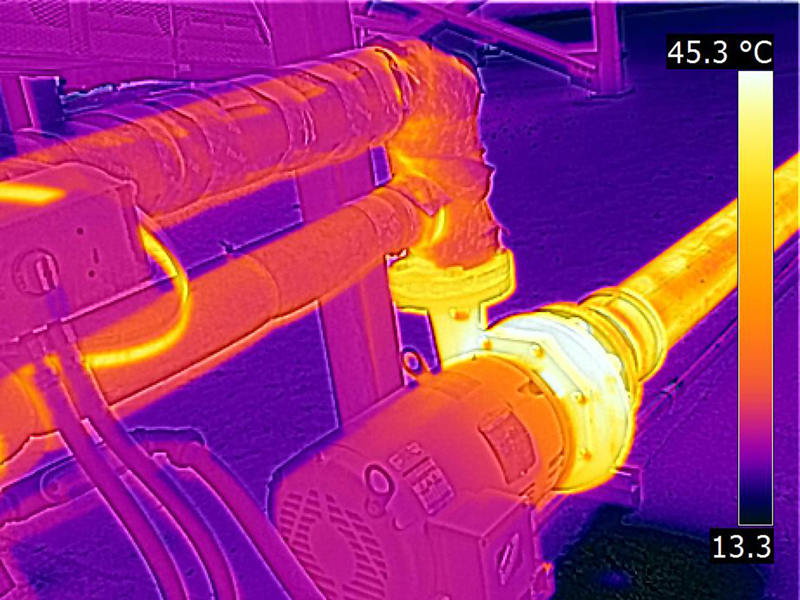
Mechanical

MACRO Coin

MACRO PCB
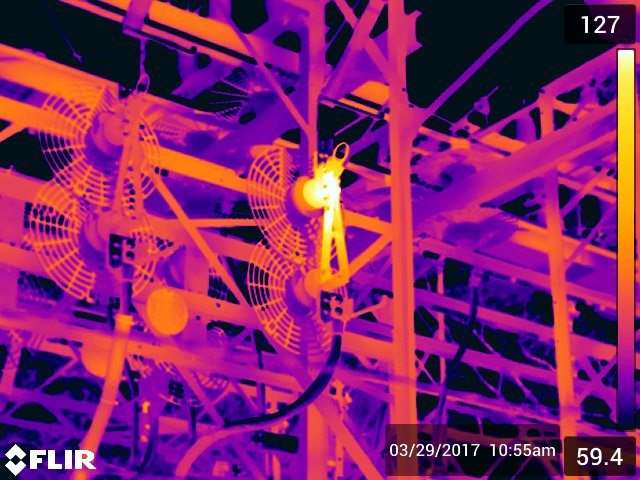
Utility Hot Spot

Vault Elbow Joint

MACRO Coin
| IR Resolution | 464 x 348 (161,472 pixels) |
| UltraMax® Resolution | 645,888 effective pixels |
| Digital Zoom | 1-6x continuous |
| Detector Type and Pitch | Uncooled microbolometer, 17 µm |
| Thermal Sensitivity/NETD | <30 mK at 30°C (42° lens) </td> |
| Spectral Range | 7.5 to 14.0 µm |
| Image Frequency | 30 Hz |
| Focus | Continuous, one-shot with laser distance meter (LDM), one-shot contrast, manual |
| Minimum Focus Distance | 24° lens: 0.5 m; optional macro mode |
| Digital Camera | 5 MP, with built-in LED photo/video lamp |
| Color Palettes | Iron, Gray, Rainbow, Arctic, Lava, Rainbow HC |
| Image Modes | Infrared, visual, MSX®, Picture-in-Picture |
| Voice Annotation | 60 sec. recording added to still images or video via built-in mic (has speaker) or via Bluetooth |
| METERLiNK® | Yes |
| Dimensions | 5.5 x 7.9 x 3.3" (140 x 201 x 84 mm) |
| Weight | 2.9 lbs (1.3 kg) |
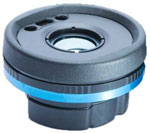
Today’s customers get to choose between 14, 24 or 42 degree lenses, but the question is… what to choose? We can help!
Here you’ll find a gathering of various building component or electrical component images that I have taken as well as my guidelines for each type of inspection.
The 24˚ lens is an excellent in-between option, however I feel the 42˚ lens will be the better choice for most applications.

In these applications the distance is longer and it’s important to take this into consideration. Ideally if you’re prepared to invest in more than one lens, my recommendation would be the 42˚ and 14˚ lenses. Since you will need to carry out both short distance audits and long distance audits. If you’re only interested in buying one lens, then the 24˚ lens is the best choice.
If your are working with IR windows on your electrical cabinet 42˚ lens would be your go to. Given that you need to be up close and personal with the windows so the shorter distance lens is the way you want to go.

Give the often short distances available to get the full span of shelves in computer rooms the 42˚ lens is the best choice, as you can see a 19” shelf at a short distance.
A final note, doubling the resolution is ideal for any application, by using the E95 or T540 over the E75 or T530 you get almost equivalent pixel resolution using a 42˚ lens over the 24˚ lens. Example at a 5 meter distance the IFOV (size of one pixel) will be 6.60 mm (E75-24) & 7.81mm (E95-42). It is almost like having 2 lenses in one.
| IR Resolution | 464 x 348 (161,472 pixels) |
| UltraMax® Resolution | 645,888 effective pixels |
| Digital Zoom | 1-6x continuous |
| Detector Type and Pitch | Uncooled microbolometer, 17 µm |
| Thermal Sensitivity/NETD | <30 mK at 30°C (42° lens) </td> |
| Spectral Range | 7.5 to 14.0 µm |
| Image Frequency | 30 Hz |
| Focus | Continuous, one-shot with laser distance meter (LDM), one-shot contrast, manual |
| Minimum Focus Distance | 24° lens: 0.5 m; optional macro mode |
| Digital Camera | 5 MP, with built-in LED photo/video lamp |
| Color Palettes | Iron, Gray, Rainbow, Arctic, Lava, Rainbow HC |
| Image Modes | Infrared, visual, MSX®, Picture-in-Picture |
| Voice Annotation | 60 sec. recording added to still images or video via built-in mic (has speaker) or via Bluetooth |
| METERLiNK® | Yes |
| Dimensions | 5.5 x 7.9 x 3.3" (140 x 201 x 84 mm) |
| Weight | 2.9 lbs (1.3 kg) |
Today’s customers get to choose between 14, 24 or 42 degree lenses, but the question is… what to choose? We can help!
Here you’ll find a gathering of various building component or electrical component images that I have taken as well as my guidelines for each type of inspection.
The 24˚ lens is an excellent in-between option, however I feel the 42˚ lens will be the better choice for most applications.
In these applications the distance is longer and it’s important to take this into consideration. Ideally if you’re prepared to invest in more than one lens, my recommendation would be the 42˚ and 14˚ lenses. Since you will need to carry out both short distance audits and long distance audits. If you’re only interested in buying one lens, then the 24˚ lens is the best choice.
If your are working with IR windows on your electrical cabinet 42˚ lens would be your go to. Given that you need to be up close and personal with the windows so the shorter distance lens is the way you want to go.
Give the often short distances available to get the full span of shelves in computer rooms the 42˚ lens is the best choice, as you can see a 19” shelf at a short distance.
A final note, doubling the resolution is ideal for any application, by using the E95 or T540 over the E75 or T530 you get almost equivalent pixel resolution using a 42˚ lens over the 24˚ lens. Example at a 5 meter distance the IFOV (size of one pixel) will be 6.60 mm (E75-24) & 7.81mm (E95-42). It is almost like having 2 lenses in one.