- Sign In
- |
- Sign Up
- |
- My Quote (0)
- |
- CART (0)

Thermal imager for firefighters. Features a 240 x 180 60Hz infared detector with a -20 to 650°C temperature range.
Thermal imager for firefighters. Features a 240 x 180 60Hz infared detector with a -20 to 650°C temperature range.
NO LONGER AVAILABLE!
This product is no longer available.
There is no direct replacement, however we recommend the:


Not what you're looking for? Let’s do a search and help you find what you need.
 Description
 Specifications
 Powerful Tools
 Included
 Videos
 Resources
 Accessories
 Forum
Forum Customer Reviews
Affordable K-Series TICs offer new, easier ways to see more clearly in the darkest, smokiest environments by showing big, bright FLIR images to help you maneuver more strategically, stay better oriented, and find victims faster.
Features
| Imaging and Optical Data | |
| IR Resolution | 240 × 180 pixels |
| Thermal Sensitivity/NETD | < 40 mK @ +30°C (+86°F) |
| Field of View (FOV) / Minimum Focus Distance | 51° × 38°/ NA fixed focus. See DOF |
| Depth of Field | 0.84 m to inf. (33 in. to inf.) |
| Spatial Resolution (IFOV) | 3.6 mrad |
| F-number | 1.25 |
| Image Frequency | 60 Hz |
| Focus | Fixed |
| Zoom | 2× digital zoom |
| Detector Data | |
| Focal Plane Array (FPA) / Spectral Range | Uncooled microbolometer / 7.5–13 µm |
| Image Presentation | |
| Display | 4" LCD, 320 × 240 pixels, backlit |
| Auto Range | Yes, mode dependent. Configurable through FLIR Tools SW |
| Contrast Optimization | Digital Image enhancement through FSX |
| Image Presentation Modes | |
| Image Modes | IR Image TI Basic NFPA Fire Fighting Mode Black and White Fire Fighting Mode Fire Mode Search and Rescue Mode Heat Detection Mode Thumbnail Gallery |
| Infrared Image | IR image, presentation mode dependent. Configurable through FLIR Tools SW |
| Measurement | |
| Object temperature range | –20 to 150°C (-4 to 302°F) 0 to +650°C (32 to 1202°F) |
| Accuracy | ±4°C (±7.2°F) or ±4% of reading, for ambient temperature 10°C to 35°C (+50°F to 95°F) |
| Measurement Analysis | |
| Spotmeter | 1 |
| Automatic Hot/Cold Detection | Heat detection mode (The hottest 2% of the of scene is colorised) |
| Isotherm | Yes, according to NFPA |
| Set-up | |
| Set-up Commands | Local adaptation of units, date and time formats |
| Languages | English |
| Storage of Images | |
| Image Storage | Standard JPEG |
| Storage Media | Internal Flash memory |
| Image Storage Capacity | 200 |
| Image Storage Mode | IR only |
| File Formats | Standard JPEG |
| Image Annotations | |
| Report Generation | Separate PC software |
| Video Streaming | |
| Non-radiometric IR-video Streaming | Uncompressed colorized video using USB |
| Data Communication Interfaces | |
| Interfaces | USB-mini |
| USB | |
| USB | USB Mini-B: Data transfer to and from PC / Uncompressed colorized video |
| Power System | |
| Battery | Li Ion |
| Battery Capacity | 4.4 Ah, at 20 to 25°C (68 to 77°F) |
| Battery Operating Time | Approx. 4 hours at 25°C (77°F) ambient temperature and typical use |
| Charging System | 2-bay charger or optional In-Truck Charger |
| Charging Time | 2 h to 85% capacity, charging status indicated by LED's |
| Charging Temperature | 0 to 45°C (32 to 113°F) |
| Power Management | Automatic shutdown and sleep mode |
| Start-up Time from Sleep Mode | < 4 sec. |
| Start-up Time | < 17 sec. (IR-image, no GUI) |
| Measurements |
 Kestrel DROP D2AG Livestock Heat Stress Monitor
|
 Kestrel 5000AG Livestock Environmental Meter / with LiNK
|
Kestrel 5500AG Agriculture Weather Meter / with LiNK
|
 Kestrel 5400AG Cattle Heat Stress Tracker
|
|---|---|---|---|---|
| Temperature | ||||
| Relative Humidity | ||||
| Heat Stress Index | ||||
| Temperature-Humidity Index (THI) | ||||
| Dew Point Temperature | ||||
| Wind Speed/Air Speed | ||||
| Wind Chill | ||||
| Wet Bulb Temp (Psychrometric) | ||||
| Station Pressure (Absolute Pressure) | ||||
| Barometric Pressure | ||||
| Altitude | ||||
| Density Altitude | ||||
| Volume Air Flow | ||||
| Direction | ||||
| Crosswind | ||||
| Headwind/Tailwind | ||||
| Delta T | ||||
| Globe Temperature | ||||
| Naturally Aspirated Wet Bulb Temp | ||||
| Wet Blub Globe Temperature (WBGT) | ||||
| Heat Load Index(HLI) | ||||
| Accumulated Heat Load Units (AHLU) | ||||
| LiNK Wireless Data | optional | optional |
Heat and humidity are tough on cattle. Rising temperatures and humidity result in increasing body temperatures, with very negative consequences. Even cattle living in fairly moderate climates may experience periods of heat stress. Heat stress causes a wide range of behavioral and medical issues in cattle – all of which cost the dairy or beef producer money.

Reducing cattle heat stress, and the associated losses in productivity and performance, is worth every cattle manager’s attention. Effective heat stress management requires an understanding of all factors contributing to a cow’s heat energy balance
Cattle generate heat metabolically through digestion and activity and also accumulate heat from their environment – ambient temperature, solar radiation and radiant heat from the ground (reflected solar radiation as well as heat generated by decomposing manure). They dissipate heat through non-evaporative cooling – radiation, conduction and convection back into their environment – as well as through evaporative cooling – sweating and panting. They can also reduce heat load through taking in cool water. In persistent hot, sunny, humid conditions, the cooling mechanisms are insufficient to dissipate all accumulated heat, and the cow’s body temperature begins to rise, triggering the cascade of negative heat stress impacts.
Heat stress management practices include providing shade, enhancing ventilation by adding fans or passive ventilation, enhancing evaporative cooling with sprinklers, providing cooled water, and modifying feed to increase dry matter intake and reduce waste. Each of these practices ALSO cost money, so the smart producer’s goal is to implement management practices every time they are needed, but ONLY when they are needed.
Fortunately, extensive academic and industry research into livestock heat stress management has generated excellent heat stress reduction guidance that is based on proven cattle-specific environmental measurements and models. Implementing a measurement-based heat stress management plan is the most effective way to minimize heat stress losses without wasting money.
By the time signs and symptoms of heat stress such as panting and drooling are visible in your cattle, production losses have already begun. Cattle suffer heat stress before people do, so simply waiting until you feel the heat intensify will also not ensure heat losses are prevented. Because cattle accumulate heat, if they do not have an opportunity to dissipate heat through overnight temperature cooling or environmental modifications, your herd's heat problems are increasing invisibly.
The first step in any cost-effective heat management plan is to accurately measure conditions wherever cattle are contained, at the pen level, and then determine your cattles’ risk of heat stress injury. To provide more accurate management guidance, researchers and government agencies have developed a variety of cattle-specific measurements and management models:

THI - Temperature-Humidity Index THI is calculated based on ambient temperature and relative humidity and has been extensively applied in research and management to represent the overall impact of moderate to hot conditions on cattle, especially those who are housed. Although THI is similar to the Heat Index typically reported in the local weather report, it is calculated differently. Accordingly, to obtain THI without a dedicated instrument, it is necessary to take a local temperature and humidity reading and refer to a reference table or perform calculations.
HLI – Heat Load Index The limitation of THI is that is does not take into account sun, air flow, or accumulation effects. HLI is a more complete environmental index which includes temperature, relative humidity, and the additional parameters of solar radiation and wind speed. These added parameters are most important for assessing heat stress risk in exposed, unshaded cattle. These parameters are derived from the Globe Temperature – an advanced meteorological measurement which uses a heat-absorbing metal globe. Because Globe Temperature is not available on traditional weather stations, it has previously been difficult to implement management practices based on HLI.
AHLU – Accumulated Heat Load Units AHLU is the most complete cattle heat stress model – addressing the fact that cattle accumulate heat load during prolonged heat events where they have insufficient environmental night cooling. THI and HLI alone may not predict the level of cattle heat stress because they do not address this accumulation impact
In order to calculate AHLU, an HLI Threshold is determined for each group of cattle. This is the HLI value above which those cows will start to accumulate heat. The HLI Threshold will vary depending on many factors, including the breed, color, feed state, acclimatization and general health of that group of animals, as well as the environmental conditions of their housing
(The Bos Taurus breeds prevalent in Western beef and dairy operations are particularly subject to ill effects from heat as they are less efficient at cooling themselves than Bos Indicus breeds.)
Because AHLU is an accumulation measure, it must be measured at the animals' location over an entire heat event to provide accurate management guidance. Previous methods of measuring and calculating AHLU were extremely time-consuming and complex, requiring the use of very expensive equipment to obtain the base measurements, referencing complex tables to obtain the correct HLI Threshold, then entry of hourly measurements into spread sheets to calculate the accumulated heat load units. All in all, a practice that is not likely to be adopted by most cattle or dairy operations, no matter how effective.
Managing heat events and implementing the proper management plans can mean the difference between life and death of your cattle and send savings straight to your bottom line. With accurate microclimate environmental data and cattle-specific heat stress measurements from your Kestrel Cattle Heat Stress Tracker, you will know when and where it is necessary to implement your plan.
There are a variety of management options available depending on the site characteristics and options available to your location. These can include:

Implementing a measurement-based heat stress management plan helps you maximize herd PERFORMANCE and profits!
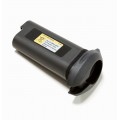
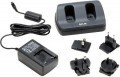
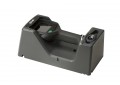
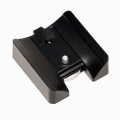
Click on a category to view a selection of compatible accessories with the FLIR K45 Thermal Imaging Camera (TIC) with FSX for Firefighters, 43200 Pixels (240 x 180).


| Imaging and Optical Data | |
| IR Resolution | 240 × 180 pixels |
| Thermal Sensitivity/NETD | < 40 mK @ +30°C (+86°F) |
| Field of View (FOV) / Minimum Focus Distance | 51° × 38°/ NA fixed focus. See DOF |
| Depth of Field | 0.84 m to inf. (33 in. to inf.) |
| Spatial Resolution (IFOV) | 3.6 mrad |
| F-number | 1.25 |
| Image Frequency | 60 Hz |
| Focus | Fixed |
| Zoom | 2× digital zoom |
| Detector Data | |
| Focal Plane Array (FPA) / Spectral Range | Uncooled microbolometer / 7.5–13 µm |
| Image Presentation | |
| Display | 4" LCD, 320 × 240 pixels, backlit |
| Auto Range | Yes, mode dependent. Configurable through FLIR Tools SW |
| Contrast Optimization | Digital Image enhancement through FSX |
| Image Presentation Modes | |
| Image Modes | IR Image TI Basic NFPA Fire Fighting Mode Black and White Fire Fighting Mode Fire Mode Search and Rescue Mode Heat Detection Mode Thumbnail Gallery |
| Infrared Image | IR image, presentation mode dependent. Configurable through FLIR Tools SW |
| Measurement | |
| Object temperature range | –20 to 150°C (-4 to 302°F) 0 to +650°C (32 to 1202°F) |
| Accuracy | ±4°C (±7.2°F) or ±4% of reading, for ambient temperature 10°C to 35°C (+50°F to 95°F) |
| Measurement Analysis | |
| Spotmeter | 1 |
| Automatic Hot/Cold Detection | Heat detection mode (The hottest 2% of the of scene is colorised) |
| Isotherm | Yes, according to NFPA |
| Set-up | |
| Set-up Commands | Local adaptation of units, date and time formats |
| Languages | English |
| Storage of Images | |
| Image Storage | Standard JPEG |
| Storage Media | Internal Flash memory |
| Image Storage Capacity | 200 |
| Image Storage Mode | IR only |
| File Formats | Standard JPEG |
| Image Annotations | |
| Report Generation | Separate PC software |
| Video Streaming | |
| Non-radiometric IR-video Streaming | Uncompressed colorized video using USB |
| Data Communication Interfaces | |
| Interfaces | USB-mini |
| USB | |
| USB | USB Mini-B: Data transfer to and from PC / Uncompressed colorized video |
| Power System | |
| Battery | Li Ion |
| Battery Capacity | 4.4 Ah, at 20 to 25°C (68 to 77°F) |
| Battery Operating Time | Approx. 4 hours at 25°C (77°F) ambient temperature and typical use |
| Charging System | 2-bay charger or optional In-Truck Charger |
| Charging Time | 2 h to 85% capacity, charging status indicated by LED's |
| Charging Temperature | 0 to 45°C (32 to 113°F) |
| Power Management | Automatic shutdown and sleep mode |
| Start-up Time from Sleep Mode | < 4 sec. |
| Start-up Time | < 17 sec. (IR-image, no GUI) |
| Measurements |
Kestrel DROP D2AG Livestock Heat Stress Monitor
|
Kestrel 5000AG Livestock Environmental Meter / with LiNK
|
Kestrel 5500AG Agriculture Weather Meter / with LiNK
|
Kestrel 5400AG Cattle Heat Stress Tracker
|
|---|---|---|---|---|
| Temperature | ||||
| Relative Humidity | ||||
| Heat Stress Index | ||||
| Temperature-Humidity Index (THI) | ||||
| Dew Point Temperature | ||||
| Wind Speed/Air Speed | ||||
| Wind Chill | ||||
| Wet Bulb Temp (Psychrometric) | ||||
| Station Pressure (Absolute Pressure) | ||||
| Barometric Pressure | ||||
| Altitude | ||||
| Density Altitude | ||||
| Volume Air Flow | ||||
| Direction | ||||
| Crosswind | ||||
| Headwind/Tailwind | ||||
| Delta T | ||||
| Globe Temperature | ||||
| Naturally Aspirated Wet Bulb Temp | ||||
| Wet Blub Globe Temperature (WBGT) | ||||
| Heat Load Index(HLI) | ||||
| Accumulated Heat Load Units (AHLU) | ||||
| LiNK Wireless Data | optional | optional |
Heat and humidity are tough on cattle. Rising temperatures and humidity result in increasing body temperatures, with very negative consequences. Even cattle living in fairly moderate climates may experience periods of heat stress. Heat stress causes a wide range of behavioral and medical issues in cattle – all of which cost the dairy or beef producer money.
Reducing cattle heat stress, and the associated losses in productivity and performance, is worth every cattle manager’s attention. Effective heat stress management requires an understanding of all factors contributing to a cow’s heat energy balance
Cattle generate heat metabolically through digestion and activity and also accumulate heat from their environment – ambient temperature, solar radiation and radiant heat from the ground (reflected solar radiation as well as heat generated by decomposing manure). They dissipate heat through non-evaporative cooling – radiation, conduction and convection back into their environment – as well as through evaporative cooling – sweating and panting. They can also reduce heat load through taking in cool water. In persistent hot, sunny, humid conditions, the cooling mechanisms are insufficient to dissipate all accumulated heat, and the cow’s body temperature begins to rise, triggering the cascade of negative heat stress impacts.
Heat stress management practices include providing shade, enhancing ventilation by adding fans or passive ventilation, enhancing evaporative cooling with sprinklers, providing cooled water, and modifying feed to increase dry matter intake and reduce waste. Each of these practices ALSO cost money, so the smart producer’s goal is to implement management practices every time they are needed, but ONLY when they are needed.
Fortunately, extensive academic and industry research into livestock heat stress management has generated excellent heat stress reduction guidance that is based on proven cattle-specific environmental measurements and models. Implementing a measurement-based heat stress management plan is the most effective way to minimize heat stress losses without wasting money.
By the time signs and symptoms of heat stress such as panting and drooling are visible in your cattle, production losses have already begun. Cattle suffer heat stress before people do, so simply waiting until you feel the heat intensify will also not ensure heat losses are prevented. Because cattle accumulate heat, if they do not have an opportunity to dissipate heat through overnight temperature cooling or environmental modifications, your herd's heat problems are increasing invisibly.
The first step in any cost-effective heat management plan is to accurately measure conditions wherever cattle are contained, at the pen level, and then determine your cattles’ risk of heat stress injury. To provide more accurate management guidance, researchers and government agencies have developed a variety of cattle-specific measurements and management models:
THI - Temperature-Humidity Index THI is calculated based on ambient temperature and relative humidity and has been extensively applied in research and management to represent the overall impact of moderate to hot conditions on cattle, especially those who are housed. Although THI is similar to the Heat Index typically reported in the local weather report, it is calculated differently. Accordingly, to obtain THI without a dedicated instrument, it is necessary to take a local temperature and humidity reading and refer to a reference table or perform calculations.
HLI – Heat Load Index The limitation of THI is that is does not take into account sun, air flow, or accumulation effects. HLI is a more complete environmental index which includes temperature, relative humidity, and the additional parameters of solar radiation and wind speed. These added parameters are most important for assessing heat stress risk in exposed, unshaded cattle. These parameters are derived from the Globe Temperature – an advanced meteorological measurement which uses a heat-absorbing metal globe. Because Globe Temperature is not available on traditional weather stations, it has previously been difficult to implement management practices based on HLI.
AHLU – Accumulated Heat Load Units AHLU is the most complete cattle heat stress model – addressing the fact that cattle accumulate heat load during prolonged heat events where they have insufficient environmental night cooling. THI and HLI alone may not predict the level of cattle heat stress because they do not address this accumulation impact
In order to calculate AHLU, an HLI Threshold is determined for each group of cattle. This is the HLI value above which those cows will start to accumulate heat. The HLI Threshold will vary depending on many factors, including the breed, color, feed state, acclimatization and general health of that group of animals, as well as the environmental conditions of their housing
(The Bos Taurus breeds prevalent in Western beef and dairy operations are particularly subject to ill effects from heat as they are less efficient at cooling themselves than Bos Indicus breeds.)
Because AHLU is an accumulation measure, it must be measured at the animals' location over an entire heat event to provide accurate management guidance. Previous methods of measuring and calculating AHLU were extremely time-consuming and complex, requiring the use of very expensive equipment to obtain the base measurements, referencing complex tables to obtain the correct HLI Threshold, then entry of hourly measurements into spread sheets to calculate the accumulated heat load units. All in all, a practice that is not likely to be adopted by most cattle or dairy operations, no matter how effective.
Managing heat events and implementing the proper management plans can mean the difference between life and death of your cattle and send savings straight to your bottom line. With accurate microclimate environmental data and cattle-specific heat stress measurements from your Kestrel Cattle Heat Stress Tracker, you will know when and where it is necessary to implement your plan.
There are a variety of management options available depending on the site characteristics and options available to your location. These can include:
Implementing a measurement-based heat stress management plan helps you maximize herd PERFORMANCE and profits!
Click on a category to view a selection of compatible accessories with the FLIR K45 Thermal Imaging Camera (TIC) with FSX for Firefighters, 43200 Pixels (240 x 180).